The 5th World Conference on Creative Economy
No: SP/WCCE/EN26/2026
Indonesia - India Establish an AI-Based Creative Corridor in the Singhasari Special Economic Zone
Jakarta, October 24, 2026 – The Indonesian government has officially strengthened its position on the global creative economy landscape through the launch of the Indonesia–India Creative Tech Corridor at Cinepolis Lippo Mall Nusantara on Saturday (10/24). This strategic initiative, born out of the 2026 World Conference on Creative Economy (WCCE), aims to integrate Indonesia’s wealth of intellectual property (IP) and national creative talent with India’s technological strengths and audiovisual production capabilities.
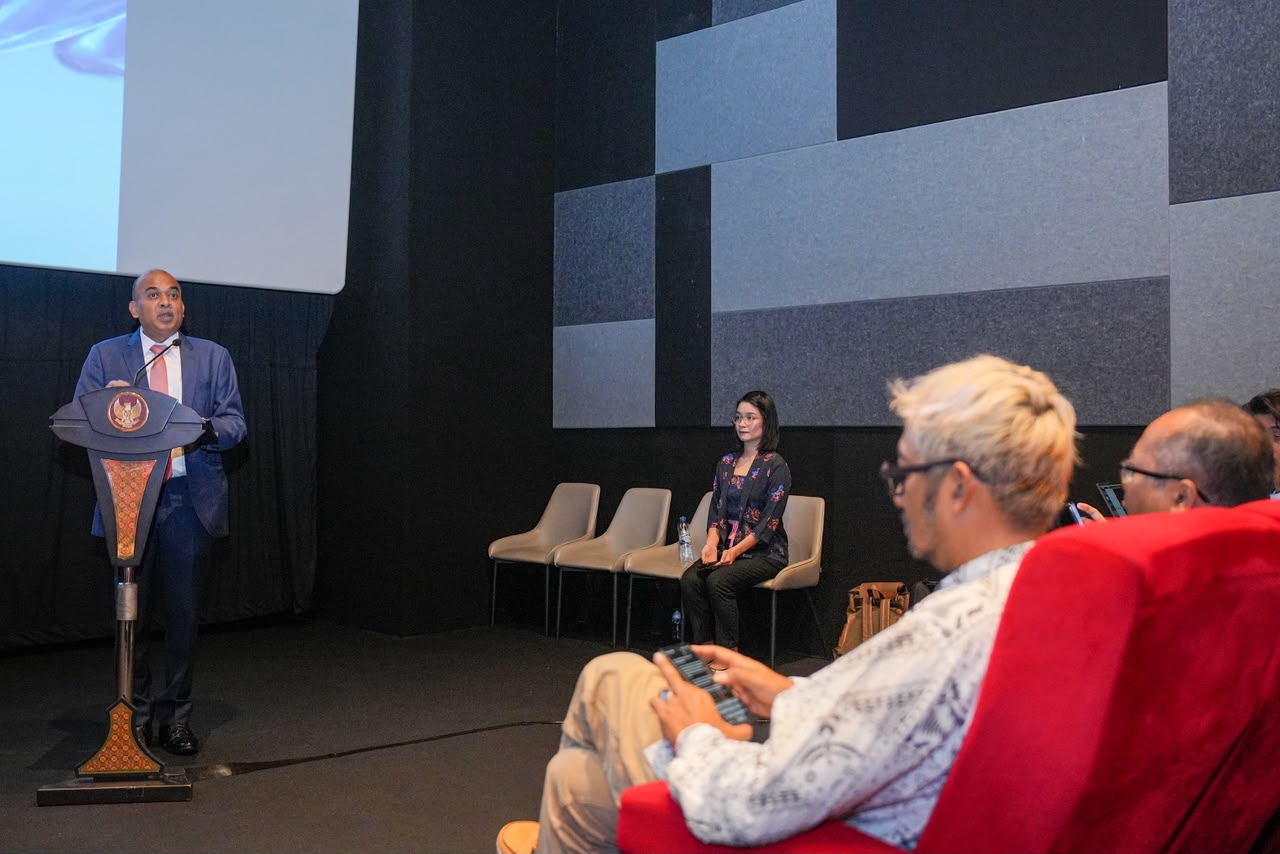
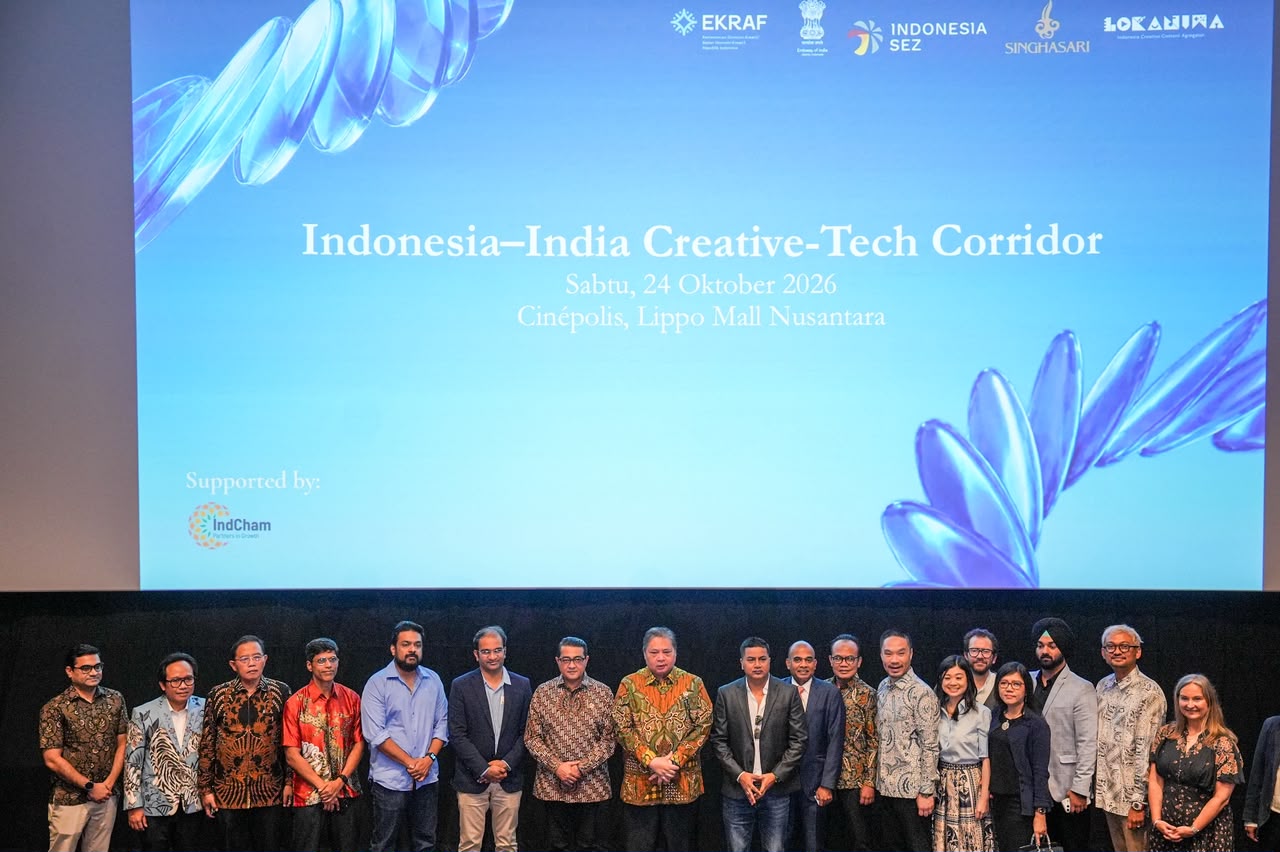 Minister of Creative Economy/Head of the Creative Economy Agency Teuku Riefky Harsya attended the launch of the Indonesia–India Creative Tech Corridor at Cinepolis Lippo Mall Nusantara, Jakarta, Saturday (24/10/2026).
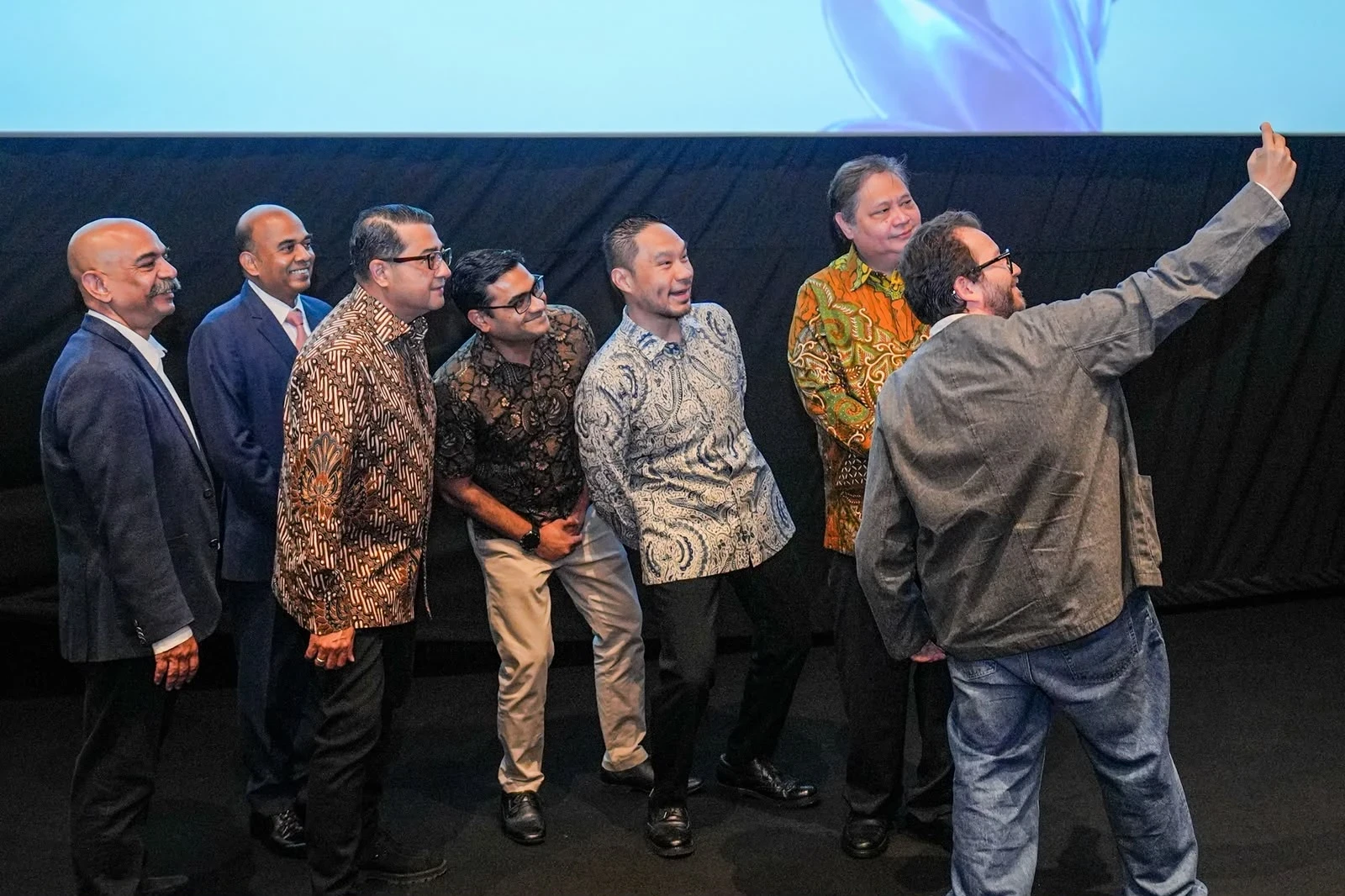
The launch was attended by Coordinating Minister for Economic Affairs Airlangga Hartarto, Minister of Creative Economy/Head of the Creative Economy Agency Teuku Riefky Harsya, and Deputy Chief of Mission at the Indian Embassy in Jakarta Bijay Selvaraj. This significant milestone was also marked by the signing of a memorandum of understanding (MoU) between Lokanima in the Singhasari Special Economic Zone (SEZ) and strategic industry partners from Indonesia and India. This collaboration covers the development of creative technologies, artificial intelligence (AI), IP creation, and the distribution of audiovisual content to international markets.
Coordinating Minister Airlangga emphasized that advancements in digital technology and AI represent a pivotal moment for Indonesia to accelerate knowledge-based economic growth. He stressed that the application of AI in the creative sector is projected to create new, high-value jobs—not to replace human roles.
“AI is not just about replacing jobs, but also about creating jobs and new skills. The creative economy is a knowledge-based industry that is increasingly being facilitated by advancements in artificial intelligence, the Internet of Things, digital twins, and quantum computing. One sector that will grow very rapidly worldwide is data centers and semiconductors, which strengthen national computing capacity—as has been done through the Singhasari Special Economic Zone (KEK),” said Coordinating Minister Airlangga.
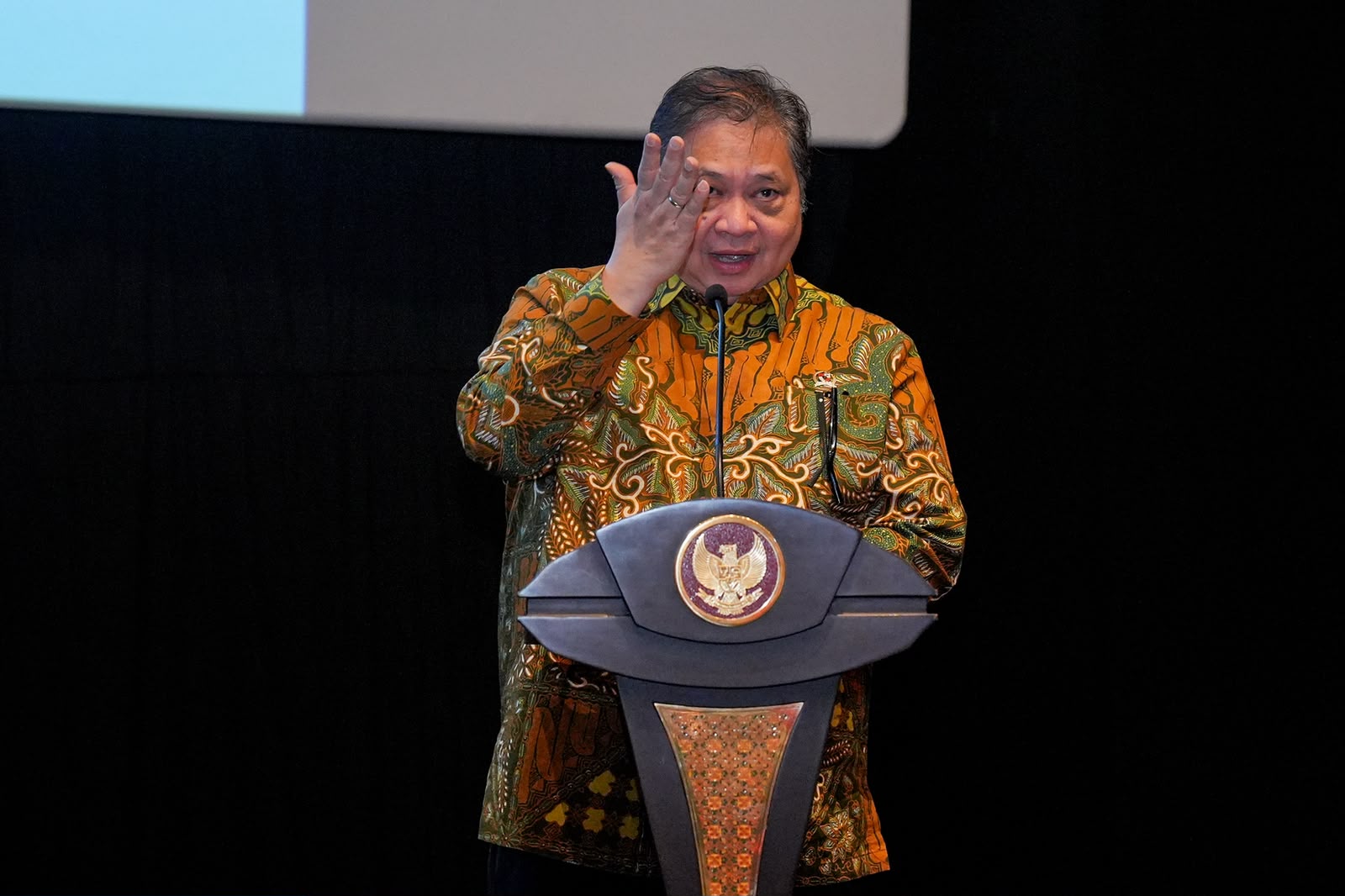 Doc. Communication Bureau of the Ministry of Creative Economy/Creative Economy Agency
Indonesia’s active involvement in shaping the global AI landscape is also evidenced by its role as a founding member of the World Artificial Intelligence Cooperation Organization (WAICO) in Shanghai in July 2026. Minister of Creative Economy Teuku Riefky stated that the establishment of this corridor represents a concrete implementation of the commitments made at the WCCE 2026, which was attended by delegations from more than 80 countries.
“We want the commitments established at the WCCE to translate into concrete partnerships that create meaningful economic opportunities. Of course, the Ministry of Creative Economy highly appreciates the initiative by the Singhasari Special Economic Zone (SEZ) to collaborate with India on AI development, while continuing to engage local talent and intellectual property (IP). Moreover, there is a wealth of character-based intellectual property that can be explored to grow not only in the domestic market but also to enter the global market,” said Minister of Creative Economy Teuku Riefky Harsya.
 Doc. Communication Bureau of the Ministry of Creative Economy/Creative Economy Agency
Indonesia’s digital economy sector is projected to reach a value of 135 billion USD by 2026 and surge to 366 billion USD by 2030, supported by more than 235 million internet users. To harness this immense potential, the government has developed a National Artificial Intelligence Roadmap focused on four pillars: digital infrastructure, research and innovation, human resource development, and responsible AI governance.
“Through this collaboration, we aim to connect Indonesia’s rich storytelling and creative talent with India’s technological capabilities and audiovisual production. The Ministry of Creative Economy is ready to support talent development, industry partnerships, intellectual property protection, and market access expansion so that Indonesia’s creative works can reach international audiences,” added Minister of Creative Economy Teuku Riefky Harsya.
 Doc. Communication Bureau of the Ministry of Creative Economy/Creative Economy Agency
Meanwhile, Bijay Selvaraj, Deputy Chief of Mission at the Indian Embassy in Indonesia, warmly welcomed this collaboration. In his view, the strength of Indonesia’s cultural narratives combined with India’s audiovisual and technological ecosystems creates a mutually complementary partnership.
“I think we’re on equal footing. There’s a lot we can learn through collaboration, and there’s significant economic value to be created,” said Bijay Selvaraj.
As part of this initiative, the Creative Tech Sandbox was also established in the Singhasari Special Economic Zone (KEK) as a testing ground for creators and industry players to explore the use of AI and emerging technologies. In addition to improving production efficiency and protecting copyrights, this partnership also aims to premiere the collaborative works of both countries at the 2027 World Audio Visual and Entertainment Summit (WAVES) in Mumbai, India.
 Doc. Communication Bureau of the Ministry of Creative Economy/Creative Economy Agency
The signing of the MoU brought together a number of cross-sector partners, including IP creator Fun Cican (Wahyu Aditya), Prodigi AI, LPP TVRI, Cinepolis, Xelta (MatchBest Group), as well as Galleri5 India and Collective Studios (Collective Artists Network).
The officials from the Ministry of Creative Economy who accompanied the Minister of Creative Economy at the event included Deputy for Strategic Development of the Creative Economy Mohammed Ali Berawi; Deputy for Media Creativity Cecep Rukendi; Director of Funding Access, Financing, and Investment Development Anggara Hayun Anujuprana; Director of Technological Creativity Dandhy Yudha Feryawan; and CEO of the Singhasari Special Economic Zone (KEK) David Santoso.
Kiagoos Irvan Faisal
Head of the Communications Bureau
Ministry of Creative Economy/Creative Economy Agency