The 5th World Conference on Creative Economy
No: SP/WCCE/EN14/2026
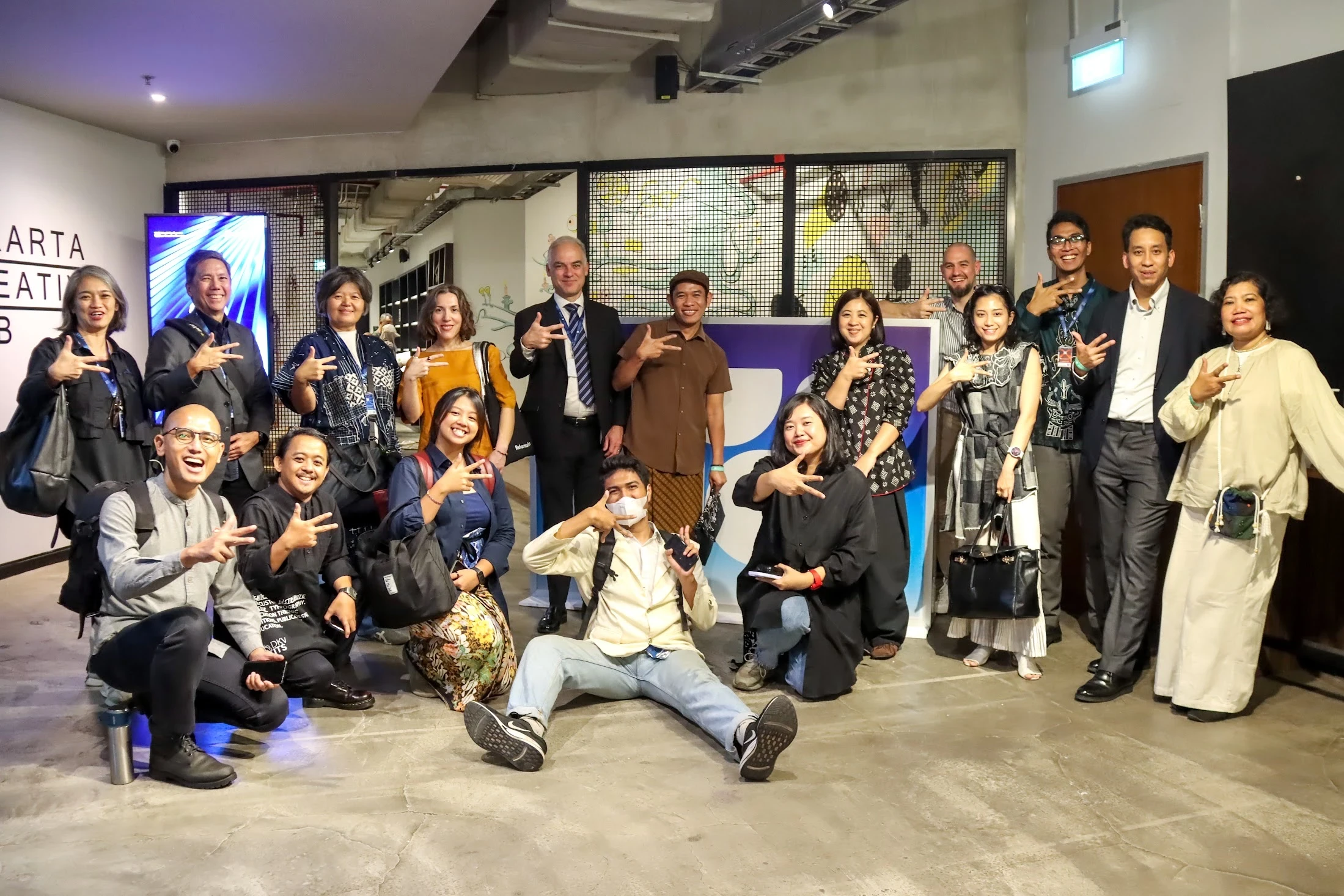
Jakarta, October 22, 2026 – The Ministry of Creative Economy/Creative Economy Agency collaborated with the Department of Industry, Trade, Cooperatives, Small and Medium Enterprises (PPKUKM) of the Jakarta Provincial Government and Jakarta Creative Hub to organize the Seminar on Social Inclusion in Indonesia's Creative Economy and the National Validation Workshop: Indonesia as part of the series of The 5th World Conference on Creative Economy (WCCE) 2026 at Jakarta Creative Hub, Jakarta, Thursday (10/22). This forum was held to map out and address access gaps and participation barriers within Indonesia's creative economy ecosystem through the validation of social inclusion research findings.
 Doc. Communications Bureau of the Ministry of Creative Economy/Creative Economy Agency.
This activity forms part of the study titled Research on Social Inclusion in the Creative Economy in Indonesia, drafted by the United Nations Department of Economic and Social Affairs (UN DESA) alongside a research team from Institut Teknologi Bandung (ITB). Involving 25 key informants, this study examines in depth the experiences of creative actors, communities, as well as youth organizations, the elderly, persons with disabilities, through to MSMEs. The seminar presented Indonesian researcher Prananda Luffiansyah Malasan and Cambodian researcher Kai Brennert to outline initial research findings and comparative analyses between the two countries.
Head of the Sub-directorate for Strategic Management at the Ministry of Creative Economy, Dwi Wahyuni, emphasized that the direction of national creative economy development must open the widest possible opportunities for people from diverse backgrounds and abilities. According to her, strengthening social inclusion serves as the main foundation so that the acceleration of creative potential is not merely concentrated in certain regions or groups, but capable of reaching all levels of society to create and contribute.
“This UN DESA research initiative represents a crucial step toward strengthening understanding and formulating policy directions for a more inclusive creative economy development. Through today's series of seminars and workshops, I hope we can obtain inputs and recommendations to support the development of an inclusive and competitive creative economy in Indonesia,” the Head of Sub-directorate for Strategic Management stated at Jakarta Creative Hub, Thursday (10/22).
 Doc. Communications Bureau of the Ministry of Creative Economy/Creative Economy Agency.
Initial research analysis results indicate that opportunities to grow in the creative economy sector still face inequality challenges. Limited access to supporting infrastructure, financing schemes, network expansion, through to market penetration remain primary obstacles, alongside inconsistent institutional support and facility disparities between central and regional areas. Furthermore, this study underscores the importance of recognizing work quality, utilizing measured digital technology tailored to specific business needs, and guaranteeing the sustainability of creative practices alongside knowledge regeneration.
To test and validate these findings, the National Validation Workshop brought together more than 30 stakeholders from various regions across Indonesia. Participants represented 21 creative economy subsectors, creative hubs, the Indonesia Creative Cities Network (ICCN), professional associations, MSME actors, and academicians. Guided by the research team from ITB, participants were divided into seven working groups to document and map issues using the problem mapping canvas method. The exploration process commenced with individual view submissions through silent discussion, followed by the categorization of strategic issues and determining priority scales for the most urgent obstacles.
All mapping results were subsequently presented and collectively discussed to verify alignment between research findings and factual ground conditions, correct information disparities, and identify policy intervention opportunities. All constructive input from stakeholders will be integrated to refine the final research report and formulate policy recommendations for strengthening national social inclusion in the creative economy.
 Doc. Communications Bureau of the Ministry of Creative Economy/Creative Economy Agency.
WCCE 2026 embodies the theme Inclusively Creative: Collective Continuity and takes place on October 21–23, 2026, in Jakarta. This event was also attended by Dwi Wahyuni, Head of Sub-directorate for Strategic Management at the Ministry of Creative Economy; Juanda Permana Jaya, Head of Industry Division at the Jakarta Provincial Government; as well as Matthieu Cognac, Inter-Regional Adviser from UN DESA. Research findings and stakeholder input are expected to serve as references for understanding participation barriers and formulating support tailored to the target groups' needs within the creative economy ecosystem.
Kiagoos Irvan Faisal
Head of Bureau for Communication
Ministry of Creative Economy/Creative Economy Agency
For further information regarding WCCE, visit:
Website wcce.id and ekraf.go.id/news
Instagram @wcceid
Event deck ekr.af/wccegeneraldeck
Media kit ekr.af/mediakitwcce2026
Youtube Official WCCE Channel - Inclusively Creative
Kementerian Ekraf/Badan Ekraf RI
World Conference on Creative Economy (WCCE)