Jakarta, October 17, 2026 – Regional identity goes beyond logos, symbols, and visual elements. Behind it lie stories, cultural values, and a sense of pride passed down through generations. When developed through a sound design process involving various stakeholders, such identity can become part of everyday community life while opening up opportunities for creative economy growth.
 Deputy Minister of Creative Economy / Deputy Head of the Creative Economy Agency (Ekraf) Irene Umar attended ADGI Design Week (ADW) 2026 at Ashta District 8, Jakarta, Saturday (October 17, 2026).
This spirit was reflected in a Design Talks session titled “Institutionalizing Integrity at Scale: Enforcing Professional Ethics Across Municipal Identity Projects,” held as part of ADGI Design Week (ADW) 2026 at Ashta District 8, Jakarta. In the design sector, collaboration provides a foundation for bringing together the needs of the government, businesses, professional designers, and communities.
Rahmat Zulfikar, Chair of the Indonesian Graphic Designers Association (ADGI) Makassar Chapter, explained that regional identity plays an important role in building social bonds and fostering community pride. In his view, an identity rooted in culture, collectively recognized, and widely used can help drive the creative economy. He highlighted the importance of community engagement, urban branding, identity in public services, and the continuity of regional values across generations.
“Local identity can continue to thrive when we trust a sound design process. Identity is born from culture. In my view, what will carry us into the future is our ability to continue collaborating and bringing processes together, while upholding design practices that produce monumental and sustainable cultural artifacts for generations to come,” Rahmat said during ADW 2026 Design Talks on Saturday (October 17).
Such collaboration needs to be supported by fair working mechanisms for professional designers. To bridge the needs of various stakeholders, ADGI established ADGI Hub as a platform connecting the government and private sector with designers through projects that prioritize transparent selection processes or design competitions in accordance with industry codes of ethics. This approach is expected to strengthen trust among stakeholders while creating a working environment that values designers’ competence and professionalism.
The importance of building an ecosystem together is also recognized by Fajar Novario, founder of Auman Design Bureau and designer of the 81st Anniversary of the Republic of Indonesia logo. He believes collaboration is one way to strengthen the design industry, including in regional areas, by providing creative talent and practitioners with greater opportunities to grow.
 Photo: Bureau for Communication, Ministry of Creative Economy / Creative Economy Agency.
“Ultimately, this is one of the efforts that my colleagues and I are making to strengthen the existing ecosystem in Padang and develop its creative industry ecosystem, particularly in visual communication design,” Fajar said.
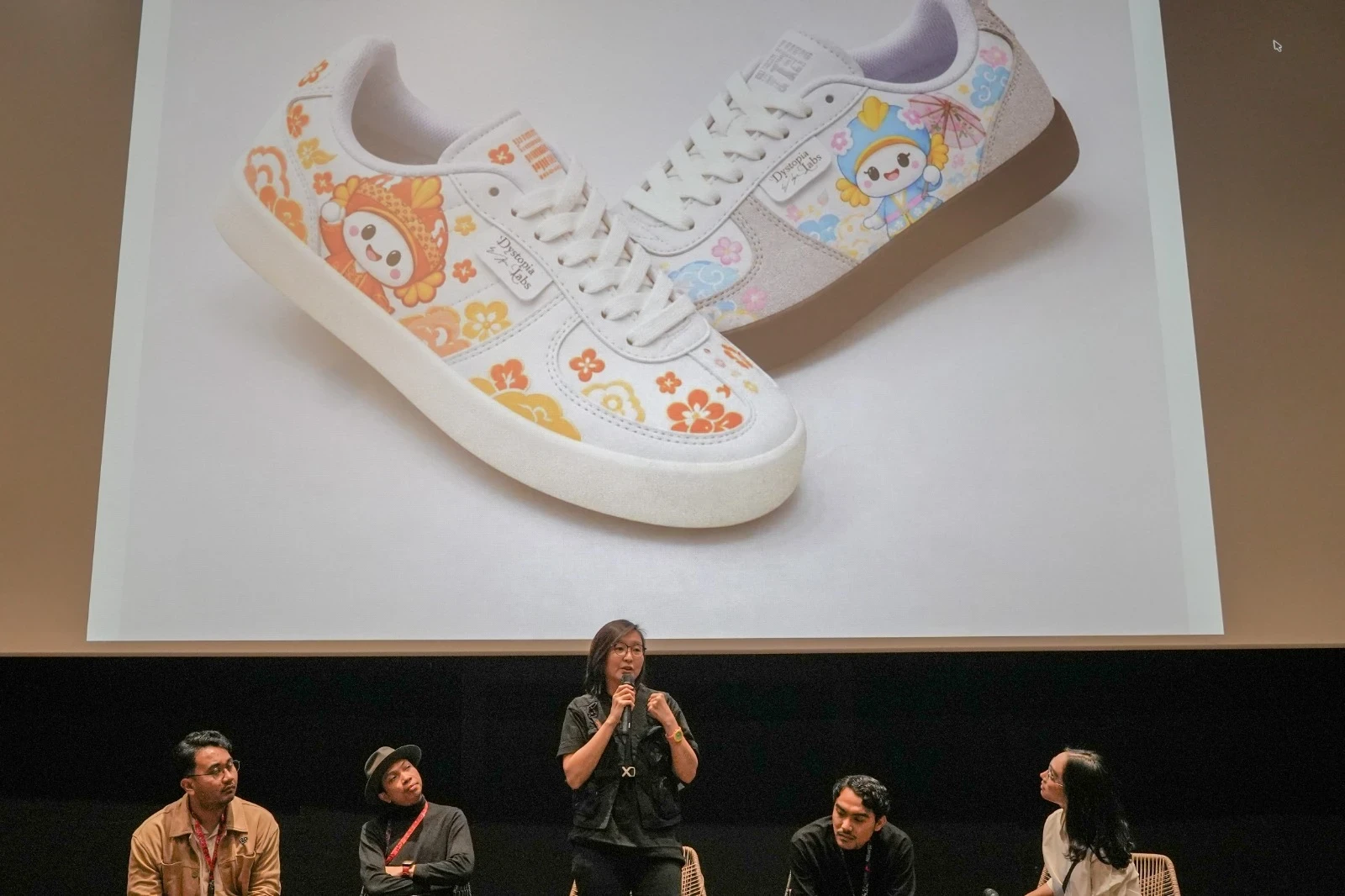
At the event, Deputy Minister of Creative Economy / Deputy Head of the Creative Economy Agency (Ekraf) Irene Umar spoke about how the spirit of collaboration is reflected in the Ministry of Creative Economy’s visual identity. In her presentation, she highlighted the significance of design and cited data indicating a 28% increase in the micro, small, and medium enterprise (MSME) sector, with a figure of approximately 5.75 million per business.
In addition, the use of logos was associated with price adjustments of 63%. Some 83% of MSMEs reported an increase in customer numbers, gaining approximately 43 to 60 new customers. Furthermore, 63% experienced an improvement in brand image credibility, while 95% reported improvements in consumer-related outcomes.
“Imagine the universe and its structure, with small planets orbiting around their respective axes. This represents the various creative economy subsectors. We deliberately chose not to limit their number because we understand the enormous potential of the creative economy worldwide. These figures show that design has the potential to be a strategic investment for businesses and to strengthen identity. Good design is good business. Design has a multiplier effect that can drive tangible economic growth,” Deputy Minister Irene explained.
Kiagoos Irvan Faisal
Head of Bureau for Communication
Ministry of Creative Economy / Creative Economy Agency