Jakarta, August 22, 2026 – Deputy Minister of Creative Economy/Deputy Head of the Creative Economy Agency (Ekraf), Irene Umar, said that developing design talent should not only focus on the ability to produce creative works, but also on building ways of thinking that enable designers to understand problems and create designs with clear purposes and meaningful impact.
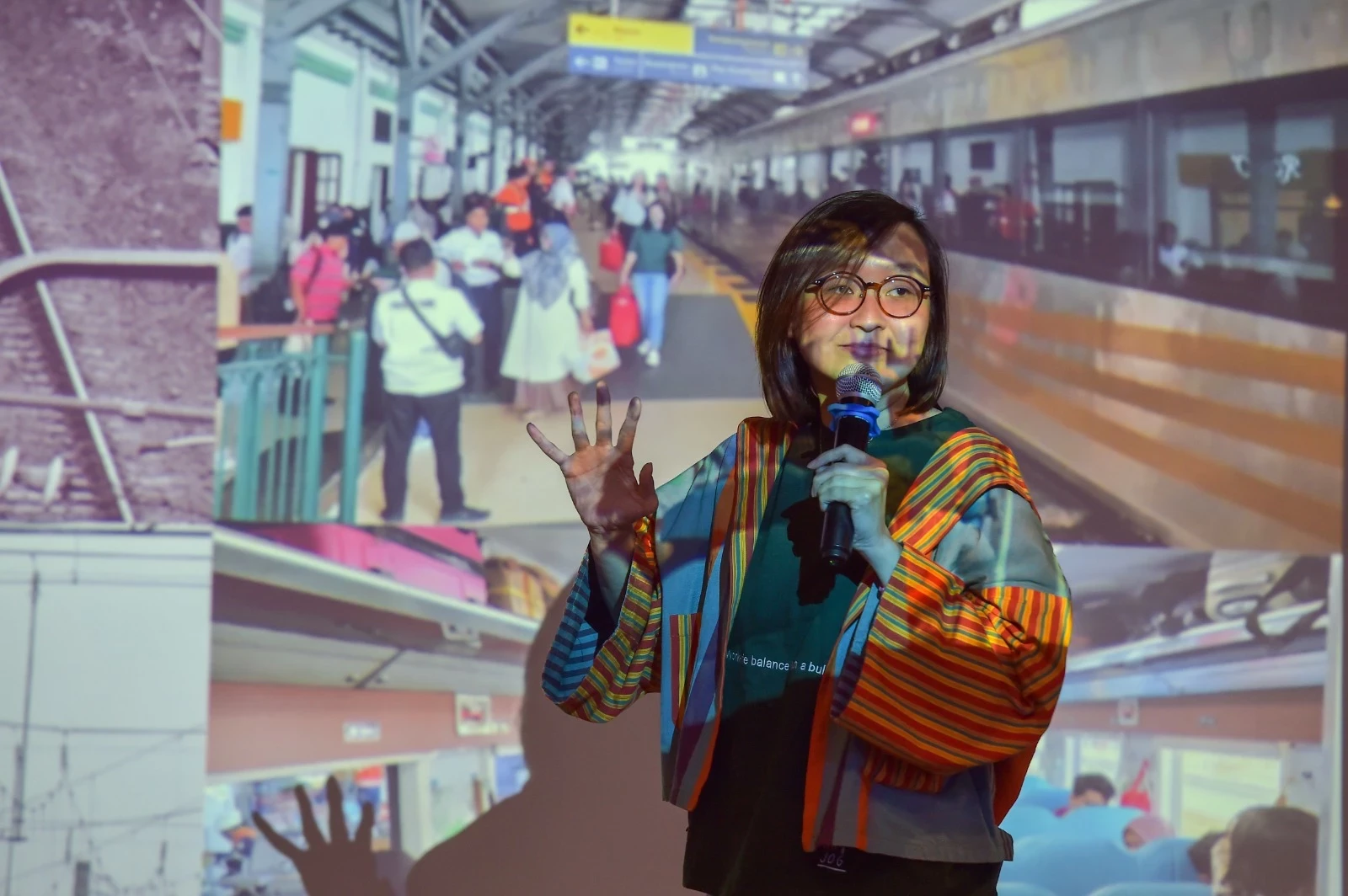
 Deputy Minister of Creative Economy/Deputy Head of the Creative Economy Agency (Ekraf), Irene Umar, speaks at Master of Design BINUS (MODB) 2026: First Wave – The Convergence of Design, organized by Master of Design BINUS at FX Sudirman, Jakarta, Saturday (22/8/2026).
She made the statement while speaking at Master of Design BINUS (MODB) 2026: First Wave – The Convergence of Design, organized by Master of Design BINUS at FX Sudirman, Jakarta, Saturday (22/8).
“Design can shape human behavior. Therefore, we need to see how design is not only aesthetic and functional, but can also be something transformative for human behavior,” said Irene.
MODB 2026 marks the inaugural edition of the Master of Design BINUS program, held from August 19–22, 2026, under the theme “The Convergence of Design.” The program includes the MODB Exhibition, featuring thesis works by the first and second cohorts, Innovation Talks, and the Design Dealing Room, which connects design works with industry.
 Photo: Bureau for Communication, Ministry of Creative Economy / Creative Economy Agency.
Irene said that the application of design in public spaces, such as information systems and signage, can influence how people receive information while also shaping their behavior. Therefore, she emphasized that every design element should have a clear purpose—not merely to convey a message, but also to encourage change.
To this end, Irene encouraged design talent not to limit themselves to particular subsectors or professions. According to her, developing creative works requires an understanding of perspectives and challenges across various fields. Collaboration among design, technology, business, and other disciplines can broaden perspectives and produce more relevant solutions.
“Do not define ourselves solely based on our subsector or profession. When working on a project, what matters most is its purpose and mission. If designers can understand the main point of other fields, and vice versa, we can create something much stronger,” explained Irene.
Irene also encouraged campuses to serve as sandboxes or safe spaces where students can experiment, ask questions, make mistakes, and iterate. According to her, this process is essential in giving students the opportunity to try and learn before entering the professional world. Such environments can also encourage cross-disciplinary collaboration, including among design, architecture, business, technology, and other fields.
 Photo: Bureau for Communication, Ministry of Creative Economy / Creative Economy Agency.
“Educate designers, shape the future. We need to develop designers who think, not merely produce. Do not be afraid to take risks, and do not become overly attached to your own ideas or designs, while continuing to hold on to the intention and purpose you want to achieve,” said Irene.
In response to technological developments, Irene advised design talent to utilize artificial intelligence (Artificial Intelligence/AI) as a tool to accelerate processes without eliminating the human touch. In addition to AI literacy, talent should develop leadership and systemic thinking, IP-readiness, cultural intelligence, and the ability in designing impact. According to her, these five capabilities are important for designers to think clearly, understand cultural contexts, preserve the value of their works, and ensure that every design decision has a clear purpose.
The Ministry of Creative Economy continues to promote the development of design talent and the design ecosystem through various programs, including the Creative Economy Digital Talent Program, Ekraf Design Festival, intellectual property registration facilitation, Cultural Design, Design Acceleration, and Packaging Design Review. These programs form part of the Ministry’s support for strengthening talent capacity, developing creative works, increasing the utilization of intellectual property, and opening opportunities for collaboration with industry players.
Through MODB 2026, the Ministry of Creative Economy is encouraging broader opportunities for interaction among design talent, educational institutions, the government, and industry. This collaboration is expected to strengthen the design ecosystem while encouraging talent to produce works that not only possess aesthetic value, but can also address challenges, shape behavior, and create meaningful impact for society.
Kiagoos Irvan Faisal
Head of Bureau for Communication
Ministry of Creative Economy / Creative Economy Agency