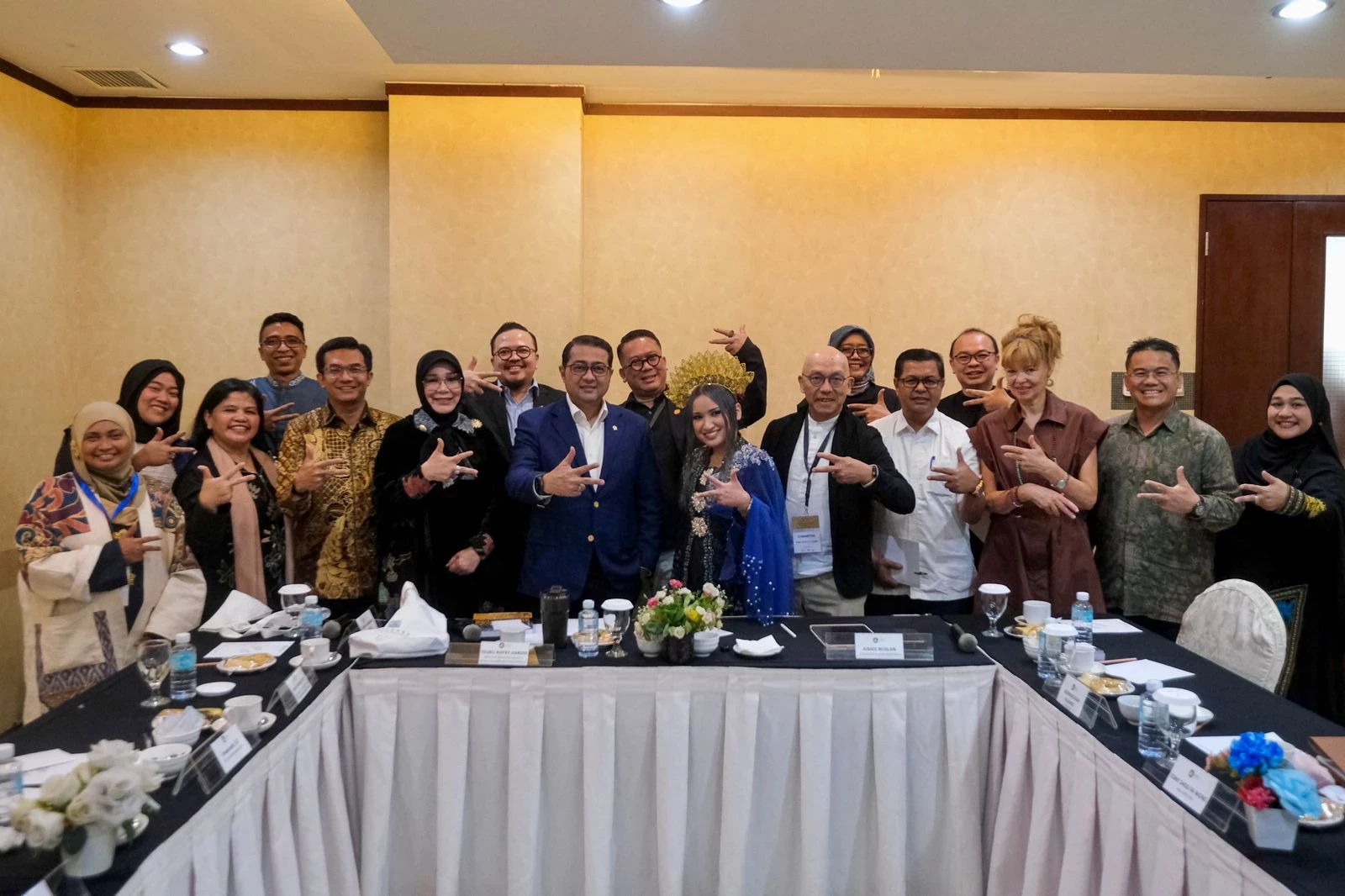
Banda Aceh, April 18, 2026 – Minister of Creative Economy/Head of the Creative Economy Agency (Ekraf), Teuku Riefky Harsya, emphasized the important role of architecture in addressing challenges in disaster-prone regions through the application of adaptive and contextual global standards. Therefore, the Minister of Creative Economy considers strengthening the architecture subsector as an important part of the creative economy to be essential in contributing to national resilience in facing disasters.
 Minister of Creative Economy, Teuku Riefky Harsya, holds an audience with representatives of architectural associations at Hermes Palace Hotel, Banda Aceh, Saturday (17/4/2026).
“Today’s activity is a very important step because it involves global architectural standards for disaster-prone areas. Holding this activity in Aceh provides valuable insights and significant benefits for all of us. In supporting the architecture subsector, the Ministry of Creative Economy needs to continue strengthening collaboration with the government, academia, associations, media, and business players so that we can address the various challenges we face together,” said the Minister of Creative Economy during an audience with representatives of architectural associations at Hermes Palace Hotel, Banda Aceh, Friday (18/4).
The meeting was part of the series of the Disaster Risk Reduction, Resilience & Recovery (DR3) International Conference on Natural & Human Disasters 2026, which aims to gather aspirations from creative economy players while exploring opportunities for cross-sector collaboration. Furthermore, he emphasized the Ministry of Creative Economy’s commitment to strengthening communication with the Indonesian Institute of Architects (IAI) as a professional organization representing architects in various regions.
 Photo: Bureau for Communication, Ministry of Creative Economy / Creative Economy Agency.
“We at the Ministry of Creative Economy will continue communicating with the Indonesian Institute of Architects (IAI), one of the associations that has long played a role in and supported Indonesian architects, with 36 chapters across the country. In the near future, we will also hold further discussions to listen to various inputs regarding proposals and challenges within the national architecture ecosystem,” he added.
Head of Region 4 Asia and Oceania, International Union of Architects (UIA) Natural Human Disaster Program, Aimee Roslan, emphasized the importance of a hexahelix approach in building mutually reinforcing relationships among stakeholders.
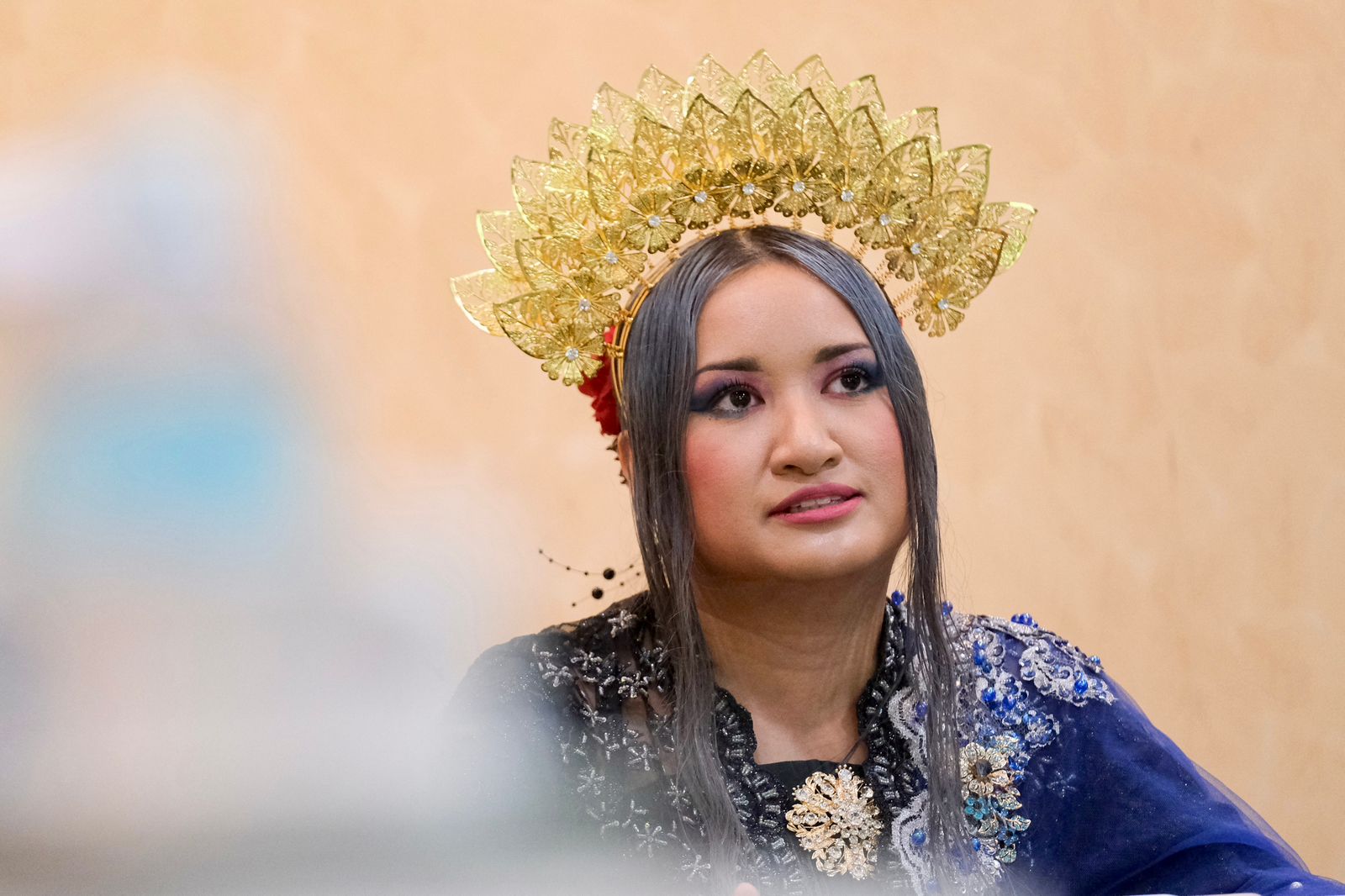 Photo: Bureau for Communication, Ministry of Creative Economy / Creative Economy Agency.
“We are ready to collaborate, starting with the establishment of a Memorandum of Understanding (MoU), introducing the Creative Resilience Lab program, and implementing post-disaster reconstruction design programs. UIA can provide support through technology transfer, given that our global network covers 170 member countries. The involvement of local experts is also key to ensuring that development remains aligned with Indonesia’s cultural values,” she explained.
The audience was also attended by Director of Arcadian Emergency Architect Tony Wang; President of the Indonesian Institute of Architects, George Budi; Managing Director of Architects Without Frontiers, Esther Charlesworth; Disaster Preparedness and Prevention Centre, Malaysia-Japan Institute of Technology, Kamaruddin Azhari Razak; and UIA Architecture for All Work Program for the Asia and Oceania region, Norwina Muhammad Nawawi.
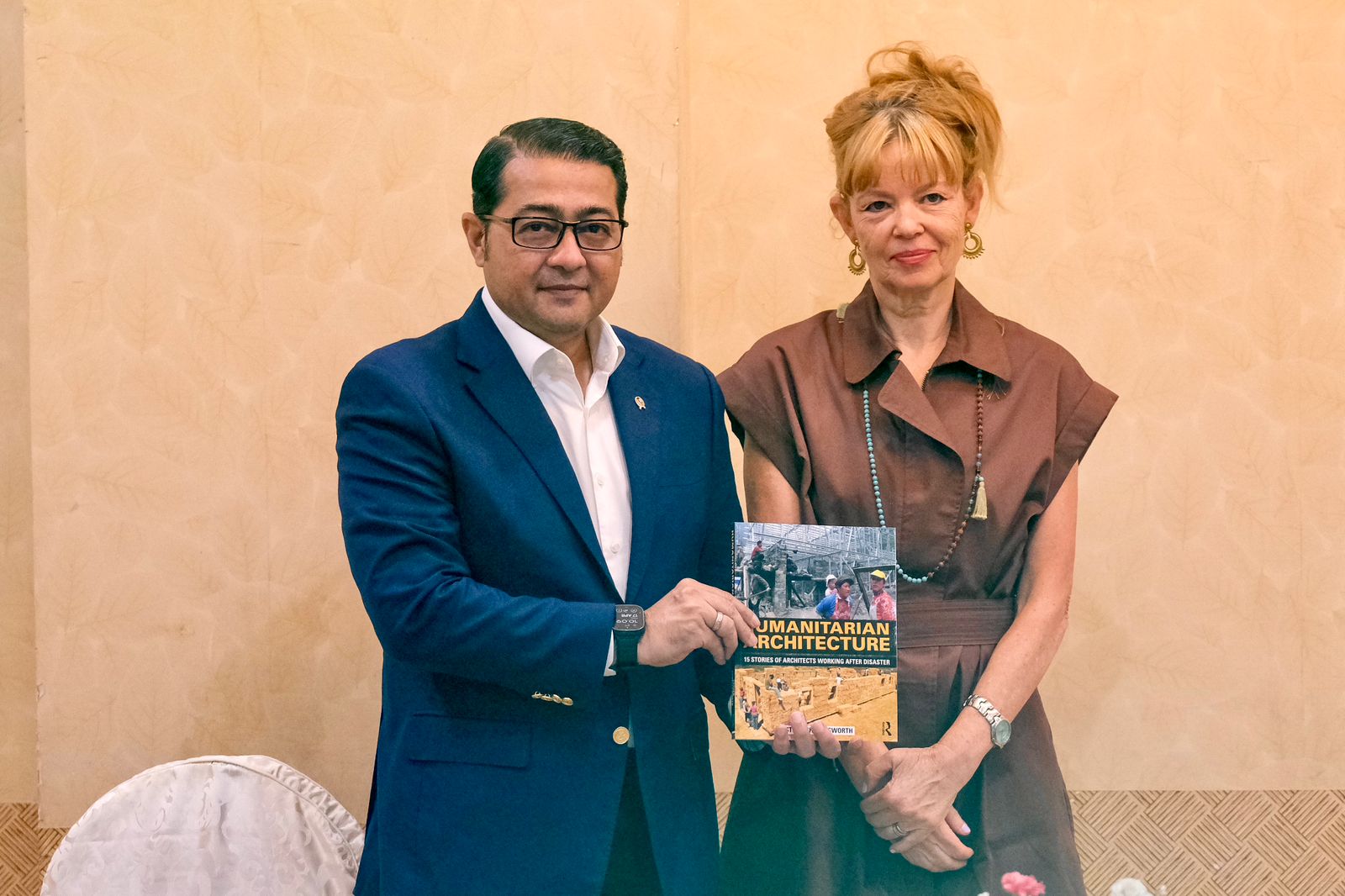 Photo: Bureau for Communication, Ministry of Creative Economy / Creative Economy Agency.
Meanwhile, the Minister of Creative Economy was accompanied by Special Staff to the Minister for Strategic and Interinstitutional Affairs, Rian Firmansyah; Acting Head of Bureau for General Affairs, Indra Saputra Farhas; and Director of Architecture and Design, Sabar Norma Megawati Panjaitan.
Kiagoos Irvan Faisal
Head of Bureau for Communication
Ministry of Creative Economy / Creative Economy Agency