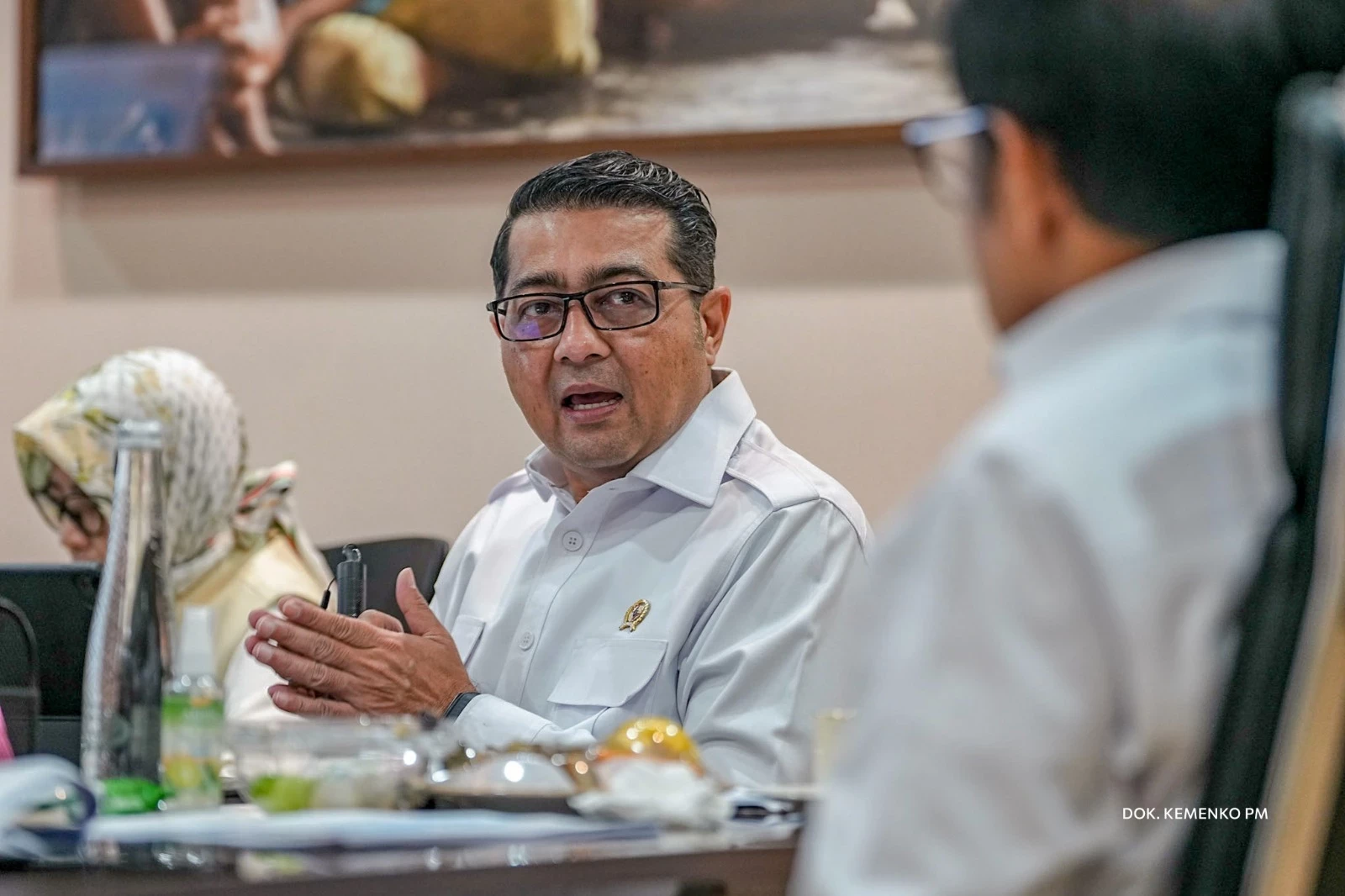
Jakarta, September 10, 2026 – Coordinating Minister for Human Development (Menko PM), Muhaimin Iskandar, said that the implementation of the Creative Economy Master Plan (Rindekraf) 2026–2045 could serve as an instrument to address various development challenges, including strengthening and expanding the middle class.
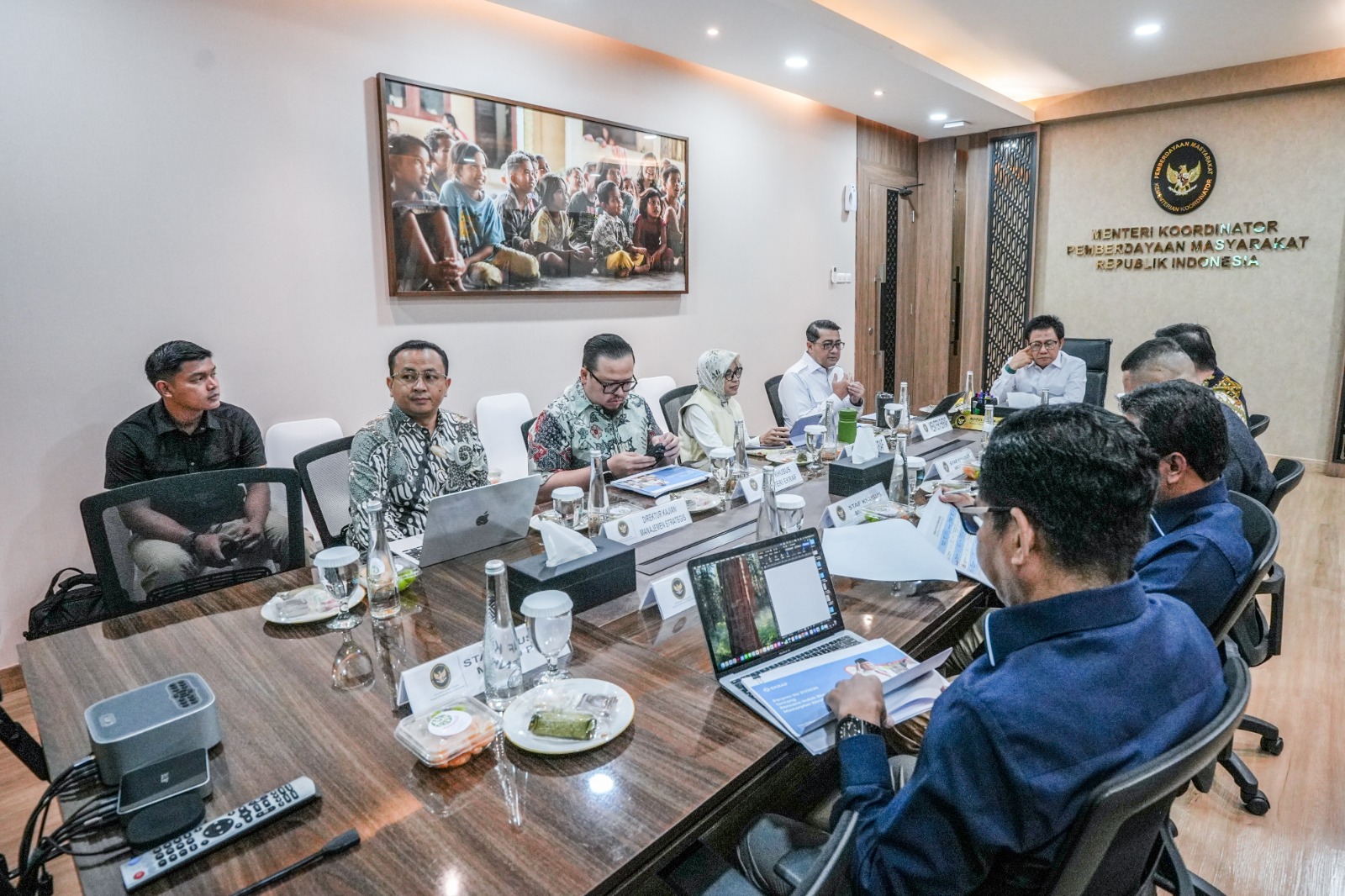 Minister of Creative Economy/Head of the Creative Economy Agency (Ekraf), Teuku Riefky Harsya, meets with Coordinating Minister for Human Development (Menko PM), Muhaimin Iskandar, at the Office of the Coordinating Ministry for Human Development and Cultural Affairs (Kemenko PMK), Jakarta, Thursday (10/9/2026).
Muhaimin made the statement while receiving Minister of Creative Economy/Head of the Creative Economy Agency (Ekraf), Teuku Riefky Harsya, at the Office of the Coordinating Ministry for Human Development and Cultural Affairs (Kemenko PMK), Jakarta, Thursday (10/9). The meeting discussed the implementation of Rindekraf, which serves as a strategic guideline for national creative economy development through 2045.
“This Presidential Regulation is extraordinary because it can serve as an important instrument to anticipate various challenges, including the decline of the middle class. The implementation of this Presidential Regulation can be one of the drivers to strengthen and rebuild the middle class,” said Muhaimin.
According to Muhaimin, creative economy development also needs to be directed toward connecting research outcomes with market needs. In this way, research findings do not stop at knowledge development but can be further developed and commercialized by creative economy players.
Rindekraf was established through Presidential Regulation Number 37 of 2026, issued on July 2, 2026. The document serves as the national creative economy master plan for a 20-year period and contains development principles, vision and mission, objectives, policy directions, targets, strategies, and the roles of stakeholders in building the creative economy ecosystem.
 Photo: Coordinating Ministry for Human Development and Cultural Affairs
As Chair of the Steering Committee of the Rindekraf 2026–2045 Coordination Team, Coordinating Minister for Human Development has a role in coordinating the implementation of Rindekraf involving ministries/agencies, regional governments, financial institutions, higher education institutions, and other stakeholders.
Minister of Creative Economy, Teuku Riefky Harsya, said that Rindekraf serves as an important foundation to ensure that creative economy development is carried out in a targeted, integrated, and sustainable manner.
“The Ministry of Creative Economy has a role in ensuring that the sector’s development agenda is translated into concrete and measurable programs that deliver an impact for creative economy players throughout Indonesia,” said Menekraf.
The initial implementation of Rindekraf is outlined in the 2026–2029 Action Plan, which covers eight strategic development areas, including research development, education development, funding and financing facilitation, infrastructure provision, marketing system development, provision of incentives, intellectual property facilitation, and protection of creative outputs.
In its implementation, the Ministry of Creative Economy has been mandated to carry out several strategic agendas, including preparing policy studies on seven priority creative economy subsectors, developing seed funding schemes, facilitating access to funding for creative economy business entities, developing creative clusters, providing and revitalizing creative public spaces, and strengthening intellectual property.
 Photo: Coordinating Ministry for Human Development and Cultural Affairs
“Support for the implementation of Rindekraf is particularly related to coordination across coordinating ministries and ministries, as well as accelerating realization. The ultimate goal of this team is for whatever form our final product takes to support regional governments, associations, academia, businesses, media, and financial institutions, with the benefits ultimately reaching regional governments, associations, and communities more broadly. This will involve academia, businesses, media, and financial institutions,” said Teuku Riefky.
The meeting was also attended by Deputy I of the Coordinating Ministry for Human Development and Cultural Affairs, Leontinus Alpha Edison. The Minister of Creative Economy was accompanied by Secretary of the Ministry/Secretary-General of the Ministry of Creative Economy, Dessy Ruhati; Special Staff to the Minister for Strategic and Interinstitutional Affairs, Rian Firmansyah; and Director of Strategic Management Studies, Agus Syarip Hidayat.
Kiagoos Irvan Faisal
Head of Bureau for Communication
Ministry of Creative Economy / Creative Economy Agency