Jakarta, July 8, 2026 – On July 2, 2026, President Prabowo Subianto officially issued Presidential Regulation No. 37 of 2026 on the 2026–2045 Creative Economy Master Plan (Rindekraf), establishing the strategic direction for Indonesia’s medium- and long-term creative economy development.
 Minister of Creative Economy/Head of the Creative Economy Agency, Teuku Riefky Harsya, delivers a press conference on the 2026–2045 Creative Economy Master Plan (Rindekraf) at the Ministry of Creative Economy office in Jakarta, Wednesday, July 8, 2026.
“The enactment of the 2026–2045 Creative Economy Master Plan reflects President Prabowo’s strong commitment to positioning the creative economy as a new engine of national economic growth. This document serves as a shared roadmap for strengthening an inclusive, adaptive, and implementation-oriented creative economy ecosystem,” said Minister of Creative Economy/Head of the Creative Economy Agency, Teuku Riefky Harsya.
Indonesia’s creative economy has demonstrated its role as a new driver of national economic growth, reflected in rising employment, investment, exports, and contributions to the country’s Gross Domestic Product (GDP). To build on this momentum, the 2026–2045 Creative Economy Master Plan has been designed as an integrated, sustainable, and forward-looking framework capable of responding to global economic and technological developments.
 Photo: Bureau of Communications, Ministry of Creative Economy/Creative Economy Agency.
“As a cross-sector strategic planning document, the Master Plan was developed through a collaborative approach involving the central and regional governments, businesses, academia, communities, the media, and financial institutions to ensure that national creative economy development moves in the same direction,” the Minister added.
From the outset, the Master Plan has been built upon three core principles: Inclusive, Adaptive, and Action-Oriented. It is inclusive by embracing the diversity of creative economy stakeholders and ecosystems; adaptive by responding to technological advancements and industry transformation; and action-oriented through a comprehensive Action Plan aligned with the mandates, authorities, and resources of implementing ministries and government agencies.
The document also establishes a long-term strategy for strengthening Indonesia’s creative economy ecosystem through an intellectual property-based approach aimed at enhancing talent development, improving business competitiveness, and empowering regions as new centers of economic growth in support of the Golden Indonesia 2045 vision.
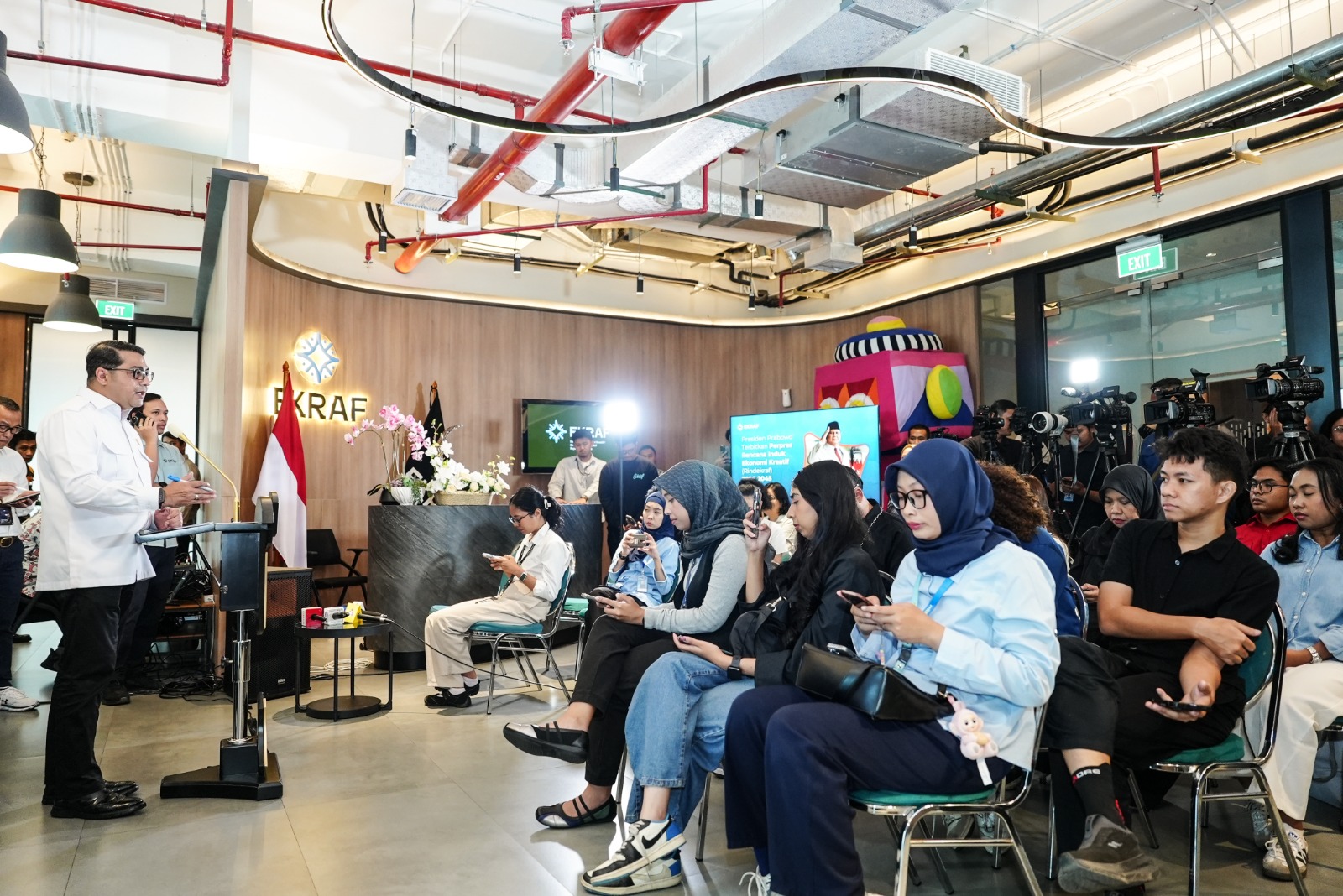 Photo: Bureau of Communications, Ministry of Creative Economy/Creative Economy Agency.
“This Presidential Regulation provides clear direction for regional governments in strengthening policies, institutions, and programs to develop creative economy ecosystems based on intellectual property,” Teuku Riefky explained.
Under the Master Plan, Indonesia’s creative economy is organized into four strategic clusters: Arts and Culture; Design; Technology and Digital Content; and Media and Creative Distribution, encompassing 21 creative economy subsectors. This clustering is intended to strengthen competitiveness while enabling the sector to adapt to digital transformation, artificial intelligence, the green economy, and emerging economic opportunities.
 Photo: Bureau of Communications, Ministry of Creative Economy/Creative Economy Agency.
For creative economy stakeholders, the Master Plan provides greater policy certainty, enhanced talent development, stronger protection and commercialization of intellectual property, as well as expanded access to financing and markets.
Kiagoos Irvan Faisal
Head of Communications Bureau
Ministry of Creative Economy/Creative Economy Agency