Jakarta, July 22, 2026 – The Ministry of Creative Economy / Creative Economy Agency and the Ministry of Communication and Digital aligned the implementation of Indonesia’s national Artificial Intelligence (AI) policy to both protect and accelerate the growth of the creative economy sector. The two ministries advanced discussions on the Draft Presidential Regulation on the National AI Roadmap 2030 and the Draft Presidential Regulation on AI Ethics as an integrated legal framework.
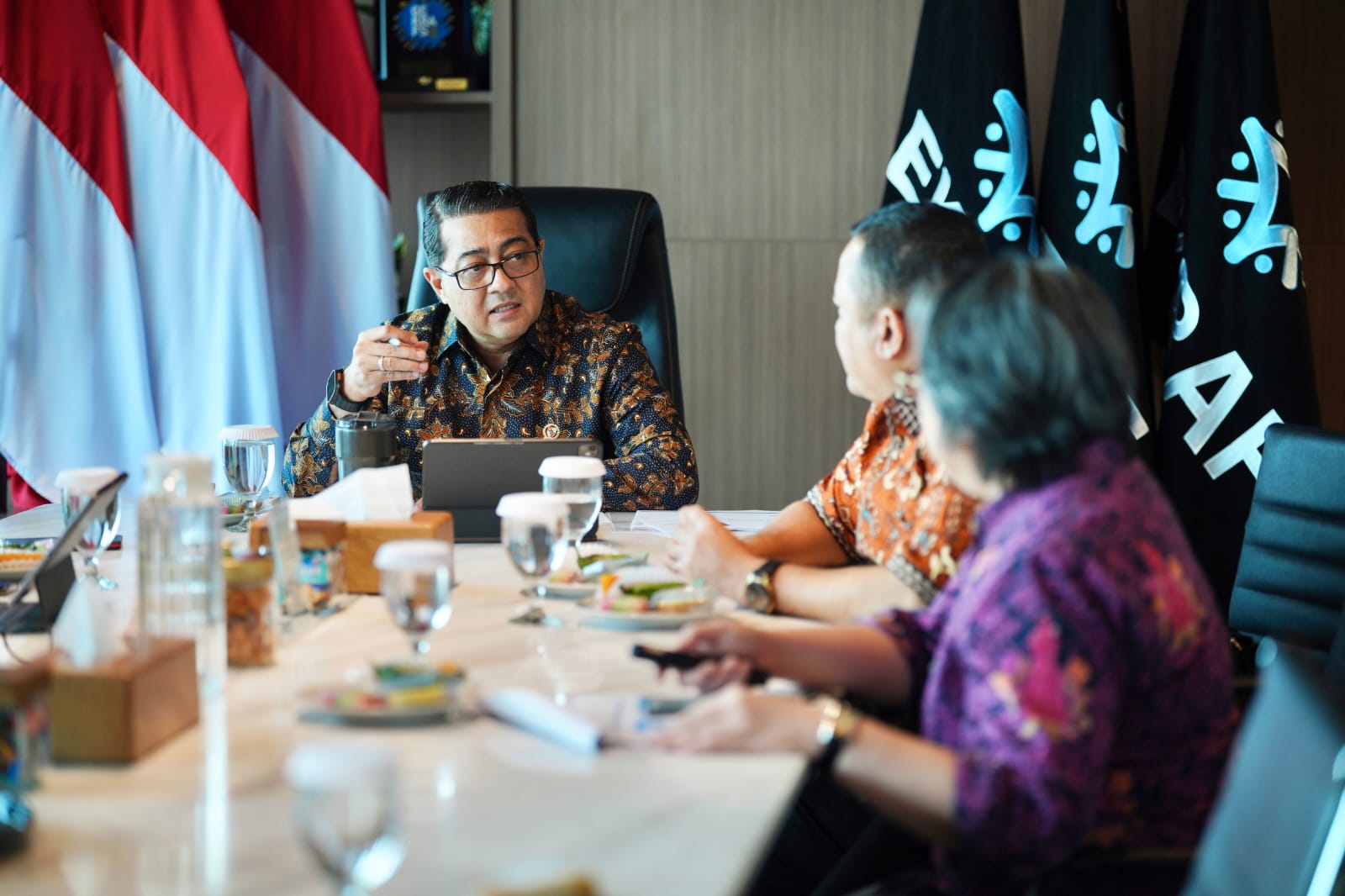 Minister of Creative Economy/Head of the Creative Economy Agency, Teuku Riefky Harsya (left), speaks with the Director General of Digital Ecosystem at the Ministry of Communication and Digital (Komdigi), Edwin Hidayat Abdullah (center), during a meeting with representatives of the Ministry of Communication and Digital (Komdigi) at the Ministry of Creative Economy Office in Jakarta, Wednesday (22/07/2026).
“The creative economy is one of the priority sectors in the implementation of the national AI agenda. Therefore, we want to ensure that AI implementation in the creative economy sector is aligned with national policy directions so that the policies and programs we develop effectively address the needs of creative economy players,” said Minister of Creative Economy Teuku Riefky Harsya during a meeting at Autograph Tower, Jakarta, on Wednesday (July 22).
The discussion covered the implementation stages for the first three years of the National AI Roadmap, including the distribution of roles among government institutions, the development of sectoral guidelines, digital talent development, and risk mitigation in the use of AI technologies. The policy framework is designed to encourage innovation while safeguarding the rights of creators.
“Each creative economy subsector has its own unique characteristics. Therefore, AI implementation must also be tailored to the specific needs of each subsector so that it can generate added value for creative economy players. AI should serve as a tool that enhances the creative process, not one that replaces human creativity,” said the Minister of Creative Economy.
Director General of the Digital Ecosystem at the Ministry of Communication and Digital, Edwin Hidayat Abdullah, explained that the drafting of the National AI Roadmap Presidential Regulation and the AI Ethics Presidential Regulation has involved more than 40 ministries and government agencies, as well as hundreds of stakeholders from academia, industry associations, businesses, and technology companies over the past year. Both regulations are designed as a national policy framework to promote innovative AI development while strengthening the mitigation of risks associated with its implementation.
 Photo: Bureau for Communication, Ministry of Creative Economy / Creative Economy Agency
“These regulations will serve as a national framework that each ministry and government agency will translate according to the characteristics of its respective sector. In this way, AI development can proceed responsibly through cross-sector collaboration,” said Edwin.
Meanwhile, Director of Artificial Intelligence and New Technology Ecosystems at the Ministry of Communication and Digital, Aju Widya Sari, added that the Draft Presidential Regulation on AI Ethics is built upon nine core principles: inclusivity, humanity, security, accessibility, transparency, credibility, accountability, personal data protection, sustainable development, and intellectual property (IP) protection. These principles will serve as the foundation for developing technical guidelines across sectors.
Following up on these initiatives, the Ministry of Creative Economy, which has actively participated in the AI Policy Working Group from the outset, is preparing a number of concrete measures. These strategic initiatives include developing sector-specific AI implementation guidelines, establishing an AI Sandbox and an AI Readiness Assessment, strengthening talent development, and promoting transparent AI use within the game and digital application subsectors across the 21 creative economy subsectors.
These efforts will also be accompanied by talent development initiatives and the implementation of transparency principles in AI utilization within the game and digital application subsectors. The meeting marked an important first step in ensuring that AI is adopted in an inclusive, secure, and industry-relevant manner for Indonesia’s creative economy.
Accompanying the Minister of Creative Economy during the meeting were Deputy for Digital Creativity and Technology Muhammad Neil El Himam; Director of New Digital Technology Dandy Yudha Feryawan; Director of Games Luat Sihombing; along with other officials from the Ministry of Creative Economy.
Kiagoos Irvan Faisal
Head of the Bureau for Communication
Ministry of Creative Economy / Creative Economy Agency