Jakarta, August 10, 2026 – Deputy Minister of Creative Economy/Deputy Head of the Creative Economy Agency, Irene Umar, discussed the development of leading creative economy subsectors in eastern Indonesia with Deputy Regent of the Tanimbar Islands, Juliana Chatarina Ratuanak. The Ministry of Creative Economy considers Tanimbar’s potential in traditional textiles, crafts, cultural arts, culinary, nature-based tourism, and the digital creative economy to be highly promising, particularly as Maluku is among the 15 priority regions for creative economy development.
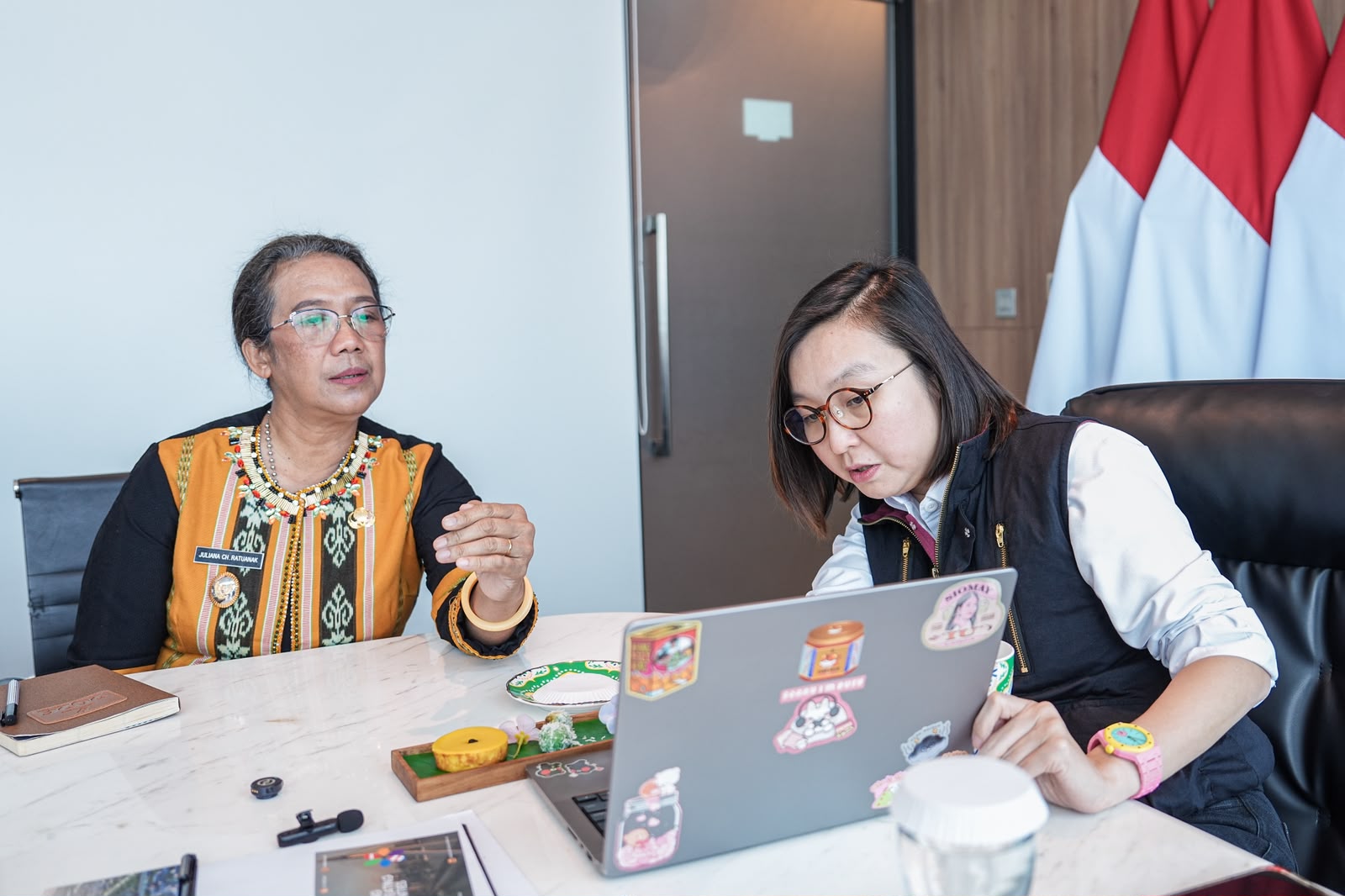 Deputy Minister of Creative Economy, Irene Umar, discusses the development of the creative economy potential of the Tanimbar Islands with Deputy Regent of the Tanimbar Islands, Juliana Chatarina Ratuanak, Jakarta, Monday (August 10, 2026).
“We need to simplify and map the wealth of creative economy potential in Tanimbar. For example, from the 47 weaving motifs, we can select the most distinctive and culturally significant motifs and bring their stories to life through storytelling so that they can be developed economically. In this way, cultural preservation and creative economy development can go hand in hand,” said the Deputy Minister of Creative Economy during a meeting with representatives of the Tanimbar Islands Regency Government at Autograph Tower, Jakarta, Monday (10/8).
The Deputy Minister emphasized that creative economy development in the Tanimbar Islands should focus on increasing added value and environmental sustainability (eco-friendly), rather than simply increasing production volume. The main strategy begins with curating leading products, strengthening cultural narratives, improving quality, and identifying the right market segments.
“The Tanimbar Islands do not need to attract as many people as possible. What we need are people who are willing to pay for an authentic experience of the Tanimbar Islands’ well-preserved nature and culture. Once the talents are ready, the Ministry of Creative Economy can also connect them with digital marketing training through programs such as Emak-Emak Matic. What matters most is ensuring that the richness of the sea and natural environment remains sustainable while continuing to benefit the local community,” the Deputy Minister added.
The Deputy Regent of the Tanimbar Islands presented the region’s agricultural, maritime, and cultural wealth, encompassing languages, traditional dances, music, folklore, carvings, woven crafts, and ikat textiles. Currently, Tanimbar ikat weaving plays a crucial role as the official traditional attire of Maluku Province, requiring further downstream development to generate tangible economic benefits for artisans.
 Doc. Bureau for Communication, Ministry of Creative Economy/Creative Economy Agency.
“We do not want the creative economy of the Tanimbar Islands to remain merely a cultural heritage to be preserved. We want to turn local potential into a source of added value, create employment opportunities, and improve the welfare of the community,” said the Deputy Regent of Tanimbar.
The Deputy Regent of Tanimbar added that the development of the creative economy in Tanimbar still faces several challenges, including limited market access, consistency in production and design, branding, packaging, financing, and connectivity due to the region’s geographical characteristics as an archipelago. Therefore, the local government is currently conducting data collection on creative economy practitioners, providing MSME development support, facilitating groups and communities, and developing more structured cultural promotions and events.
“Looking ahead, we certainly hope that we can work together to strengthen human resources, create pathways and opportunities for local potential to access markets, and help MSMEs upgrade and move up the value chain, so that everything ultimately contributes to the welfare of the people in the Tanimbar Islands,” concluded the Deputy Regent of Tanimbar.
Kiagoos Irvan Faisal
Head of the Bureau for Communication
Ministry of Creative Economy/Creative Economy Agency