Jakarta, October 6, 2026 — The Ministry of Creative Economy / Creative Economy Agency (Ekraf) supports the revision of the Copyright Law as a step toward strengthening protection for creators and copyright holders while adapting regulations to developments in digital technology.
 The Ministry of Creative Economy / Creative Economy Agency (Ekraf) supports the revision of the Copyright Law to strengthen protection for creators and copyright holders while providing legal certainty for creative industry players, Jakarta, Tuesday (6/10/2026).
This support was conveyed during a Level I Working Meeting on the discussion of the Copyright Bill with the Legislative Body (Baleg) of the House of Representatives of the Republic of Indonesia (DPR RI) and the government at the DPR RI Building in Jakarta, Tuesday (6/10). The revision of Law No. 28 of 2014 on Copyright is considered important to provide legal certainty for creative industry players, including in matters concerning royalty management, the use of works on digital platforms, artificial intelligence-based works, and the protection of journalistic works.
“Amendments to the Copyright Law that affect creators, intellectual property management, the commercialization of works, royalties, and the use of creative works are directly related to the development of the creative economy ecosystem,” said Deputy for Strategic Development of Creative Economy at the Ministry of Creative Economy, Mohammed Ali Berawi.
The Ministry of Creative Economy also considers intellectual property (IP) protection an essential part of developing the creative economy ecosystem. This policy is aligned with Law No. 24 of 2019 on the Creative Economy and the Creative Economy Master Plan (Rindekraf) 2026–2045.
Under Rindekraf, IP facilitation and the protection of creative outputs are two strategies intended to generate economic added value for creative economy practitioners. Both serve as important instruments for creating economic added value and supporting the achievement of Key Performance Indicators (KPIs) established by President Prabowo Subianto.
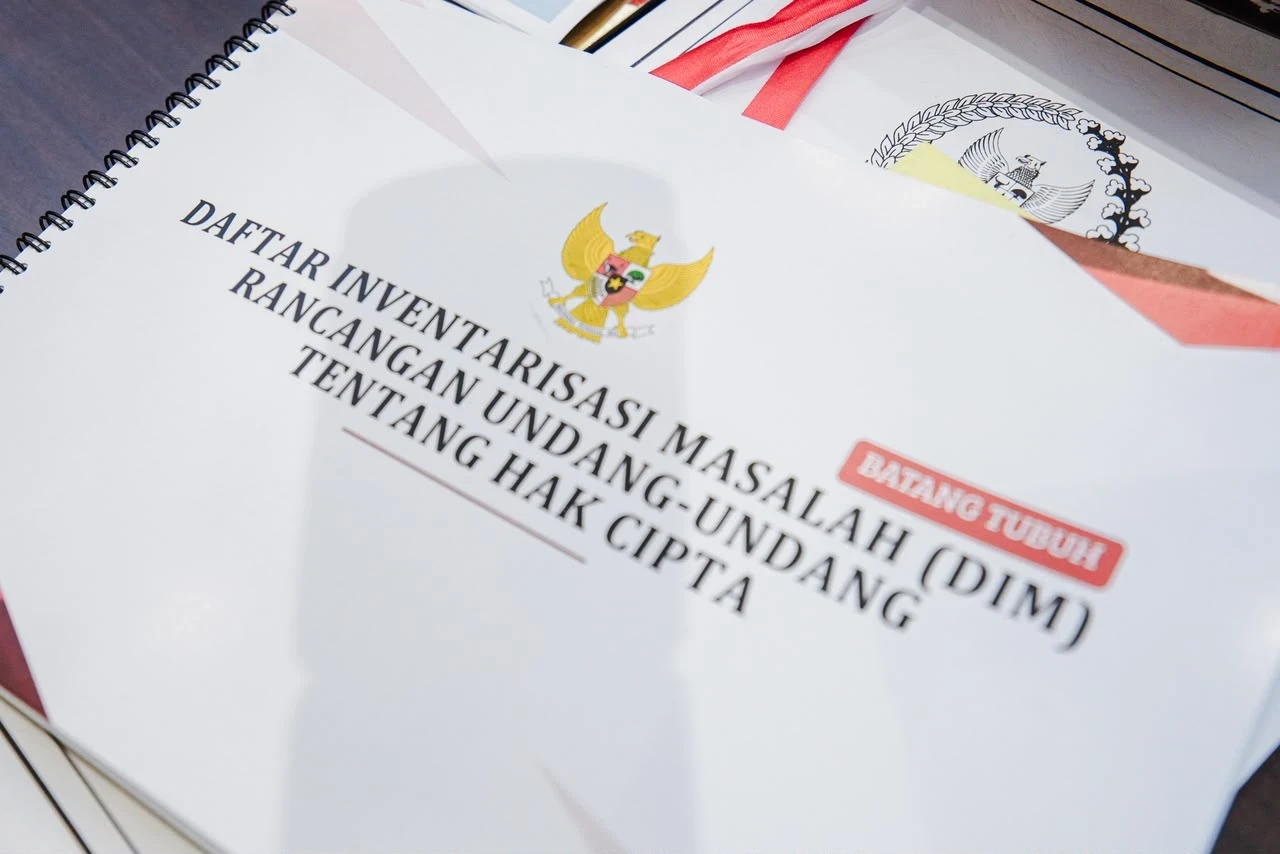
The Ministry of Creative Economy has been involved in preparing the Inventory List of Problems (DIM) for the Copyright Bill since the initial stage. A total of 56 inputs from the Ministry and its hexahelix partners have been compiled and grouped into three main issues: royalty governance and protection, copyright in the digital era, and economic rights in the organization of activities across creative economy subsectors.
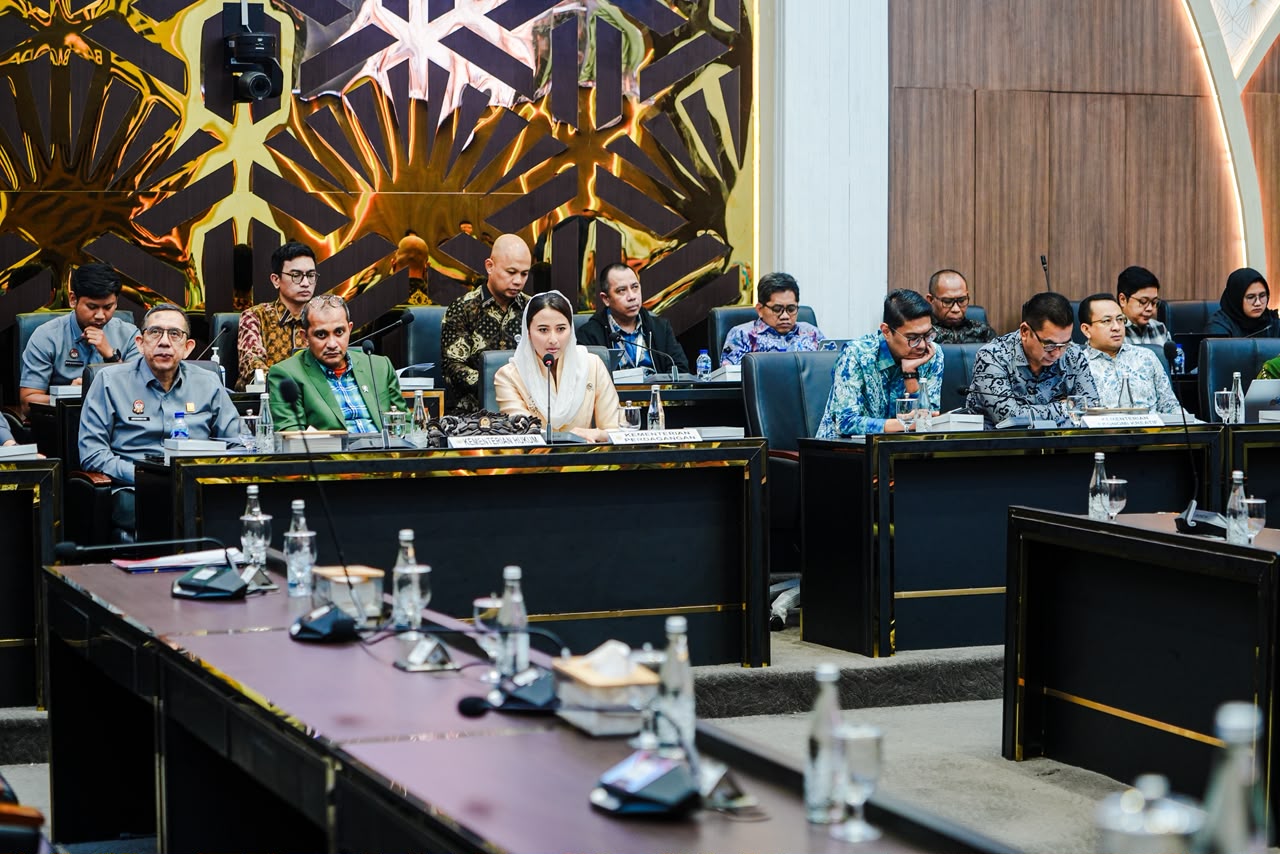 Photo: Bureau for Communication, Ministry of Creative Economy / Creative Economy Agency.
This involvement has been ongoing since March 2025 through various forums, ranging from focus group discussions (FGDs), the submission of studies, and interministerial and interagency discussions to public hearings and the submission of the jointly initialed DIM on July 28, 2026.
“We are committed to fully supporting and actively contributing to every stage of the Copyright Bill discussions with the government and the DPR RI. Given the rapid pace of digital development today, we hope that the revision of the Copyright Law will accelerate the growth of the creative economy ecosystem, protect creative works, and strengthen intellectual property governance,” Mohammed Ali added.
Following the submission of the Inventory List of Problems (DIM), compiled from ministries, institutions, academics, and associations, to the DPR RI, the government and the DPR RI are now prioritizing further discussions on the Copyright Law revision, covering more than 1,117 DIM items. The objective is to create a fair and competitive copyright ecosystem.
“The Legislative Body of the DPR RI and the government have agreed to set December 17, 2026, as the tentative deadline for completing the Level I discussions on the Copyright Bill. Further deliberations will be conducted transparently through a Working Committee (Panja) led by Martin Manurung, while continuing to provide open opportunities for meaningful public participation,” said Chairman of the DPR RI Legislative Body, Bob Hasan.
 Photo: Bureau for Communication, Ministry of Creative Economy / Creative Economy Agency.
The meeting was also attended by Deputy Speakers of the DPR RI Legislative Body Sturman Panjaitan, Ahmad Doli Kurnia Tandjung, Martin Manurung, and Iman Sukri; Deputy Minister of Law Edward Omar Sharif Hiariej; Deputy Minister of Trade Dyah Roro Esti Widya Putri; as well as representatives of the Ministry of Communication and Digital Affairs and the Ministry of Culture. Representing the Ministry of Creative Economy were Head of the Bureau for Legal Affairs, Mochammad Nurul Huda, and Director of Strategic Studies and Management, Agus Syarip Hidayat.
Kiagoos Irvan Faisal
Head of Bureau for Communication
Ministry of Creative Economy / Creative Economy Agency