
Jakarta, 29 April, 2026 – The Deputy Minister of Creative Economy/Deputy Head of the Creative Economy Agency, Irene Umar, explored collaboration with the Directorate General of Intellectual Property (DGIP) to strengthen synergy in the management and utilization of Intellectual Property (IP). The initiative aims to ensure that IP commercialization becomes an integral part of efforts to drive the growth of the national creative economy.
 The Deputy Minister of Creative Economy, Irene Umar, received an audience with the Directorate General of Intellectual Property (DGIP) at the Office of the Ministry of Creative Economy, Jakarta, on Wednesday (29/4/2026).
“The creative economy should not stop at the registration of intellectual property; we must ensure that these works can be commercialized and generate tangible economic value for their creators,” said the Deputy Minister during the meeting with DGIP representatives at the Office of the Ministry of Creative Economy on Wednesday (29/4).
The Ministry of Creative Economy, through its Directorate of Intellectual Property Facilitation Development, has collaborated with DGIP in facilitating IP registration processes for business players ready to scale up. This meeting discussed further collaboration opportunities to strengthen government synergy, particularly in enhancing public awareness of the importance of IP rights while encouraging their economic utilization.
“We see that DGIP can play a role beyond legal protection by collaborating in creative economy events to strengthen IP literacy, as well as presenting certified brands to be curated and showcased so that their commercialization can be further increased,” the Deputy Minister added.
The Director General of Intellectual Property, Hermansyah Siregar, welcomed the initiative and emphasized DGIP’s strategic role in ensuring legal protection of intellectual property. He also highlighted its contribution to IP data validation, while IP-based financing is now supported by assessors from the Indonesian Society of Appraisers (MAPPI), who play a role in supporting financing schemes for creative economy players.
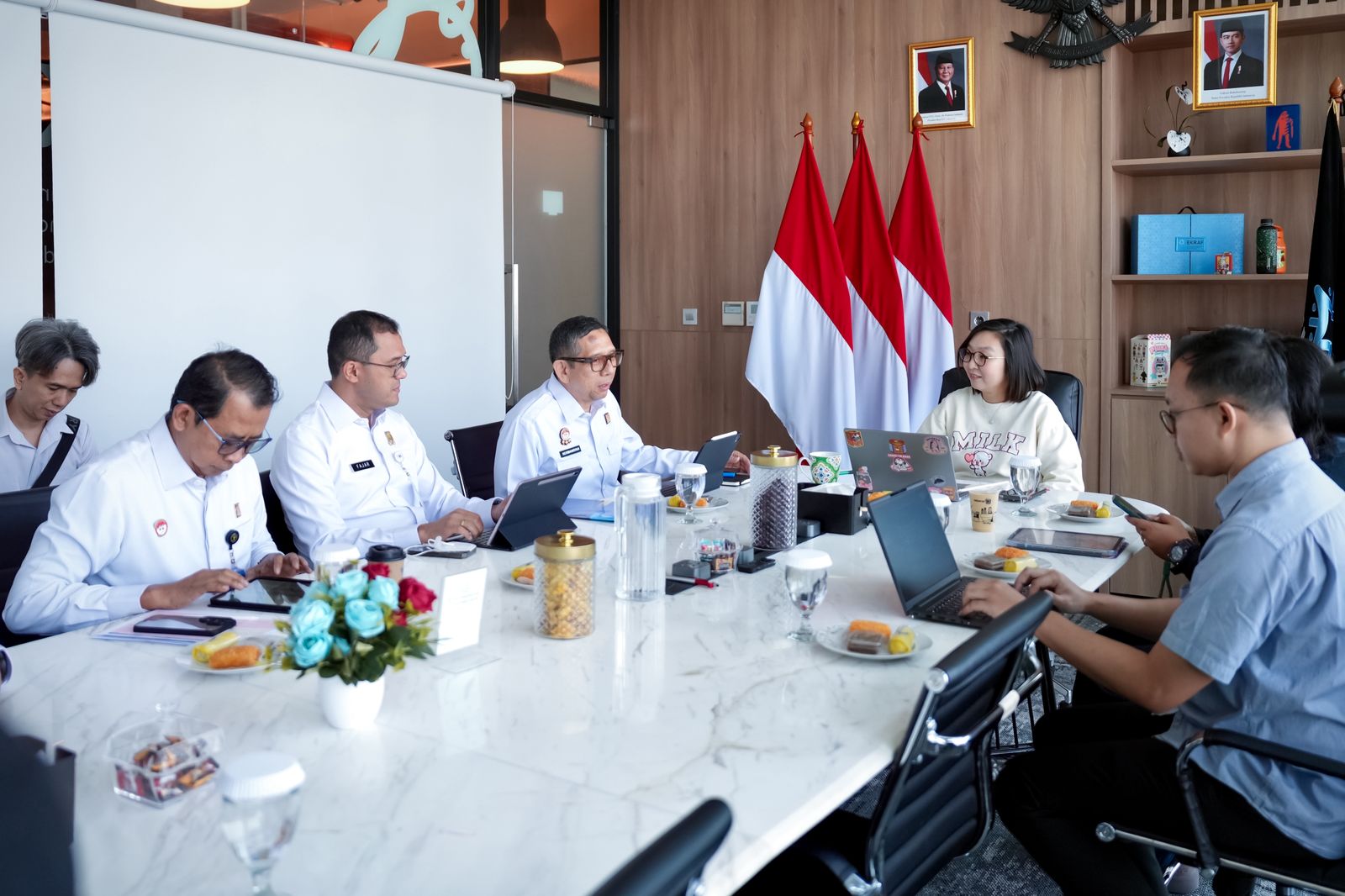 Documentation: Bureau for Communication of the Ministry of Creative Economy/Creative Economy Agency.
“We ensure protection by validating intellectual property data, while valuation and IP-based financing are supported by certified IP appraisers appointed by the Ministry of Creative Economy, thereby opening broader financing access for business players,” said Hermansyah.
In terms of protection, DGIP continues to promote the strengthening of various IP categories, including Geographical Indications (GI), which represent one of Indonesia’s key potentials. GI products possess distinctive characteristics based on their regions of origin and hold significant potential for high value-added competitiveness at the global level. These products can be further developed, among others, through showcases in creative economy events.
“In addition to trademarks, we also protect Geographical Indications, which are distinguished by elements such as soil nutrients and climate—for example, Gayo Coffee and Kulon Progo palm sugar. Indonesia currently has 249 Geographical Indications, the highest in ASEAN. Last year we ranked second after Thailand, and now we are striving to become the best. Collaboration with the Ministry of Creative Economy can open opportunities to enhance their added value and commercialization,” he added.
Also present at the meeting were the Director of Trademarks and Geographical Indications at DGIP, Fajar Sulaeman Taman; the Director of Copyright and Industrial Design at DGIP, Agung Damarsasongko; and the Director of Patents, Integrated Circuit Layout Design, and Trade Secrets at DGIP, Andrieansjah.
Kiagoos Irvan Faisal
Head of Bureau for Communication
Ministry of Creative Economy/Creative Economy Agency


