Jakarta, April 28, 2025 – Deputy Minister of Creative Economy Irene Umar spoke about the role of the Ministry of Creative Economy as one of the key pillars of the national economy. Deputy Minister of Creative Economy Irene described the Ministry of Creative Economy as a “matchmaking agency.” How so?
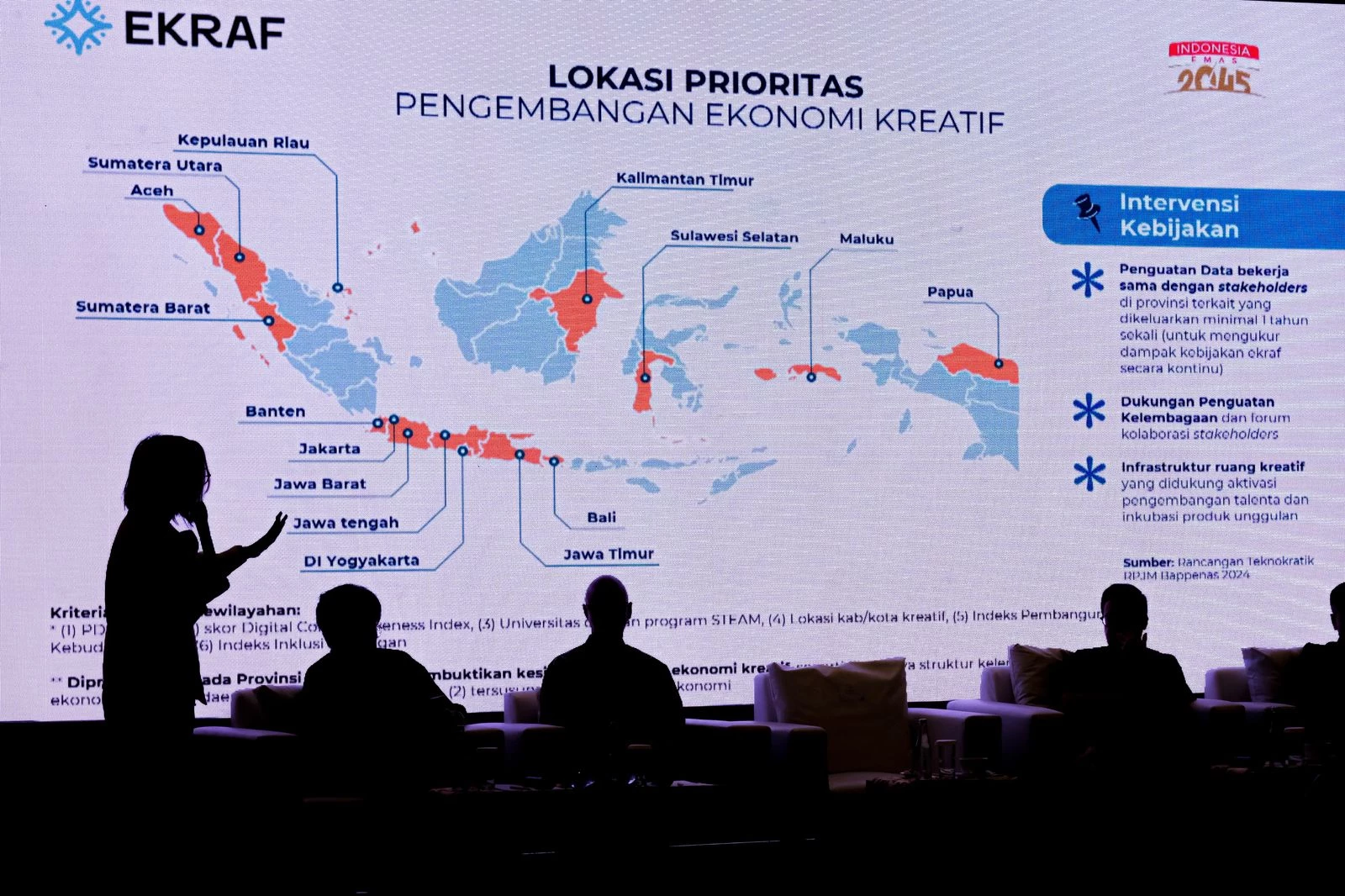
Wamenekraf Irene Umar dorong sinergi hilirisasi untuk kembangkan ekraf daerah, Hotel DoubleTree by Hilton, Jakarta, Senin (28/4/2025).
Deputy Minister of Creative Economy Irene began by presenting several data points from Statistics Indonesia (BPS) processed by the Ministry of Creative Economy. The data showed that the contribution of the creative economy to the national Gross Domestic Product (GDP) grew from IDR 700 trillion in 2013 to more than IDR 1,500 trillion in 2024.
In addition, the data also revealed that the creative economy has boosted employment from 14 million jobs in 2013 to 26.47 million in 2024. Export value also rose significantly, reaching USD 25.10 billion in 2024, compared to USD 15 billion in 2013.
“The creative economy is now recognized as the New Engine of Growth for Indonesia’s economy. The hope is that this growth can take deeper root across the regions,” said Deputy Minister Irene in her remarks at the National Conference entitled Enhancing the Added Value of Regional Advantages through Synergy in Downstreaming Agriculture, Tourism, and Creative Economy to Support Deepening of the Financial Services Market organized by the Financial Services Authority (OJK) at DoubleTree by Hilton, Jakarta, on Monday, April 28, 2025.
Deputy Minister of Creative Economy Irene emphasized that Ministry of Creative Economy presence aligns with the vision of President Prabowo Subianto and Vice President Gibran Rakabuming Raka as outlined in the third Asta Cita, which calls for the creation of quality jobs, the development of the creative industry, and the strengthening of national infrastructure. According to Deputy Minister Irene, the Ministry of Creative Economy serves as a Subject Matter Expert in formulating policies based on the real conditions of the industry, utilizing a hexahelix approach.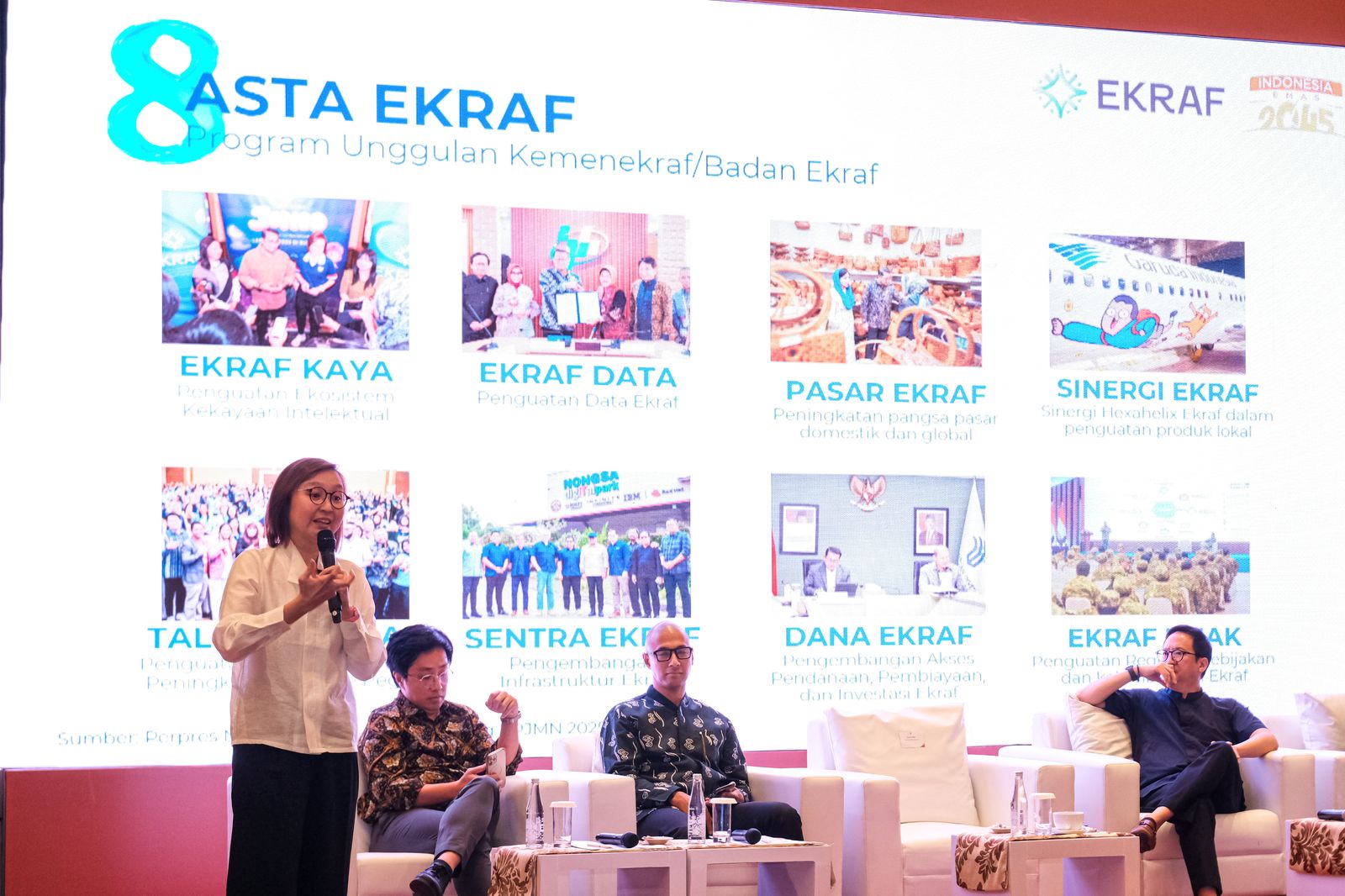
Doc. Communication Bureau of Ministry of Creative Economy/Creative Economy Agency.
In the first year of the current administration, the Ministry of Creative Economy has focused on building a strong foundation. Deputy Minister of Creative Economy Irene highlighted one initiative, the creation of policies and implementation of training programs such as Financial Management One-on-One to support financial literacy and management for creative economy players.
“In short, the creative economy is a matchmaking agency, because the right match can change lives for the better,” explained Deputy Minister of Creative Economy Irene.
The “matchmaking” referred to by Deputy Minister of Creative Economy Irene is about connecting creative economy players with the right partners and supporters. This approach, she continued, is expected to drive positive change within the national creative ecosystem.
In expanding access to financing, the Ministry of Creative Economy collaborates with the Financial Services Authority (OJK) through an Intellectual Property (IP)-based collateral scheme, as stipulated in Government Regulation No. 24 of 2022 on the Creative Economy and OJK Circular Letter No. S-12/D.03/2022.
Doc. Communication Bureau of Ministry of Creative Economy/Creative Economy Agency.
Deputy Minister of Creative Economy Irene was accompanied by Director for Access to Finance, Funding, and Investment Development at the Ministry of Creative Economy, Anggara Hayun Anujuprana. Other speakers at the conference included Ben Soebiakto (CEO of PT Benson Kapital Indonesia), Marcel Siahaan (Chair of the National Collective Management Organization/LMKN), and Nicko Widjaja (CEO of BRI Ventures).
Kiagoos Irvan Faisal
Acting Head of Bureau for Communication
Ministry of Creative Economy


