
Jakarta, February 21, 2025 – Deputy Minister of Creative Economy/Deputy Head of the Creative Economy Agency, Irene Umar, expressed support for LAKON Indonesia in opening opportunities for local fashion brands to overcome challenges and penetrate the global market. Irene hopes that fashion entrepreneurs, particularly batik artisans, will continue to produce batik consistently, given Indonesia's fashion market holds great potential for business development.
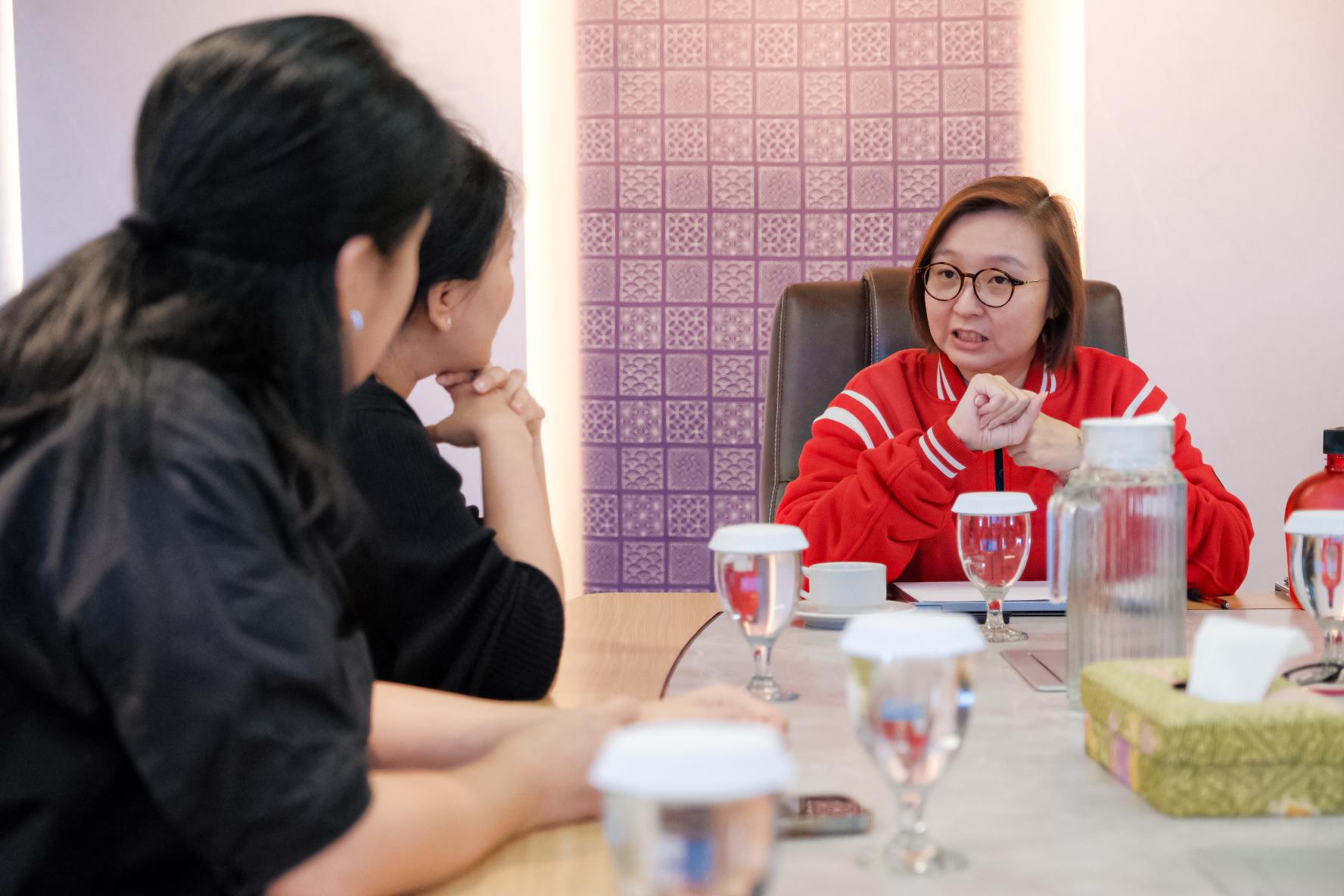
 Dok. Biro Komunikasi Kemenekraf/Bekraf - Wamenekraf berdialog untuk membentuk ekosistem fesyen yang terstruktur dan berkepanjangan bersama LAKON Indonesia saat audiensi di Gedung Pesona Film Indonesia, Jakarta, Jumat (21/02/25).
"Today, we want to discuss and learn from LAKON Indonesia, considering that the fashion subsector evolves dynamically every year, and global market competition is becoming increasingly fierce. We aim to gain as much insight as possible from experts who have built a structured fashion ecosystem like this. It’s more about how to change people’s mindset," said Irene during an audience at Gedung Pesona Film Indonesia, Jakarta, on Friday, February 21, 2025.
LAKON Indonesia plays a crucial role in empowering fashion entrepreneurs, especially batik artisans, by helping them expand their markets beyond Indonesia. One of its flagship programs, PINTU, is a bilateral initiative that supports fashion entrepreneurship by collaborating with public sector partners to create economic development opportunities. The new perspective within the fashion creative economy subsector not only focuses on production but also emphasizes skills development and a deeper understanding of Indonesia’s traditional textiles (wastra Nusantara).
 Dok. Biro Komunikasi Kemenekraf/Bekraf
"This is an opportunity for aggregators like LAKON Indonesia to curate and identify the necessary steps for incubation preparation. The goal is not only to create job opportunities but, more importantly, to help artisans or batik makers understand the business and marketing aspects of their products. If we want to create a pilot project, we just need to skill up, and later, we can collaborate further with local governments that are ready with their fashion products or batik artisans to implement a sustainable program," said Irene, who was accompanied by Romi Astuti, Director of Fashion.
On the same occasion, representatives of LAKON Indonesia emphasized that their focus extends beyond training; they also work on improving the supply and demand system. As part of the fashion ecosystem, LAKON Indonesia aims to uplift artisans from various regions to preserve local culture.
 Dok. Biro Komunikasi Kemenekraf/Bekraf
"What LAKON Indonesia is doing is building an ideal ecosystem so that artisans can sustain themselves and continue preserving cultural heritage. Artisans need support because their knowledge is still limited. They require training to stay motivated in their craft. Furthermore, regenerating batik artisans is a major challenge, as younger generations are less interested in this profession. Moving forward, we need to create a pilot project together to help batik artisans shift their mindset. If MSMEs (Micro, Small, and Medium Enterprises) want to scale up, they must also achieve better income," said Thresia Mareta, Founder of LAKON Indonesia.
Kiagoos Irvan Faisal
Acting Head of the Communications Bureau
Ministry of Creative Economy / Creative Economy Agency


