Jakarta, 6 March, 2026 – Deputy Minister of Creative Economy/Deputy Head of the Creative Economy Agency Irene Umar spoke about collaboration focused on innovation and concrete actions for Indonesia’s creative economy, including challenges and support for content creators, musicians, and talents across various creative economy subsectors. She believes that every creative warrior can grow through social media that reaches international audiences.
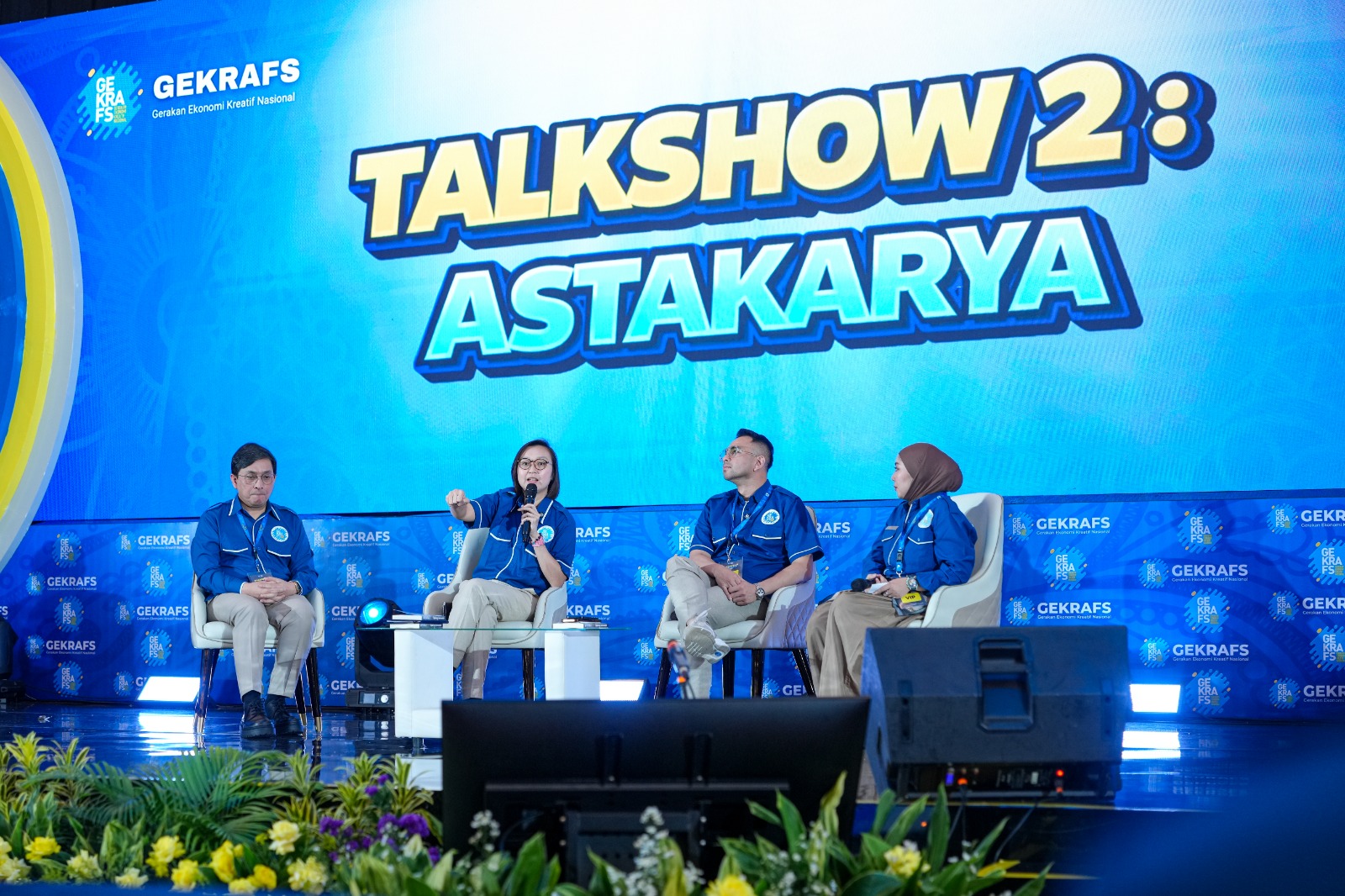 Irene Umar delivered the remarks while speaking at the Talkshow ASTAKARYA held at Nusantara Ballroom, NT Tower, Jakarta, on Friday (March 6, 2026).
“The question is no longer about capital or connections, but how strong our willingness is to start striving independently as creative economy warriors. If we truly want to create, there will always be a way to grow—especially in today’s digital era that no longer has limitations in access to funding and networks,” said Irene Umar during the Talkshow ASTAKARYA at Nusantara Ballroom, NT Tower, East Jakarta, on Friday, March 6, 2026.
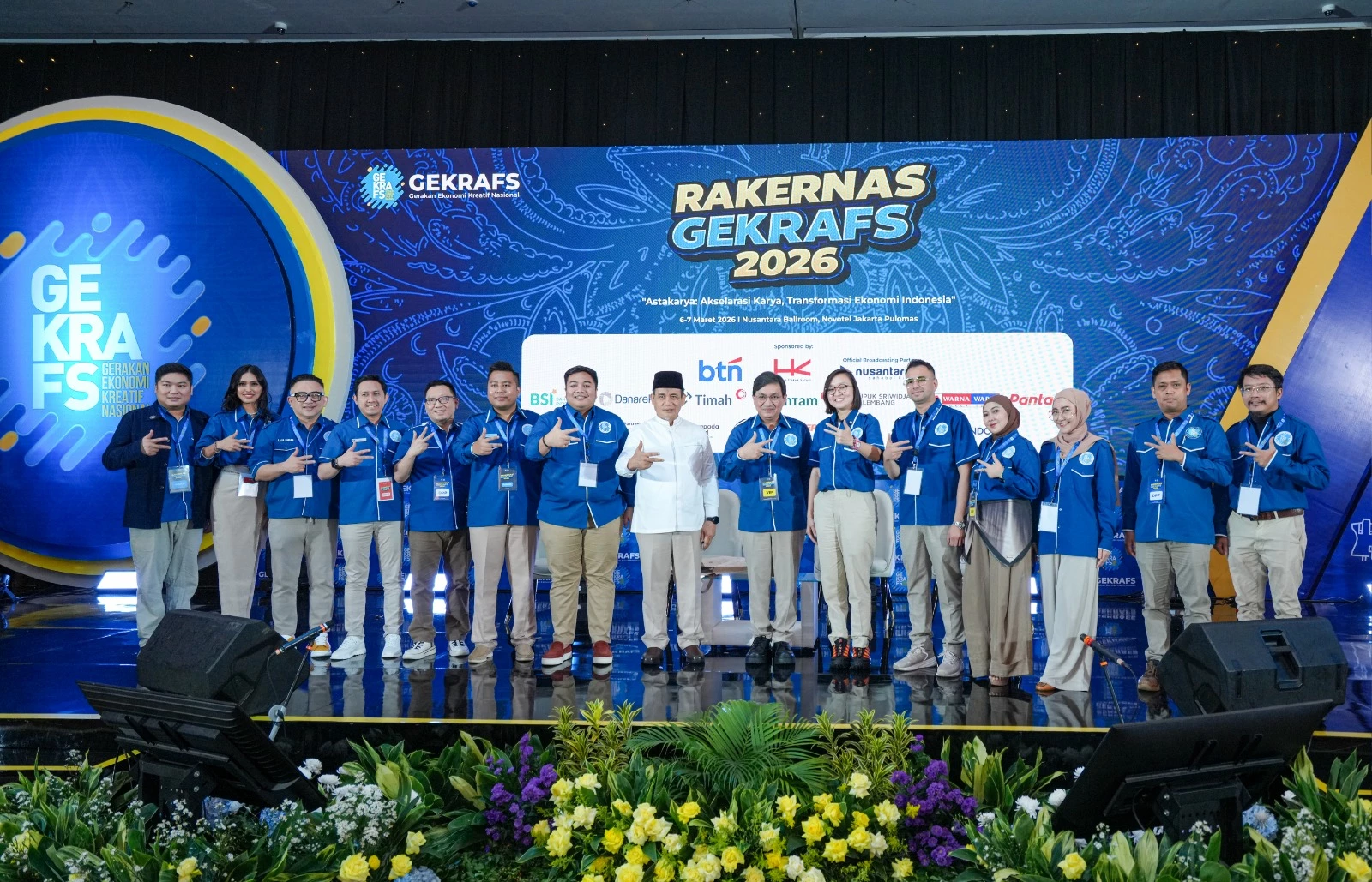
The talk show was part of the 2026 National Working Meeting (Rakernas) of Gerakan Ekonomi Kreatif Nasional (GEKRAFS), carrying the theme “Astakarya: Accelerating Works, Transforming Indonesia’s Economy.” In the discussion, the speakers emphasized the importance of creativity that goes beyond ideas and can be developed into sustainable economic value through collaboration and the use of digital technology.
 Doc. Bureau of Communications, Ministry of Creative Economy / Creative Economy Agency
“The task of the Ministry of Creative Economy is to provide a stage for creative economy warriors to showcase what they have. One example is that we have launched Ekraf Hunt, where creative economy players can upload their portfolios and manage them through their own accounts so they become part of a centralized database. With the platforms and networks we are building, Indonesian creative talents can be more easily discovered and collaborate with various stakeholders,” explained Irene Umar, who also serves as Deputy Chair of the Expert Council of Gerakan Ekonomi Kreatif Nasional.
“I would like to challenge all friends in Gerakan Ekonomi Kreatif Nasional to do something anti-mainstream or out of the box once a month, so there will be more collaboration between local and national creators to produce creativity beyond conventional thinking, while still encouraging the growth of Indonesia’s creative economy,” added Irene Umar.
Echoing the statement by Irene Umar, Yovie Widianto, Presidential Special Envoy for Creative Economy and Chair of the Expert Council of Gerakan Ekonomi Kreatif Nasional, emphasized that creativity often emerges from limitations and challenges. He also shared his career journey, having worked in Indonesia’s music industry for more than four decades.
 Doc. Bureau of Communications, Ministry of Creative Economy / Creative Economy Agency.
“I have been creating music since 1983 and have spent more than 40 years with Kahitna. I have always believed that creativity often emerges under limited or pressing conditions, like a writer racing against a deadline. At the same time, I have embraced technological advancements, which make the inevitability of making music continue to grow,” added Yovie Widianto.
Meanwhile, Raffi Ahmad, Presidential Special Envoy for Youth Development and Arts Workers as well as Vice Chair of the Central Executive Board of Gerakan Ekonomi Kreatif Nasional, stated that creativity must be directed to become a business strength so that creative economy players can compete in the global market. According to him, creativity needs to be protected through stronger intellectual property rights and professional management.
“Creativity is indeed an intangible value. No matter how creative we are, if we cannot compete in the business world, we will lose. Therefore, we must safeguard our Intellectual Property (IP) so it can be protected—including copyrights and royalties—so that the businesses we manage can keep the wheels of the economy moving,” said Raffi Ahmad.
 Doc. Bureau of Communications, Ministry of Creative Economy / Creative Economy Agency.
Raffi Ahmad emphasized the importance of cross-generational and cross-sector collaboration within the creative economy ecosystem. According to him, success in the creative industry does not come from individuals alone but from the strong teamwork built within creative teams.
“In the creative world, no one becomes great because of a single person. There is no superman—what exists is a super team. Collaboration allows creativity to grow and endure. Creativity is not just a work of art, but also the future of the nation,” added Raffi Ahmad.
 Doc. Bureau of Communications, Ministry of Creative Economy / Creative Economy Agency
Moderated by Temmy Sumarlin, the talk show became increasingly interactive through a question-and-answer session with representatives from the regional branches of Gerakan Ekonomi Kreatif Nasional (GEKRAFS). The discussion explored topics ranging from how to turn hobbies into professions to support for local talents and musicians. Collaboration was highlighted as a strategic key to stimulating creativity—both on social media and in real life—resulting in impactful creative content.
Kiagoos Irvan Faisal
Head of the Communications Bureau
Ministry of Creative Economy / Creative Economy Agency


