Jakarta, 16 December 2025 — Legal certainty and good governance are fundamental foundations for building a healthy, innovative, and globally competitive Indonesian startup ecosystem. This was the main highlight of the second panel discussion at EKRAF Summit 2025, which emphasized that startup success, including in the smart mobility sector, does not rely solely on technology, but also on a supportive ecosystem with clear regulations, consistent law enforcement, and strong corporate governance.
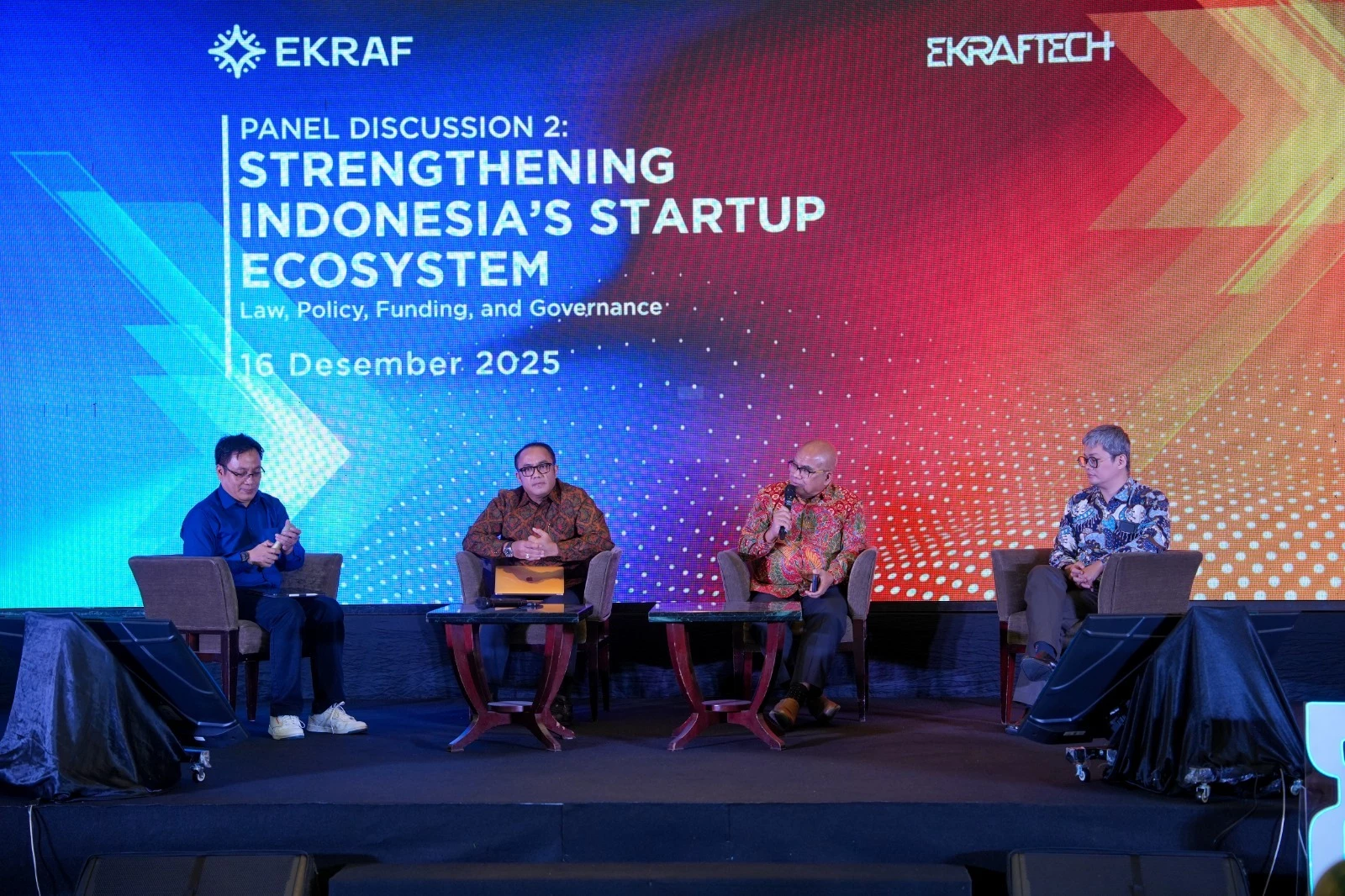
 Diskusi panel kedua dengan tajuk Strengthening Indonesia's Startup Ecosystem: Law, Policy, Funding and Governance dalam acara Ekraf Tech Summit 2025 yang berlangsung di Hotel Pullman, Jakarta, Selasa (16/12/2025).
Synergy among regulators, investors, and startup players was deemed vital to creating a secure investment climate and encouraging sustainable creative economy growth, thereby enhancing global competitiveness and strengthening the national economy.
Senior Expert Prosecutor at the Attorney General’s Office of the Republic of Indonesia, M. Idris F. Sihite, underscored the importance of legal certainty in fostering innovation courage. “Startups must be able to innovate without fear of facing disproportionate legal risks. A healthy ecosystem requires clear law enforcement, free from conflicts of interest, bribery, or extortion,” said Idris.
 Dok. Biro Komunikasi Kementerian Ekraf/ Badan Ekraf
Meanwhile, Chair of the Tax Supervisory Committee at the Ministry of Finance, Amien Sunaryadi, provided perspectives from the fiscal regulation and governance standpoint. “Startups must remain innovative, but the ecosystem must also be safe for them. Funding decisions—whether from the government or the private sector—should be treated as business decisions, as long as there is no malicious intent or conflict of interest. Business risk is natural, and what matters most is the presence of clear governance and regulations to ensure business sustainability,” he said.
On the other hand, Head of Regulatory and Logistech at Amvesindo, Even Alex Chandra, emphasized the need for a long-term perspective in startup investment. According to him, innovation requires high costs and carries significant risks; however, with proper governance, such innovation can generate sustainable economic value, create new job opportunities, and enhance the competitiveness of startups in the global market.
Lastly, Deputy for Digital and Technology at the Ministry of Creative Economy, Neil El Himam, added that the government actively promotes a startup ecosystem that supports scale-up and sustainability. “We focus on strengthening the startup ecosystem through adaptive regulations, governance development, as well as support for market access and industry collaboration. Through various acceleration, incubation, and strategic partnership programs, Indonesian startups can compete globally and become new engines of growth,” said Neil.
 Dok. Biro Komunikasi Kementerian Ekraf/ Badan Ekraf
The panel reaffirmed that developing a startup ecosystem is not only about technology, but also about legal certainty, good governance, and a supportive environment. Through synergy among regulators, investors, and startups, Indonesia remains optimistic about creating a sustainable, innovative, and globally competitive ecosystem.
Kiagoos Irvan Faisal
Acting Head of the Bureau for Communication
Ministry of Creative Economy / Creative Economy Agency


