
Jakarta, June 17, 2025 — Deputy Minister of Creative Economy, Irene Umar, affirmed the significant potential of Indonesia's creative economy, driven by its young population, to become the new engine of growth. She highlighted that collaboration with other countries, including the United States, is key to accelerating the sustainable growth of Indonesia’s creative industry.
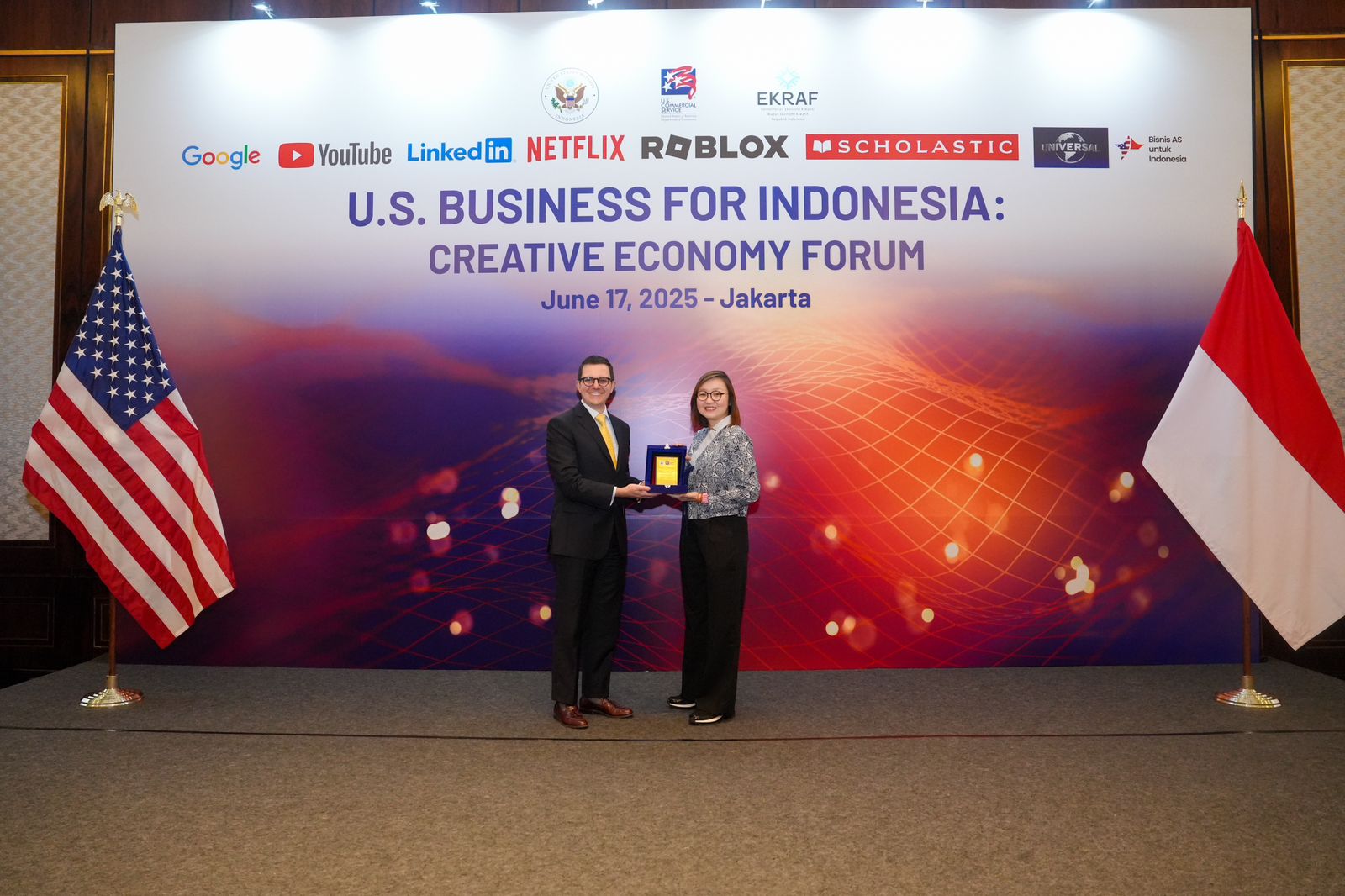
“Creative economy is the new engine of growth for Indonesia, and we are optimistic that strategic partnerships like this will drive real acceleration,” said Deputy Minister Irene during her keynote speech at the U.S.–Indonesia Creative Economy Forum, held at the Four Seasons Hotel, Jakarta, on Tuesday, June 17, 2025.
The forum, co-hosted by the U.S. Embassy in Jakarta and the U.S.–ASEAN Business Council, brought together Indonesian creative talents and U.S. creative industry leaders to explore cross-sector collaboration in areas such as film, gaming, animation, design, and technology-based publishing.
Indonesia’s creative economy—boosted by its dynamic youth population and growing internet penetration—has emerged as a major contributor to national economic growth. Strategic subsectors such as music, fashion, gaming, and digital platforms are playing a crucial role in job creation and GDP contribution. At the same time, the U.S., a global leader in innovation, technology, and digital content, is well-positioned to strengthen creative economy partnerships with Indonesia.
“We believe that the partnerships we foster today will address global challenges and amplify the impact of Indonesia’s creative industry. From YouTube to Roblox, Netflix to Scholastic—these platforms can be bridges for local talent to showcase and compete on the world stage,” Deputy Minister Irene added.
She also emphasized the importance of connecting local creative talents with global players, many of whom are already part of daily life in Indonesia. Creative subsectors like gaming, film, and publishing were highlighted as key areas for joint development, particularly given their alignment with emerging technologies such as AI and blockchain, alongside the high consumption of digital content in Indonesia.
The Indonesian government encouraged an inclusive, collaborative approach where local talents—especially youth—are not only consumers but also creators within the global creative ecosystem. With the right support and mentorship, Deputy Minister Irene believes Indonesia’s youth can become active contributors, even before entering the formal workforce.
“Don’t be afraid to show and express what you have inside. Your work matters. If you’re scared, find a friend to move forward together,” she encouraged.
“We are opening the doors wide for international partners who want to grow together with Indonesia’s creative industry. It’s time the world recognizes and celebrates the work of our nation’s young creators,” she concluded.

Meanwhile, Jason Rebholz, Acting Deputy Chief of Mission at the U.S. Embassy in Jakarta, emphasized that the creative economy is an emerging strategic pillar in U.S.–Indonesia bilateral cooperation. He noted that the forum offers new opportunities for U.S. companies to better understand the Indonesian market and build concrete partnerships.
“For 75 years, we’ve been strong economic partners. Now, through the creative economy, we seek new ways to collaborate,” said Jason.
Deputy Minister Irene was accompanied by Cecep Rukendi (Deputy for Strategic Development of the Creative Economy), Muhammad Neil El Himam (Deputy for Digital and Technology Creativity), and Agustini Rahayu (Deputy for Media Creativity).
Kiagoos Irvan Faisal
Acting Head of Bureau for Communication
Ministry of Creative Economy / Creative Economy Agency


