
Jakarta, 17 June 2026 – Minister of Creative Economy/Head of the Creative Economy Agency, Teuku Riefky Harsya, emphasized the importance of the creative economy sector in safeguarding Southeast Asia’s strategic autonomy amid intensifying global power competition. Strengthening the creative economy has become increasingly relevant as economic value shifts from physical assets to intangible assets driven by Intellectual Property (IP), digital content, and technological capabilities.
 Minister of Creative Economy, Teuku Riefky Harsya, delivers a keynote address at the Southeast Asia Lecture Series titled “Between Giants: SEA’s Strategic Autonomy in an Era of Great Power Competition” during the Asia Economic Summit 2026 at Fairmont Jakarta on Wednesday (17 June 2026).
“The challenge facing Asian countries, including Indonesia, is maintaining competitiveness within a global ecosystem increasingly driven by innovation, technology, and talent. Therefore, under the leadership of President Prabowo Subianto, Indonesia has positioned the creative economy as one of the new engines of national economic growth to foster job creation, entrepreneurship, innovation, and cultural diplomacy,” said Minister Teuku Riefky Harsya during his keynote address at the Southeast Asia Lecture Series titled ‘Between Giants: SEA’s Strategic Autonomy in an Era of Great Power Competition’ at the Asia Economic Summit (AES) 2026 held at Fairmont Jakarta on Wednesday (17/6).
Indonesia’s creative economy sector demonstrated strong performance in 2025, recording creative economy GDP growth of 6.86 percent—1.75 percentage points higher than the national economic growth rate. This achievement was supported by creative economy exports valued at USD 31.94 billion and investment realization reaching IDR 183 trillion. In addition, the sector employed more than 27 million workers nationwide, predominantly productive young people, making it one of the country’s strategic sectors for driving innovation- and talent-based economic growth.
 Photo: Bureau of Communications, Ministry of Creative Economy/Creative Economy Agency.
Asia Economic Summit (AES) 2026 is a closed-door high-level forum attended by approximately 250 government leaders, CEOs, investors, and policymakers, with participation from more than 10 countries, 30 major corporations, and 100 organizations. The forum aims to generate tangible collaboration between the public and private sectors. Organized by Tech in Asia, a member of Singapore-based SPH Media, the summit has consistently hosted interactive agendas since 2010, including keynote speeches, panel discussions, and Q&A sessions focusing on technology, startups, and Asia’s digital economy policies.
During the forum, the Minister stressed that regional strategic autonomy can be strengthened through the optimization of intangible assets such as intellectual property rights and local talent to address global geopolitical disruptions. Through collaboration with financial institutions, regulators, and the development of IP valuation frameworks, the government is working to address financing challenges and enable digital assets to serve as strong collateral and funding instruments at the national level.
“For the creative economy, intellectual property is a strategic economic asset capable of generating long-term value, creating jobs, attracting investment, and strengthening competitiveness. By enhancing regional cooperation, cross-border partnerships, and support for creators and innovators, we can contribute to a broader foundation for building a connected, integrated, and innovative creative economy ecosystem across Southeast Asia,” explained Teuku Riefky.
At the regional level, the Ministry of Creative Economy is collaborating with the World Intellectual Property Organization (WIPO) through the Creative Economy Data Model (CEDM) initiative to strengthen ASEAN’s digital ecosystem database. This strategic effort aims to optimize the region’s young population and cultural diversity in order to build a more integrated, innovative, and globally competitive Southeast Asian market.
To support this transformation, the Government of Indonesia, through the Ministry of Communication and Digital Affairs (Komdigi), is currently preparing a range of artificial intelligence (AI)-related policies, including the development of AI Ethics Guidelines and a National AI Roadmap. These initiatives are intended to ensure that the adoption of AI remains ethical, inclusive, and beneficial to society as a whole.
On the same occasion, the Minister invited all global delegates attending AES 2026 to continue these strategic collaborations at the World Conference on Creative Economy (WCCE) 2026, which will be held from 21–23 October 2026 at JIExpo Kemayoran, Jakarta. Addressing critical issues such as digital platforms, AI, and IP, WCCE 2026 is expected to serve as an important continuation of discussions initiated at AES 2026, contributing to the formulation of global agendas and strengthening an inclusive and sustainable creative economy ecosystem for the future.
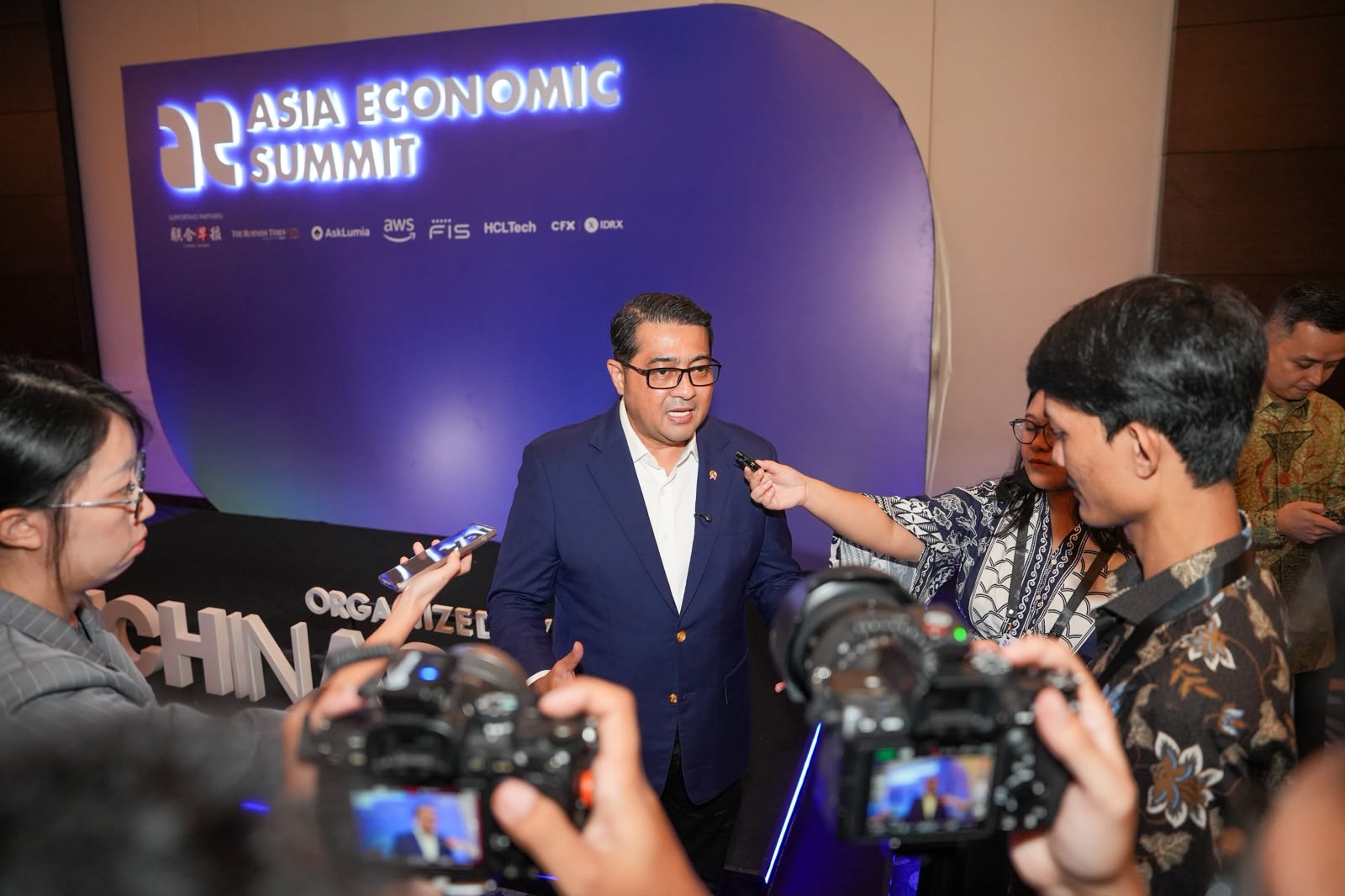 Photo: Bureau of Communications, Ministry of Creative Economy/Creative Economy Agency.
Overall Lead and Editor-in-Chief of Tech in Asia, Terence Lee, noted that this year’s edition reflects the growing need for Southeast Asian countries to strengthen coordination in addressing global challenges.
“From economic resilience and AI infrastructure development to capital flows and regional collaboration amid ongoing global uncertainty,” said Terence Lee.
The Minister was accompanied at the international forum by Deputy for Digital Creativity and Technology, Muhammad Neil El Himam; Acting Director of Marketing System Development and Institutional Relations, Aulia Chloridiany; Director of Emerging Digital Technologies, Dandy Yudha; and Ministerial Expert Staff, Gemintang K. Mallarangeng.
Kiagoos Irvan Faisal
Head of Bureau of Communications
Ministry of Creative Economy/Creative Economy Agency


