
Jakarta, June 24, 2026 – Minister of Creative Economy/Head of the Creative Economy Agency, Teuku Riefky Harsya, has called on regional governments to strengthen the implementation of creative economy policies across Indonesia. Through the dissemination of Ministerial Regulation of the Ministry of Creative Economy No. 9 of 2025 on the Administration of the Creative Economy in the Regions, the government aims to establish a shared understanding and accelerate policy implementation at both provincial and regency/city levels.
 Menteri Ekonomi Kreatif, Teuku Riefky Harsya, memberikan arahan dalam kegiatan Penguatan Kelembagaan dan Sosialisasi Permenekraf Penyelenggaraan Ekraf di Daerah secara hybrid, Jakarta, Rabu (24/6/2026).
“The creative economy is no longer a complementary sector in national development. It is one of the new engines of economic growth, and that growth begins in the regions. Therefore, strong ecosystems and institutions are needed so that local talents, innovations, and creative potential can develop in a structured and sustainable manner,” said Minister Teuku Riefky during the hybrid dissemination event on Wednesday (June 24).
Ministerial Regulation No. 9 of 2025, enacted on December 17, 2025, serves as a guideline for regional governments in administering the creative economy. The regulation covers various aspects, including subsector development, planning, ecosystem strengthening, intellectual property facilitation, infrastructure, funding and financing, incentives, as well as guidance and supervision.
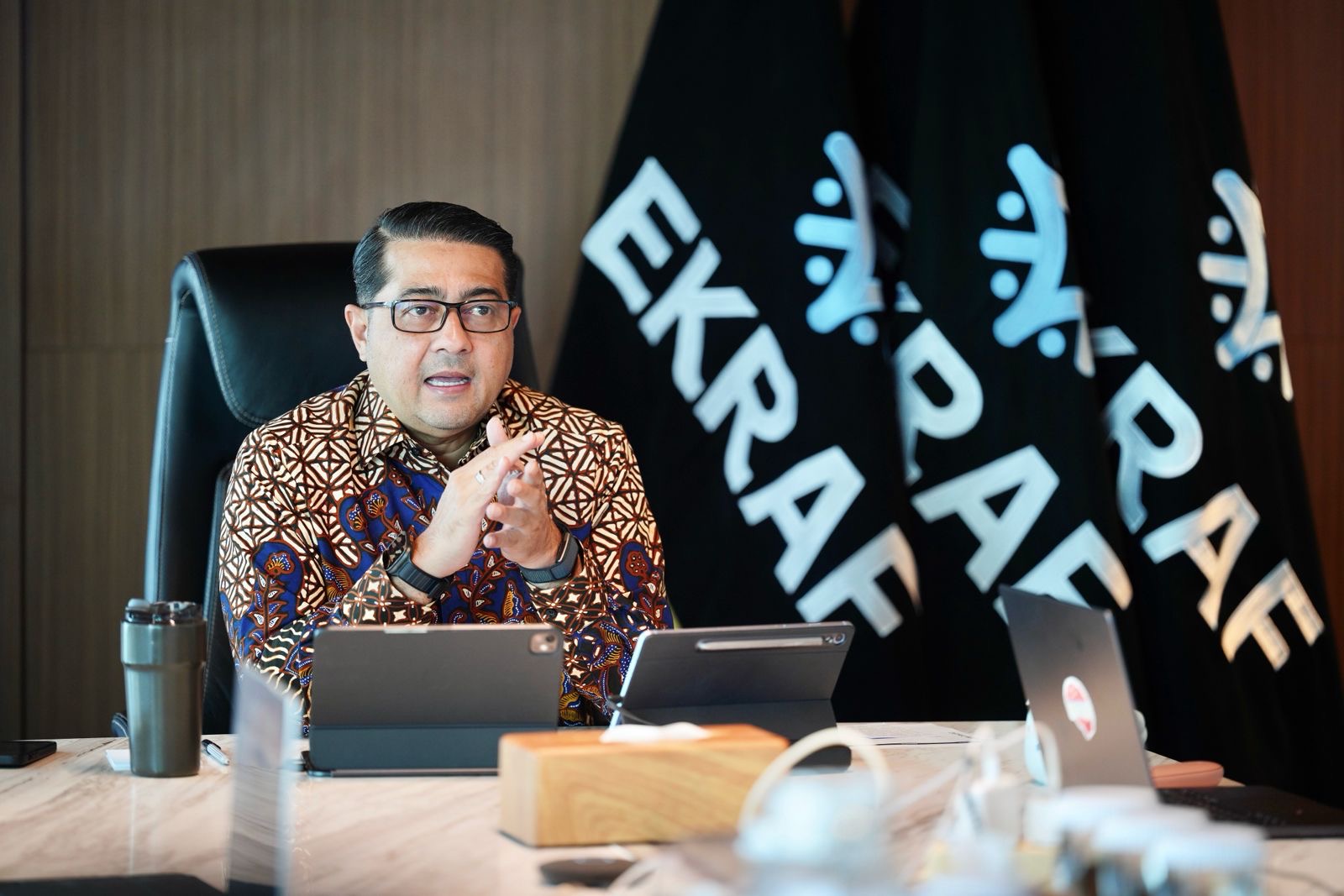 Photo: Bureau of Communications, Ministry of Creative Economy/Creative Economy Agency.
The event was attended by more than 1,000 participants, including provincial, regency, and city regional secretaries, regional agencies responsible for creative economy affairs, representatives from the Ministry of Home Affairs, and officials from the Ministry of Creative Economy. The forum also provided technical guidance on the implementation of the regulation while allowing regional governments to share challenges and feedback regarding creative economy development in their respective areas.
The Minister emphasized that successful creative economy development requires cross-sector collaboration to transform regional potential into economic strength. Through synergy between the Ministry of Home Affairs and regional governments, creative economy development is expected to become more structured and integrated into broader development programs.
Through the implementation of this regulation, regional governments are encouraged to integrate the creative economy into their development planning documents and strengthen collaboration with the Ministry of Creative Economy in implementing strategic programs such as Creative Villages, Creative Hubs, Creative by Indonesia, Government Assistance Programs, and Institutional Strengthening and Creative Economy Diplomacy initiatives aimed at reinforcing regional creative ecosystems.
 Photo: Bureau of Communications, Ministry of Creative Economy/Creative Economy Agency.
To date, institutional development of the creative economy across Indonesia has shown encouraging progress. A total of 13 provinces have incorporated creative economy nomenclature into their regional organizational structures, while several other provinces and regencies/cities are currently in the process of aligning their policies accordingly.
“When the creative economy grows in the regions, jobs will be created in the regions, talents will flourish in the regions, and community welfare will improve from the regions. Let us make creative economy development a shared investment toward realizing Golden Indonesia 2045,” the Minister said.
The dissemination of Ministerial Regulation No. 9 of 2025 forms part of the Ministry of Creative Economy’s ongoing efforts to strengthen collaboration between the central and regional governments in building an inclusive, competitive, and sustainable creative ecosystem.
Kiagoos Irvan Faisal
Head of Communications Bureau
Ministry of Creative Economy/Creative Economy Agency


