
Jakarta, 7 February 2026 – The Central Statistics Agency (BPS) recorded Indonesia’s economy growing by 5.11 percent cumulatively throughout 2025, with fourth-quarter 2025 economic growth reaching 5.39 percent (year-on-year). Minister of Creative Economy/Head of the Creative Economy Agency Teuku Riefky Harsya welcomed this achievement as a foundation for formulating subsequent policies for the Ministry of Creative Economy/Creative Economy Agency.
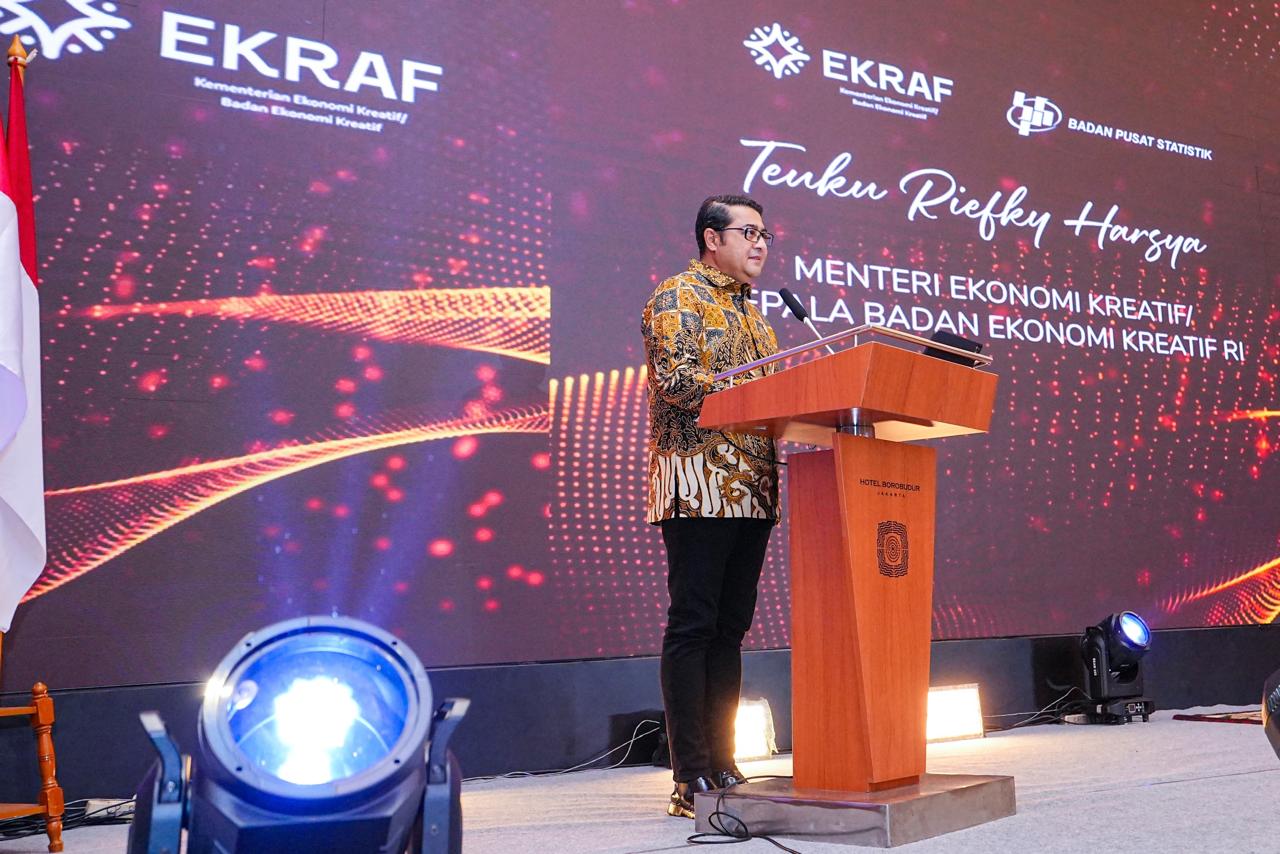 Minister of Creative Economy Teuku Riefky Harsya highlighted the 5.11 percent economic growth as a basis for strengthening data-driven policies to advance the creative economy sector.
Compared to previous years, the 2025 economic growth rate is higher. In 2024, Indonesia’s economy grew by 5.03 percent, while in 2023 it increased by 5.05 percent.
“This economic growth must be supported by accurate and comprehensive data. The Ministry of Creative Economy supports the implementation of the National Economic Census because strong data is the foundation for effective data-driven policy making to develop the creative economy across all regions of Indonesia,” said Minister of Creative Economy Teuku Riefky on Saturday, 7 February 2026.
The Economic Census is conducted every 10 years by BPS. This year, the 2026 Economic Census (SE2026) will take place from 1 May to 31 July, with results that will update the economic sector database, including creative economy subsectors. This information will serve as an important reference for policymakers to design targeted programs that accelerate growth and equitable development of the creative economy at both national and regional levels.
 Photo: Bureau for Communication, Ministry of Creative Economy/Creative Economy Agency.
According to the BPS report, the “other services” business sector recorded the highest growth throughout 2025 at 9.93 percent, while on the expenditure side, the export of goods and services contributed significantly to the increase in national GDP by 7.03 percent. During 2025, Java Island dominated Indonesia’s economy spatially, contributing 56.93 percent and recording growth of 5.30 percent (c-to-c).
The government hopes that more accurate census data will provide a comprehensive picture of the structure and dynamics of creative economy actors, who have long been one of the engines of national economic growth. The Ministry of Creative Economy also sees the census as a tool to map both the challenges and potential within various creative economy subsectors.
Kiagoos Irvan Faisal
Head of Bureau for Communication
Ministry of Creative Economy/Creative Economy Agency


