
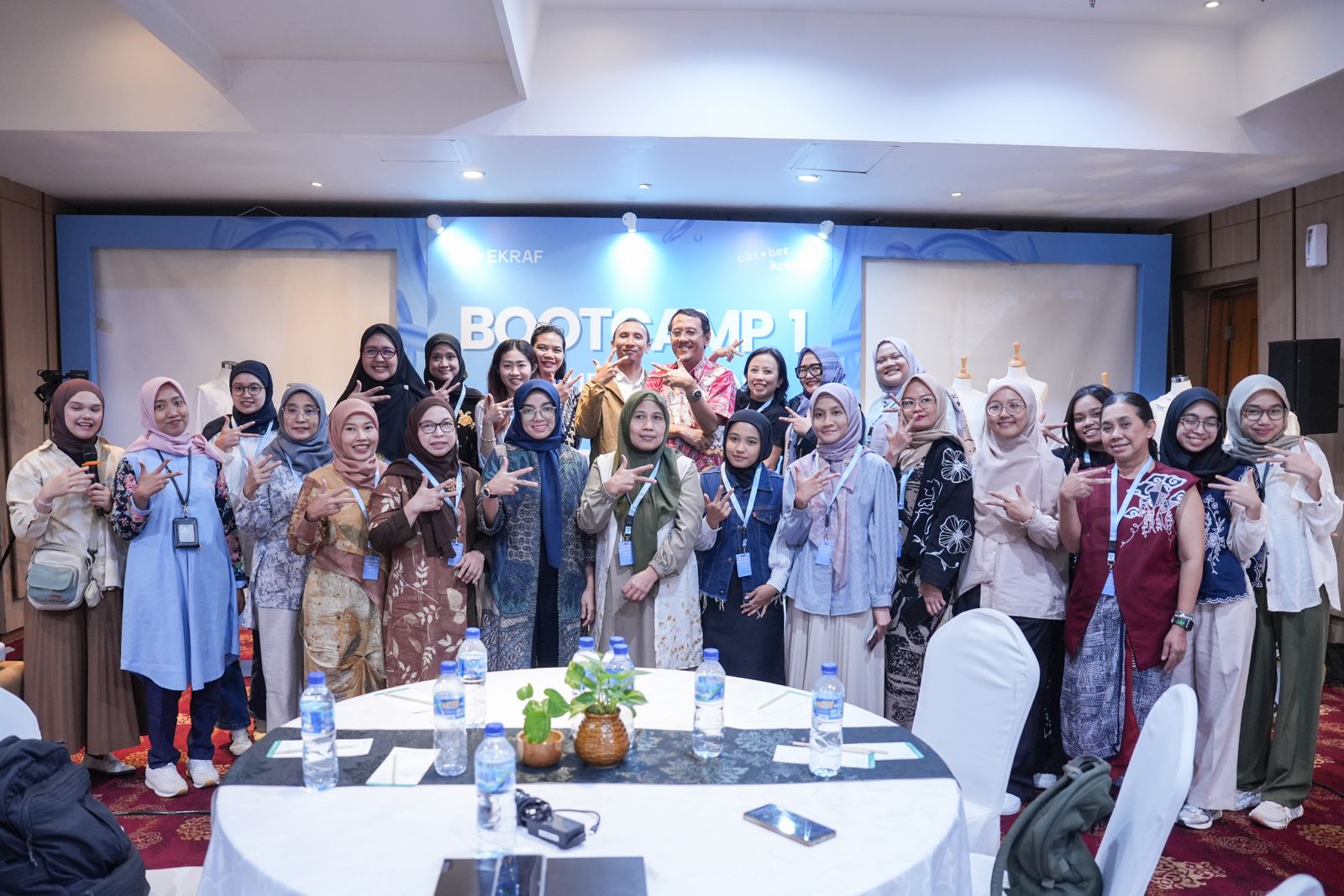
Bogor, 3 November 2025 – The Ministry of Creative Economy/Creative Economy Agency officially concluded Bootcamp 1 of the Fashion Incubation Program for the Jabodetabek region on Monday, 3 November 2025. After three days of intensive sessions on business strategy and branding, dozens of national fashion entrepreneurs are now entering the next phase of sustained mentorship.
 Kementerian Ekraf Tutup Bootcamp 1 Inkubasi Fesyen wilayah Jabodetabek, Bogor, Senin (3/11/2025).
“We hope this mentorship can run optimally so that every fashion brand here can become a local champion ready to enter the global market,” said Director of Fashion, Romi Astuti, in a virtual closing address broadcast from The 1O1 Suryakencana Hotel, Bogor.
The Ministry of Creative Economy/Creative Economy Agency emphasized its commitment to ensuring that fashion practitioners participating in the program gain competitive advantage in both national and international markets. The program continues with in-depth one-on-one mentoring sessions held virtually, a second bootcamp, and culminates in a professional photoshoot for catalog production.
Throughout the three-day bootcamp, participants received both theoretical and practical guidance—from developing moodboards and silhouettes to portfolio presentations and financial fundamentals. On the final day, they also learned from the success stories and branding strategies of the founders of two notable local fashion brands, Danjyo Hiyoji and Niion, as well as sales strategies presented by representatives from the marketplace platform Blibli.
Dana Maulana, Founder of Indonesia’s streetwear label Danjyo Hiyoji, highlighted the importance of networking and collaboration as key components that helped him recover and rebuild following the pandemic. He noted that long-term success often begins with small opportunities—such as those offered through this incubation program.
 Communication Bureau of the Ministry of Creative Economy/Creative Economy Agency.
“Through programs like those organized by the Ministry of Creative Economy, early opportunities for networking and collaboration can grow into significant impact. That is why participants here are incredibly fortunate,” Dana said.
Similarly, Aditya Rahman, Founder of Niion, emphasized the importance of building and engaging communities as an effective strategy to expand market reach. He shared how community marketing—particularly through promoting padel bags to sports communities—has strengthened customer loyalty and boosted organic sales.
In her testimonial, Dilla Yudi Astari, owner of O My Craft—a curated brand that produces bags and accessories made from traditional textiles such as Badui weaving, NTT weaving, and batik using patchwork and upcycling techniques—expressed that the training opened new access channels for small businesses seeking to enter digital platforms.
“Previously, I faced difficulties registering due to limited access to those who could assist. This program directly connected us with marketplace partners, giving me a new digital sales channel that is crucial in today’s digital era,” Dilla said.
 Communication Bureau of the Ministry of Creative Economy/Creative Economy Agency.
Another participant, Dwi Novie Andrie, owner of Opie Ovie—a fashion brand that highlights Nusantara textiles crafted by artisans from Banyumas, Surabaya, and Mojokerto—shared that the program provided firsthand insights into business strategy and branding directly from industry practitioners.
“When it comes to branding, I am still very new since my ready-to-wear brand was only recently established. Normally, this kind of knowledge can only be gained through business school, but here we learned directly from industry experts and immediately put it into practice. This will serve as an important stepping stone for my brand’s development going forward, especially in the business aspect,” Novie explained.
Kiagoos Irvan Faisal
Acting Head of Communication Bureau
Ministry of Creative Economy / Creative Economy Agency


