Jakarta, 4 December 2025 – The Ministry of Creative Economy/Creative Economy Agency launched SIKLUS, a circular fashion initiative that transforms unused office uniforms into new products. This collaboration with recycling startup Pable aims to reduce textile waste while promoting a sustainable creative economy and environment.
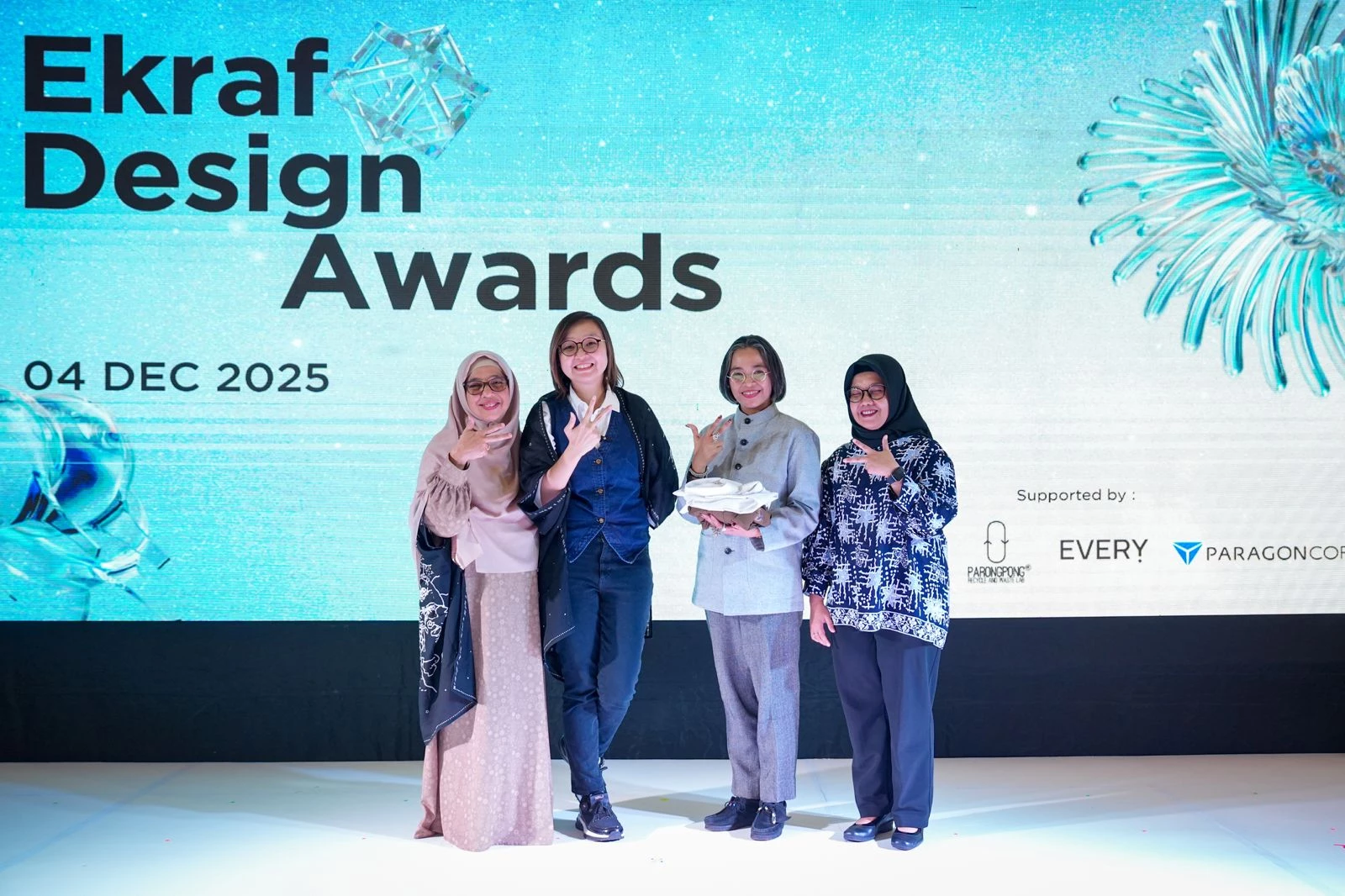
 Wakil Menteri Ekonomi Kreatif, Irene Umar, memberi sambutan pada acara peluncuran Program SIKLUS yang berlangsung di Galeri Oesman Effendi, Taman Ismail Marzuki, Jakarta, Kamis (4/12/2025).
“Circular fashion is not only about aesthetics but also functionality. Therefore, we must understand how sustainability in the SIKLUS program is intertwined with the phenomenon of fast fashion. Considering that 10 percent of the waste around us comes from fast fashion products,” said Deputy Minister of Creative Economy Irene Umar at the Oesman Effendi Gallery, Taman Ismail Marzuki, Jakarta, on Thursday, 4 December 2025.
In the collaborative spirit of the SIKLUS program, the Ministry of Creative Economy provides concrete support for sustainable living while promoting circular fashion that brings positive environmental impact.
 Dok. Biro Komunikasi Kementerian Ekraf/ Badan Ekraf
“Through SIKLUS, we must view this as an opportunity to begin addressing the need for alternative fashion or the utilization of recycled materials. My hope is that the Ministry of Creative Economy can truly practice circular fashion, and that every time we make a purchase, we remember the economic and environmental impacts it creates. Let’s choose wisely, let’s live wisely as valuable human beings,” the Deputy Minister emphasized.
Echoing this statement, Deputy for Cultural Creativity and Design, Yuke Sri Rahayu, encouraged all personnel within the Ministry of Creative Economy to contribute by submitting unused uniforms for recycling. Uniforms can be dropped off at designated drop boxes or drop points that will be prepared at the Pesona Indonesia Film Building.
 Dok. Biro Komunikasi Kementerian Ekraf/ Badan Ekraf
“We are collaborating with Pable to deliver unused office uniforms for recycling so they can be turned back into yarn. This yarn will then be woven into fabric by weavers in Pasuruan, East Java. The fabric will later be designed by students from a university in Surabaya to be made into new uniforms. This will become the final circular fashion product,” Deputy Yuke explained.
Data from Pable indicates that each kilogram of unused uniforms recycled has the potential to reduce carbon emissions from new fabric production by 315 kilograms of CO2 and save 14 trees. Meanwhile, processing 500 kilograms of unused uniforms requires only 40 milliliters of water, significantly lower than the 2,700 liters needed to process new cotton.
 Dok. Biro Komunikasi Kementerian Ekraf/ Badan Ekraf
“A total of 92 million tons of textile waste is produced globally, yet only 1 percent is recycled back into material. As one of the world’s largest populations, Indonesia faces the challenge of how circular economy systems can be applied across sectors. This is not only for the fashion subsector, but we can also see extraordinary potential in other creative economy subsectors. We need a clear supply chain so that Indonesia has the opportunity to become a circular hub not only in Asia but globally,” said Pable founder Aryenda Atma.

Dok. Biro Komunikasi Kementerian Ekraf/ Badan Ekraf
The Deputy Minister was accompanied by the Special Staff to the Minister for Internal Management and Organizational Effectiveness, Yanuar Pranuradhi, and Director of Fashion, Romi Astuti, during the launch of the SIKLUS program.
Kiagoos Irvan Faisal
Acting Head of Bureau for Communication
Ministry of Creative Economy/Creative Economy Agency


