
Jakarta, 30 March, 2026 – The Ministry of Creative Economy/Creative Economy Agency (Ekraf) has issued an official response to the case concerning the procurement of village profile video content services in Karo Regency, North Sumatra, which involves creative economy practitioners. The government considers this case as an important momentum to improve the foundation of the creative economy ecosystem, particularly in aspects of regulation, understanding, and assessment mechanisms for creative services.
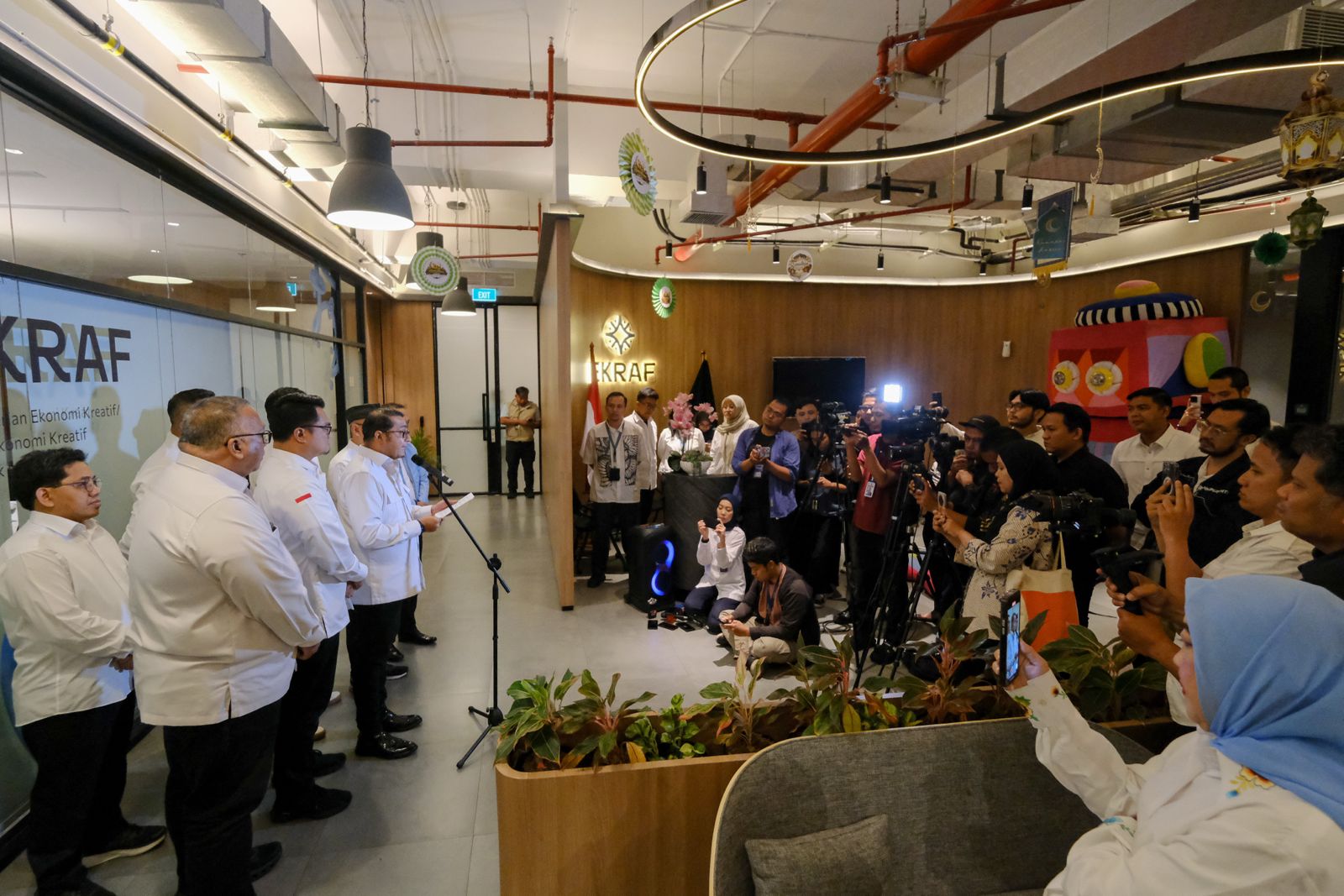
 The Minister of Creative Economy, Teuku Riefky Harsya, delivered an official response to public attention regarding the procurement case of village profile video content in Karo Regency, North Sumatra, involving creative economy actors at the Ministry of Creative Economy Office in Jakarta on Monday (March 30, 2026).
This was conveyed by the Minister of Creative Economy, Teuku Riefky Harsya, during a press conference with associations of creative economy practitioners at the Ministry of Creative Economy Office in Jakarta on Monday (March 30).
The Minister of Creative Economy also stated that the government has communicated with various stakeholders, including associations, communities, and creative economy practitioners, to formulate more comprehensive guideline measures. This is because the current regulatory framework has not yet fully accommodated the rapidly evolving dynamics of the creative economy sector.
“At present, the creative industry may not yet be fully covered. This is what we will continue to discuss with associations and stakeholders to serve as input in formulating policies that are more equitable, as well as assessment standards that are more proportional and measurable,” he said.
The Ministry of Creative Economy, the Minister continued, respects the ongoing legal process at the Medan District Court while upholding the principle of presumption of innocence.
“The procurement of creative services has different characteristics compared to the procurement of goods. The fairness in assessing the Owner’s Estimate (HPS) for Creative Services must be conducted objectively and based on an understanding of the creative industry,” he explained.
 Doc: Bureau for Communication of the Ministry of Creative Economy/Creative Economy Agency.
The Minister of Creative Economy also expressed appreciation for the attention given by various parties to this issue as a form of shared concern for the national creative economy ecosystem.
“Furthermore, we would like to express our appreciation for the public’s sympathy and the House of Representatives of the Republic of Indonesia, as well as our colleagues in communities and associations. I believe this reflects our shared commitment to strengthening Indonesia’s creative economy ecosystem for the better,” said the Minister of Creative Economy.
Also present at the press conference were three creative industry associations, namely the Himpunan Pengusaha Dokumentasi Indonesia (HIPDI), the Asosiasi Kreator Foto Video Indonesia (AKFID), and the Himpunan Pengusaha Dokumentasi Indonesia (HIPDI). They viewed this case as a reflection of broader issues within Indonesia’s national creative economy ecosystem. They emphasized the need for systemic improvements, particularly in the aspects of assessment and recognition of creative work, whose value is not always tangible.
The Chairperson of the Indonesian Professional Photographers Association (APFI), Ridha Kusuma, expressed hope for the establishment of a reference framework for creative industry services in the future to prevent similar incidents from recurring.
 Doc: Bureau for Communication of the Ministry of Creative Economy/Creative Economy Agency.
“We from APFI extend our highest appreciation to the Ministry of Creative Economy, as this demonstrates that the government is present to protect the creative economy ecosystem. We encourage the development of benchmarks or jointly formulated references related to creative industry services so that similar cases do not happen again. In fact, the socialization of the E-Catalog has already been carried out as one of the instruments that can be used as a reference for creative industry services, and earlier the Minister also conveyed that this will be finalized soon,” explained Ridha.
Meanwhile, the Treasurer of the Himpunan Pengusaha Dokumentasi Indonesia (HIPDI) stated that the Ministry of Creative Economy has facilitated the aspirations of creative economy business actors from the photography, video, and documentation sectors.
“This case serves as an entry point to recognize that there are aspects within the system that need improvement, particularly in how creative work is assessed and understood within the framework of law and state audit,” said Eppstian Syah As'ari, Treasurer of the Himpunan Pengusaha Dokumentasi Indonesia (HIPDI).
The Ministry of Creative Economy also reaffirmed its commitment to continuously monitor the ongoing legal process while maintaining open communication channels with stakeholders. In addition, the government encourages creative economy practitioners to utilize available complaint channels and public services to obtain early assistance.
 Doc: Bureau for Communication of the Ministry of Creative Economy/Creative Economy Agency.
Through synergy between the government, associations, and communities, Indonesia’s creative economy ecosystem is expected to grow stronger, more adaptive, and more competitive. This effort also represents a strategic step toward ensuring legal certainty and fostering a conducive business climate for millions of creative economy practitioners across Indonesia.
Also present at the press conference were the Chairperson of the Indonesian Professional Photographers Association (APFI), Ridha Kusumabrata, and the Chairperson of the Asosiasi Kreator Foto Video Indonesia (AKFID), Rizki Trestianto.
Also present were Special Advisor to the Minister for Legal Affairs and Development, Agus Sarjono; Special Advisor to the Minister for Communication, Media, and Public Services, Renanda Bachtar; Director of Intellectual Property Facilitation Development, M. Fauzi; Head of Bureau of Legal Affairs, Human Resources, and Organization, M. Nurul Huda; and Head of Bureau for Communication, Kiagoos Irvan Faisal.
Kiagoos Irvan Faisal
Head of Bureau for Communication
Ministry of Creative Economy/Creative Economy Agency


