
Bogor, 1 November 2025 – The Ministry of Creative Economy held Bootcamp 1 as part of the Fashion Incubation Program for the Greater Jakarta Area. This intensive training aims to accelerate fashion entrepreneurs in elevating their products, enhancing added value, and preparing them to compete in national and global markets.
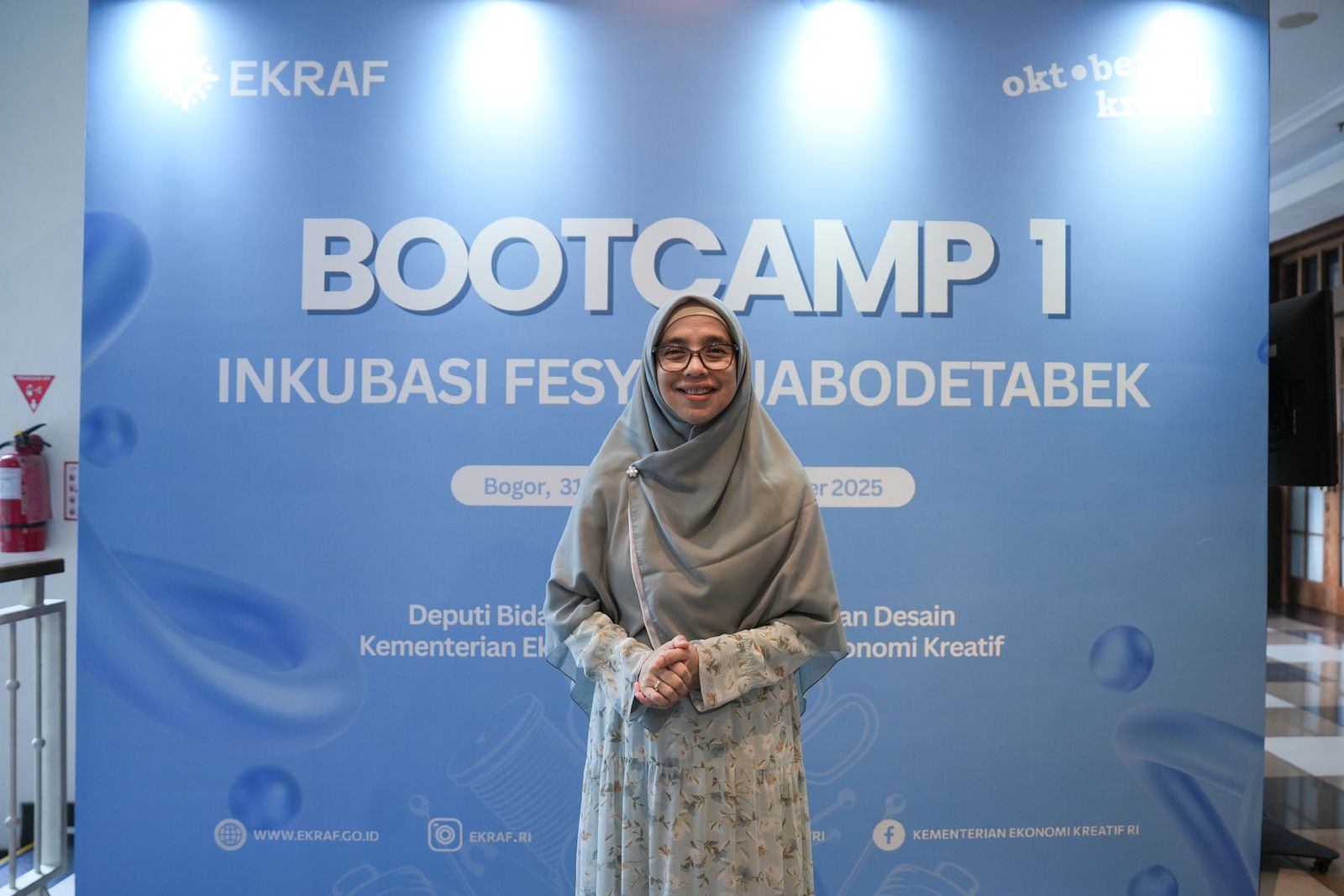
 Deputi Bidang Kreativitas Budaya dan Desain, Yuke Sri Rahayu, memberi sambutan pada kegiatan Bootcamp 1 Inkubasi Fesyen wilayah Jabodetabek, Bogor, Sabtu (1/11/2025).
“The fashion subsector makes a significant contribution to exports and employment within the creative sector. Therefore, this incubation program is the Ministry’s initial step to upscale empowered local brands so they can become more independent and competitive in international markets, strengthening the role of the creative economy as the new engine of national growth starting from the regions,” said Minister of Creative Economy Teuku Riefky on Saturday, 1 November 2025.
This bootcamp is held from 31 October–3 November 2025 at The 1O1 Suryakencana Bogor. Previously, the Fashion Incubation Program for the Greater Jakarta Area had gone through several stages: Open Call (17 October 2025), data-based brand selection via Ekraf Hub (17–18 October 2025), as well as curation and interviews (17–18 October 2025). From 61 applicants, 10 fashion entrepreneurs—producing apparel, bags, and footwear from Jakarta, West Java, and Banten—were selected to participate in the four-day intensive training.
Deputy Minister for Cultural and Design Creativity Yuke Sri Rahayu emphasized that the primary goal of this program is not only to strengthen the capacity of fashion entrepreneurs but also to enhance the added value of their products. She also expressed her hope that participants would help create higher-quality creative job opportunities.
 Communication Bureau of the Ministry of Creative Economy/Creative Economy Agency.
“Many participants here already run businesses and employ an average of five workers. With 10 business owners taking part in this bootcamp, it means around 50 workers are also contributing to national economic growth,” explained Deputy Minister Yuke.
She added that this bootcamp is part of the ongoing assistance prepared by the Ministry of Creative Economy.
“We have prepared a roadmap through 2029, starting from curation, training, and export acceleration programs such as ASIK. So let this spirit continue—keep participating in the next programs of the Ministry of Creative Economy,” Yuke added.
Held over four days, Bootcamp 1 was guided at each stage by expert mentors in their respective fields:
The first day focused on understanding product DNA and storytelling translated into a moodboard.
The second day emphasized the design creation process and material exploration to craft product silhouettes.
The third day covered the finalization and presentation of participants’ product silhouettes as well as financial management material.
The fourth day concluded with non-practical sessions on product DNA success stories, branding strategies, and optimizing digital media.
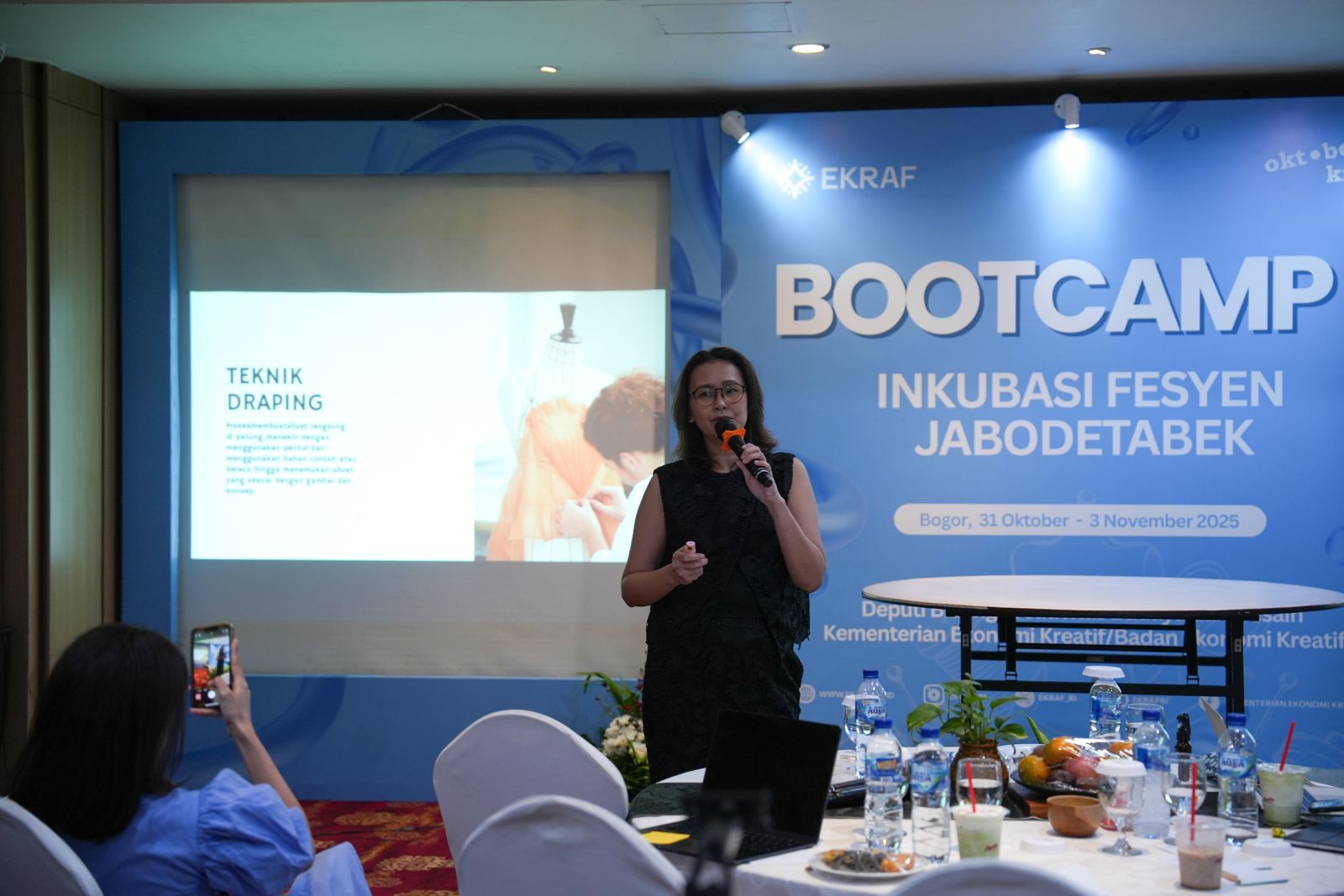
One of the mentors, Amanda Prihutomo, a fashion lecturer at Binus University SOCCA, appreciated the Ministry’s initiative in delivering training that provides space for creative practitioners to learn directly from experience and build sustainable fashion businesses.
 Communication Bureau of the Ministry of Creative Economy/Creative Economy Agency.
“It is truly fulfilling to share knowledge with MSME fashion players—not only about design but also about building their businesses. Programs like this motivate them to stay enthusiastic in developing their designs and enterprises until they are ready for export,” said Amanda.
In the material and silhouette development sessions, participants showed strong enthusiasm in creating new versions of their products. The training space was filled with activities such as cutting fabric, drawing patterns, and knitting materials to complete their developing designs.
 Communication Bureau of the Ministry of Creative Economy/Creative Economy Agency.
One participant, Eti Yuniarti, owner of PT Schon Craft, was seen meticulously knitting her handmade shoes and bags. Her business, which specializes in knitted products, already holds Intellectual Property Rights (IPR) and has retailed its products in several countries, including Japan, the Netherlands, and Germany. Eti hopes that through this program, her products can be scaled up further to enhance global competitiveness and expand market access.
“Through this program, we not only learn theory but also practice directly. We hope that ongoing assistance from the Ministry can continue so we are increasingly prepared to expand our markets,” said Eti.
Kiagoos Irvan Faisal
Acting Head of the Bureau for Communication
Ministry of Creative Economy / Creative Economy Agency


