
Yogyakarta, 14 April, 2026 – Deputy Minister of Creative Economy/Deputy Head of the Creative Economy Agency -(Ekraf), Irene Umar, visited DOES University in Sleman, Yogyakarta, which focuses on creative industry training through a residential (bootcamp) system. The Deputy Minister assessed that DOES University demonstrates a non-formal creative education ecosystem aligned with the vision of the Ministry of Creative Economy.
 Deputy Minister of Creative Economy, Irene Umar, visited DOES University in Sleman, Yogyakarta, on Tuesday (14/4/2026).
“We see DOES University as tangible proof that Indonesia’s creative ecosystem is not only growing in major cities, but also through community-driven initiatives with a forward-looking vision. This 1.5-year residential education model is highly effective in producing practitioners who are ready to directly enter the industry,” said the Deputy Minister on Tuesday (14/4).
Since its establishment on December 15, 2015 by Erix Soekamti—who is also the vocalist and bassist of Endank Soekamti—the institution has produced nearly 430 graduates from 10 cohorts, many of whom are now employed in the animation, design, and programming industries at both national and international levels. The Deputy Minister also emphasized the importance of the “Knowledge Paid with Knowledge” learning model implemented by DOES University as a driving force for regenerating national creative talent.
 Doc. Bureau for Communication Ministry of Creative Economy/ Creative Economy Agency
“DOES University is an ideal prototype of grassroots creative economy independence through a residential system that instills discipline. We fully support the spirit of ‘Independent in Work, Free in Creation,’ which defines this institution,” she stated.
The Deputy Minister also reviewed the curriculum across five strategic majors at DOES University, namely 3D Animation, 3D Modeling, UI/UX Design, Cinematography, and Software Development. She expressed particular appreciation for the involvement of DOES alumni in major projects, such as the animated film JUMBO, as well as 3D mapping works developed in collaboration with Pipilaka Foundation, currently exhibited at Sarinah. These achievements demonstrate that graduates of non-formal education possess the quality to compete in top-tier industry markets.
 Doc. Bureau for Communication Ministry of Creative Economy/ Creative Economy Agency
DOES University continues to expand through programs such as DOES Go To School, Intensive Program, and DOES Les to respond to growing public interest. These initiatives enhance inclusivity by engaging talents from Aceh to Papua, forming a strong foundation for the future of Indonesia’s creative content industry.
“The independence of management by alumni is our strategic step to expand funding opportunities and program flexibility. The transition of leadership to graduates is concrete proof of successful knowledge transfer and sustainable social values within the DOES University ecosystem,” said Erix Soekamti.
This visit reflects the Ministry of Creative Economy’s commitment to continuously act as a facilitator for impactful local initiatives. Through synergy between the government and institutions such as DOES University, Indonesia is expected to meet its target of producing millions of digital and creative talents, thereby strengthening the nation’s position as a leading creative economy force in Southeast Asia.
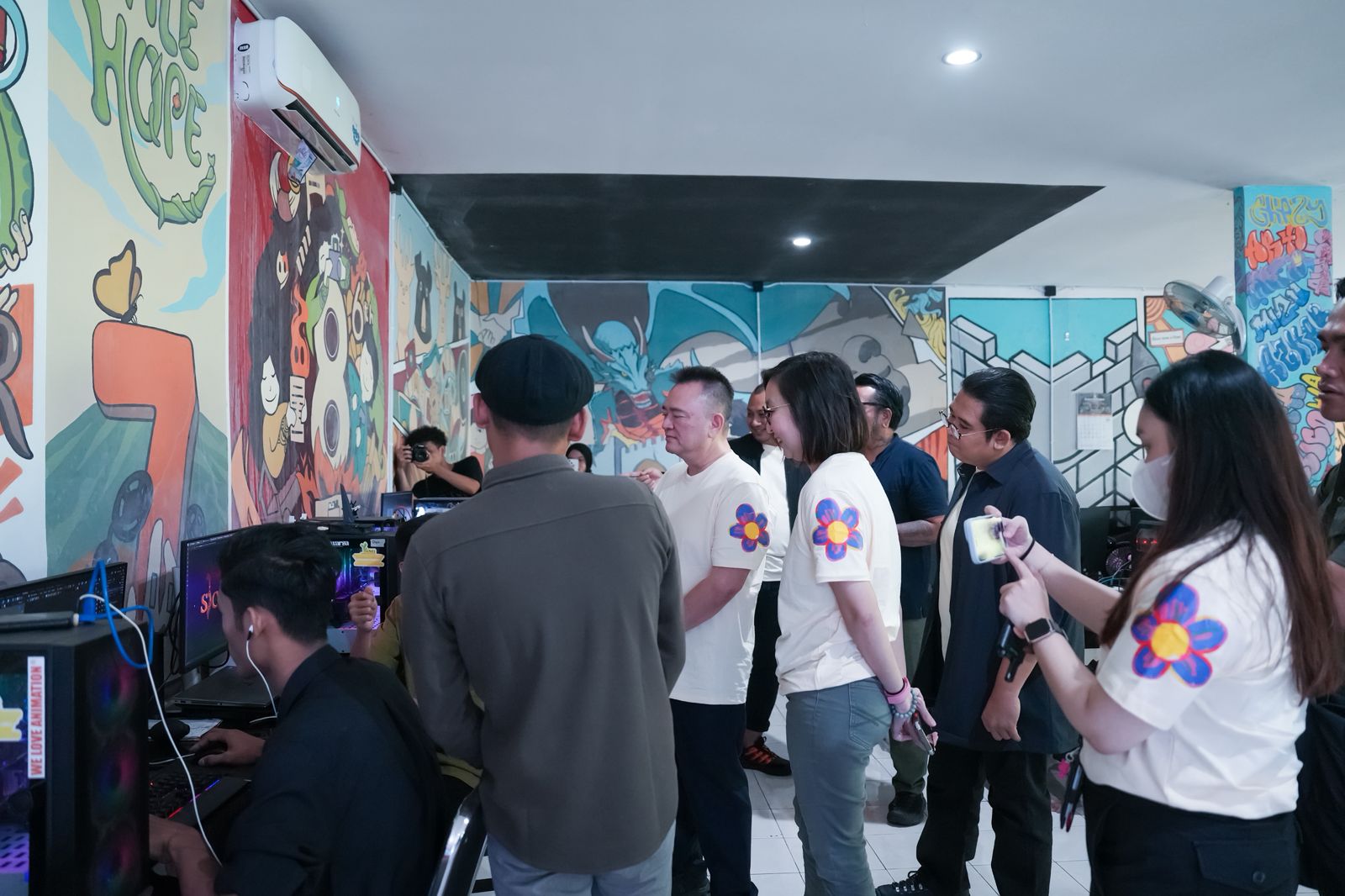 Doc. Bureau for Communication Ministry of Creative Economy/ Creative Economy Agency
During this visit, the Deputy Minister of Creative Economy was accompanied by Special Staff to the Minister for Strengthening the Creative Economy Ecosystem and Data, Jago Anggara, as well as Expert Staff for Regulation and Institutional Affairs, Dahana Esa Putera.
Kiagoos Irvan Faisal
Head of Bureau for Communication
Ministry of Creative Economy/ Creative Economy Agency


