
Jakarta, 5 March, 2026 – The Ministry of Creative Economy / Creative Economy Agency (Ekraf), through its Directorate of Games, utilizes board games as an educational medium and trauma healing tool for children affected by disasters. The activity, titled “Joyful and Creative through Board Game Play,” was held in Adiankoting Subdistrict, North Tapanuli Regency, North Sumatra, on Thursday (March 5).
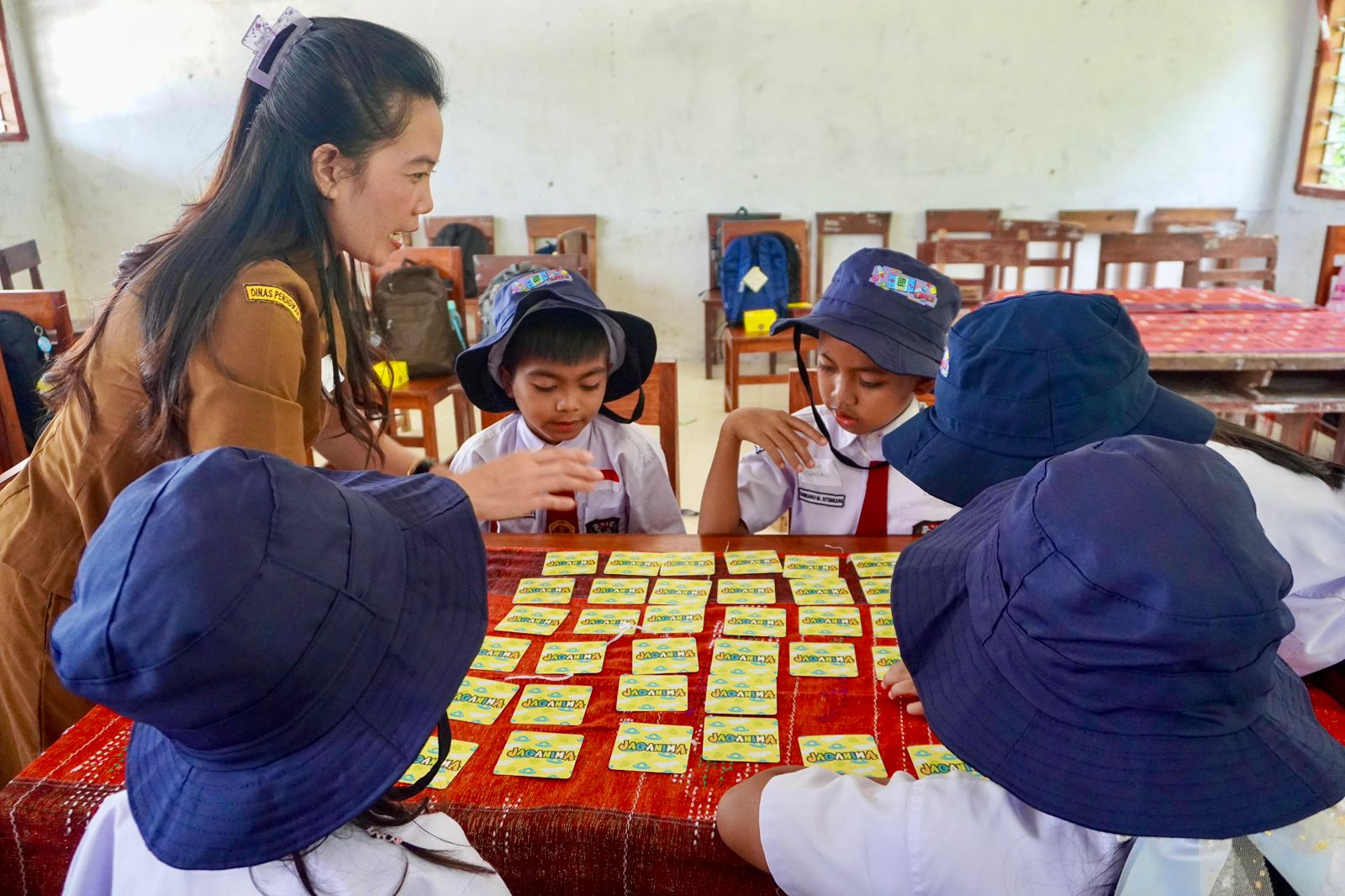
 The Ministry of Creative Economy / Creative Economy Agency, through the Directorate of Games, organized the activity Joyful and Creative through Board Game Play as an educational and trauma healing medium for post-disaster children in North Tapanuli Regency on Thursday (March 5, 2026).
This program serves as a platform to introduce the game subsector while demonstrating the role of the creative economy in supporting the social recovery of communities affected by disasters.
Minister of Creative Economy Teuku Riefky Harsya emphasized that the game subsector not only holds economic potential but also delivers tangible social impact.
“Creative economy can provide innovative and inclusive solutions. Board games encourage children’s creativity, create spaces for interaction that support psychosocial recovery, and at the same time strengthen the creative economy ecosystem as the new engine of growth,” said Minister Teuku Riefky.
The activity involved 50 participants from various schools and local communities. The Directorate of Games collaborated with the Indonesian Board Game Industry Association (APIBGI) to present games developed through collaborations between academics and industry players, including works from ITB, Vistalab Mediakreasi, and the Gimersia Creator Camp 2025 workshop. Participants were also introduced directly to the creative process of game design.
Two standout works from participants of the Gimersia Creator Camp workshop were also introduced to the students: Cats and The Rugs by Diah Ayoe and Sszoo!! by Febianzini, both from Bandung. The presence of these works not only introduced creative products by Indonesian creators but also demonstrated how the game design process can serve as a form of experiential learning.
 Doc. Bureau of Communications, Ministry of Creative Economy / Creative Economy Agency.
The Head of Subdirectorate for Game Marketing and Commercialization at the Ministry of Creative Economy, Iman Argiono, emphasized that the activity is part of a post-disaster rehabilitation program that utilizes board games as a simple yet effective social intervention tool.
“Board games in this activity are positioned not merely as entertainment, but also as instruments that support the trauma healing process while introducing creative economy products from the game subsector to the community,” said Iman.
Meanwhile, a representative of the Head of the Tourism, Culture, and Youth and Sports Office of North Tapanuli Regency, Emil Lumbantobing, noted that the activity represents a creative and educational recovery approach while also opening opportunities for the development of the creative economy in the region.
Meanwhile, Alvanov Zpalanzani Mansoor from the Visual Communication Design program at ITB and a member of the Indonesian Board Game Industry Association (APIBGI) added that board games can strengthen empathy, cooperation, and communication among players.
 Doc. Bureau of Communications, Ministry of Creative Economy / Creative Economy Agency.
A similar program also continued in Padang Pariaman on March 5, 2026. This replication demonstrates that a board game–based approach has the potential to be developed as an educational and social intervention model in various regions, particularly in disaster-affected areas.
Through this program, the Ministry of Creative Economy continues to encourage the utilization of the game subsector as part of strengthening the national creative economy ecosystem, while also presenting creative innovations that deliver tangible social impact for communities.
Kiagoos Irvan Faisal
Head of the Communications Bureau
Ministry of Creative Economy / Creative Economy Agency


