
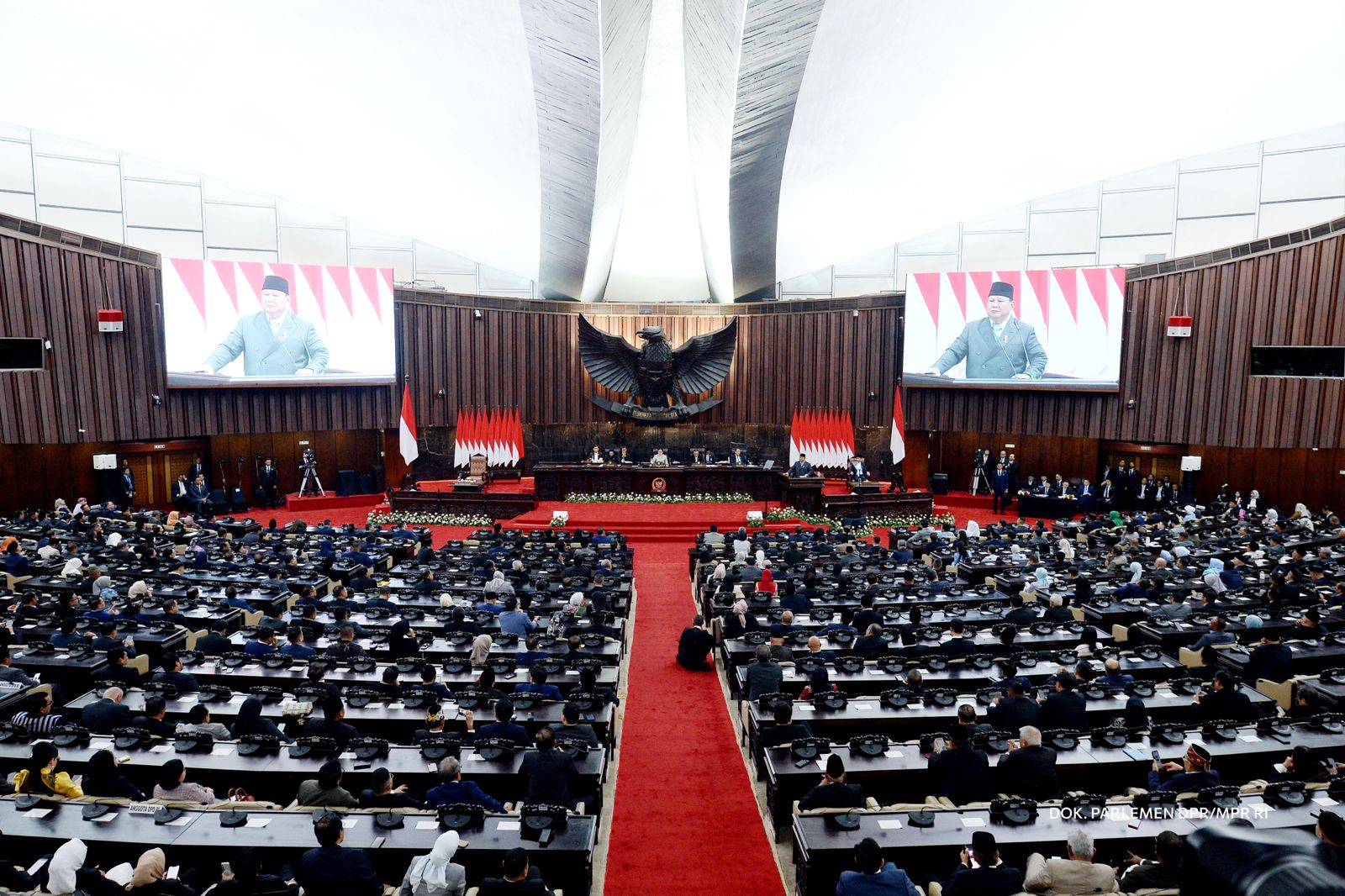
Jakarta, May 20, 2026 – President of the Republic of Indonesia, Prabowo Subianto, presented the Macroeconomic Framework and Main Points of Fiscal Policy (KEM-PPKF) for the 2027 State Budget Draft (RAPBN) during the 19th Plenary Session of the House of Representatives (DPR RI) at the DPR Building, Senayan, Jakarta, on Wednesday (20/5). In his speech, President Prabowo targeted Indonesia’s economic growth to reach between 5.8 percent and 6.5 percent in 2027.
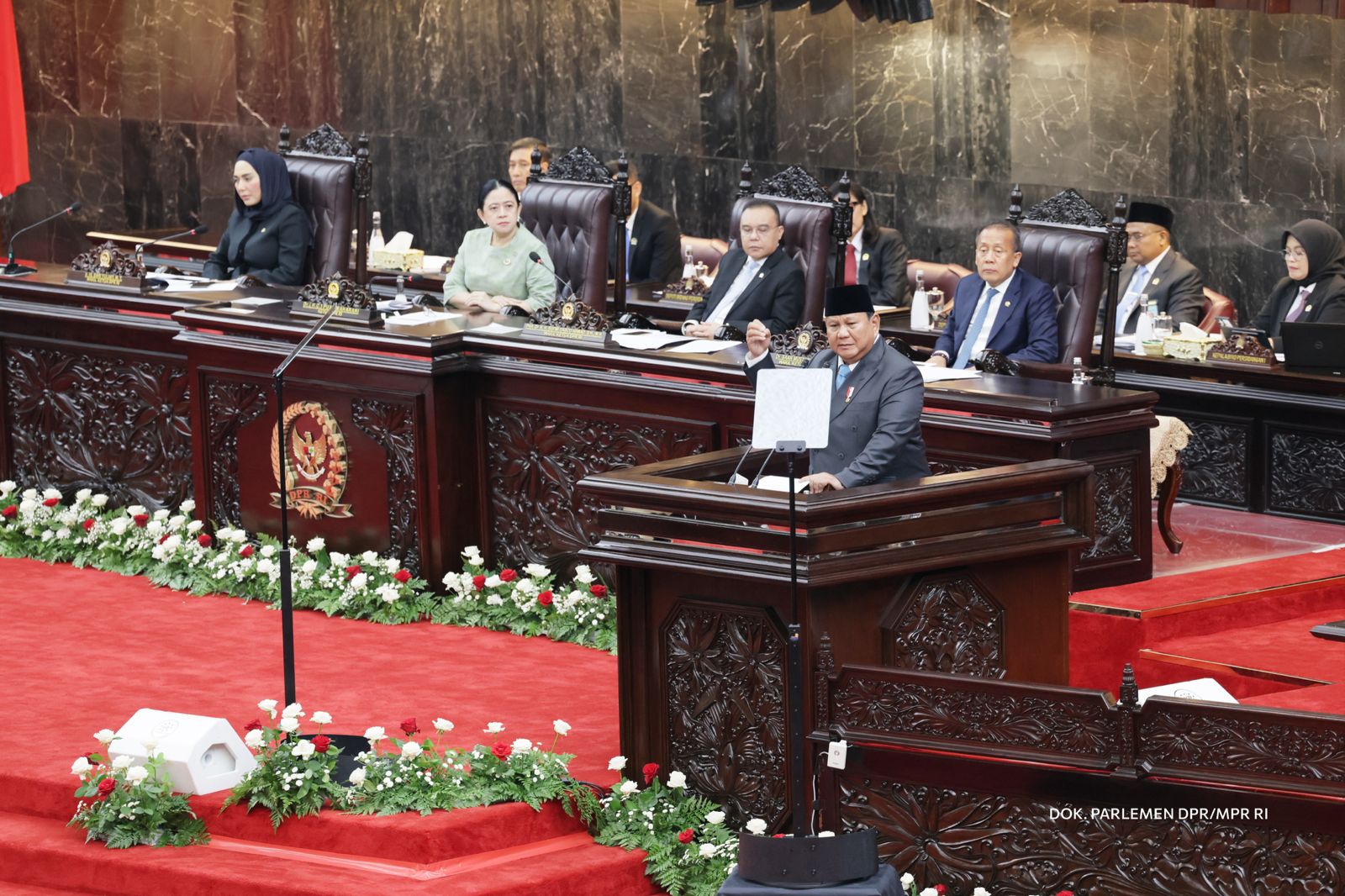
 Minister of Creative Economy, Teuku Riefky Harsya, together with Deputy Minister of Creative Economy, Irene Umar, attended the 19th DPR RI Plenary Session at the DPR Building, Senayan, Jakarta, on Wednesday (20/5/2026).
As part of efforts to support the target, the government has set state revenue in the 2027 State Budget at 11.82 to 12.40 percent of gross domestic product (GDP). Meanwhile, state spending will be directed to become more efficient and productive within the range of 13.62 to 14.80 percent of GDP in order to support various national priority programs.
“I am confident that Indonesia’s economy can grow within the range of 5.8 percent to 6.5 percent in 2027, on the path toward achieving 8 percent economic growth by 2029. Such growth must also be reflected in tangible improvements to the people’s welfare,” said Prabowo Subianto.
To realize this target, the government aims to increase formal job creation to 40.81 percent, higher than the previous achievement of 35 percent. Meanwhile, the open unemployment rate is targeted to decline to the range of 4.30 to 4.87 percent, lower than the previous target of 4.44 to 4.96 percent.
Nevertheless, Prabowo Subianto also encouraged Indonesia’s younger generation to compete confidently in the informal sector and entrepreneurship. According to him, Indonesia has many talented young people who need to be supported through adequate access to education and financing.
 Documentation: Bureau for Communication of the Ministry of Creative Economy / Creative Economy Agency.
Therefore, Prabowo called on the State-Owned Banks Association (Himbara) to provide financing support with more affordable interest rates.
“This is what we are currently formulating together. We must not only provide education, but once they graduate, we also need to provide startup financing and give them opportunities to become strong new entrepreneurs,” he emphasized.
Meanwhile, Minister of Creative Economy/Head of the Creative Economy Agency, Teuku Riefky Harsya, expressed optimism that the national economic growth target for 2027 can be achieved. According to him, the creative economy has now become a new engine of national economic growth.
 Documentation: Bureau for Communication of the Ministry of Creative Economy / Creative Economy Agency.
This optimism is supported by the positive trend of the creative economy sector in recent years. In 2024, the creative economy contributed Rp1,611.15 trillion, or 7.28 percent, to national GDP. Entering 2025, the sector continued to strengthen, recording export values of USD31.94 billion, investment realization reaching Rp183.01 trillion, and employment absorption of up to 27.4 million people. These achievements further reinforce Indonesia’s ambition to increase the creative economy’s contribution to GDP to between 8.0 and 8.4 percent by 2029.
“We are optimistic that the national economic growth target conveyed by the President can be achieved. The creative economy has now become a new engine of growth driven by added value and intellectual property, with continuously increasing contributions to GDP, exports, investment, and job creation,” said Teuku Riefky.
Kiagoos Irvan Faisal
Head of Bureau for Communication
Ministry of Creative Economy / Creative Economy Agency


