
Depok, 5 February 2026 — The Ministry of Creative Economy / Creative Economy Agency (Ekraf), through the Deputy for Media Creativity, organized a Working Meeting on the Drafting of a Government Regulation (GR) concerning the Reconstruction of Income Tax (PPh) on Royalties for Writers. Held at the Ballroom of The Margo Hotel, Depok, on Thursday (5/2), this activity represents the next stage in policy formulation based on the Academic Manuscript.
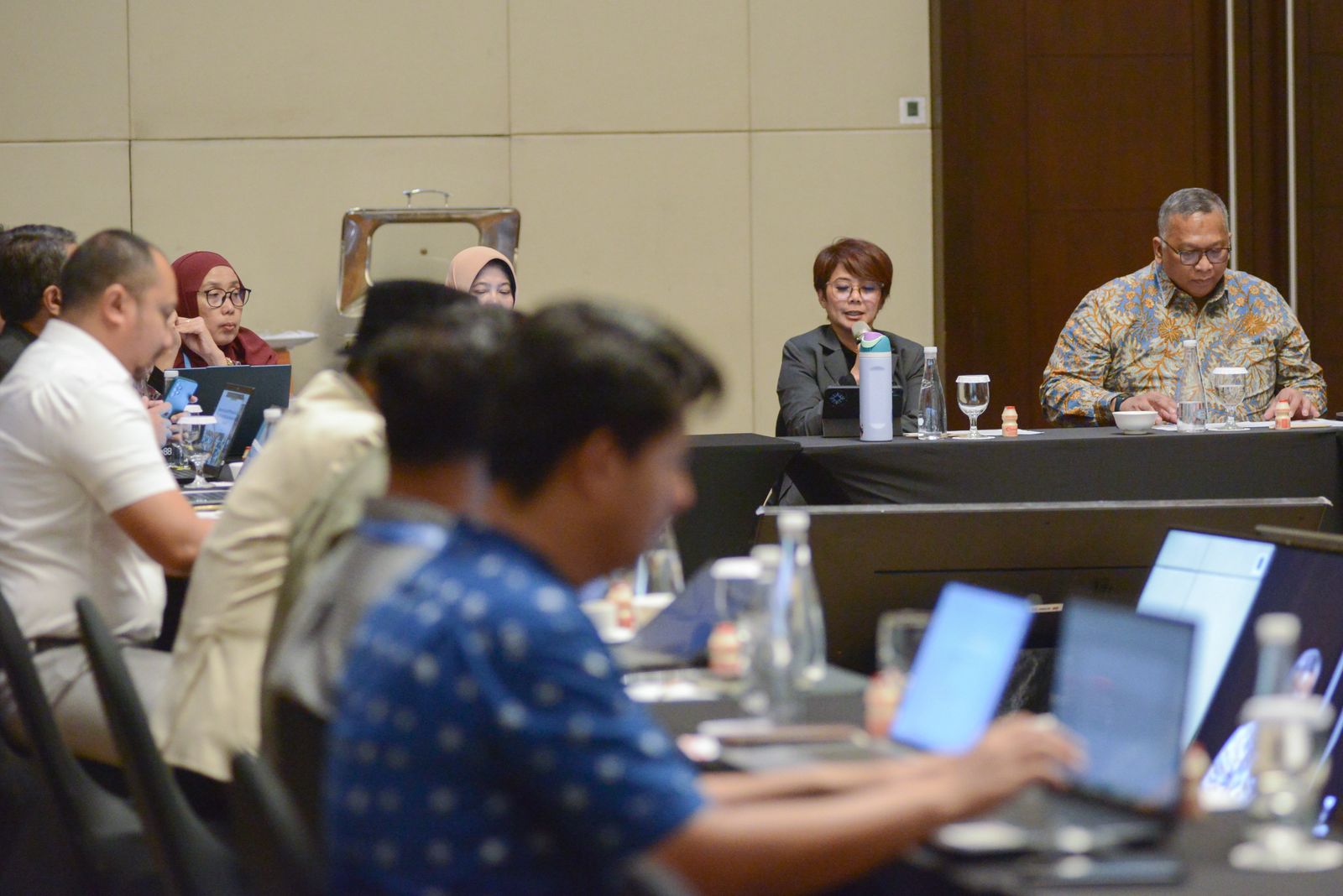 The Ministry of Creative Economy / Creative Economy Agency (Ekraf) organized a Working Meeting on the Drafting of a Government Regulation (GR) concerning the Reconstruction of Income Tax (PPh) on Royalties for Writers, held at the Ballroom of The Margo Hotel, Depok, on Thursday (5/2/2026).
The working meeting involved writers, participants from the publishing subsector, academics, taxation policy experts, as well as representatives from relevant ministries and agencies. This forum served as an initial platform to gather substantive input to ensure that the regulation of income tax on writers’ royalties is fair, proportional, and provides certainty for the sustainability of the publishing ecosystem.
The Deputy for Media Creativity, Agustini Rahayu, stated that the publishing subsector plays a strategic role in the national creative economy ecosystem. Writers have a crucial role in fostering a reading culture, transferring knowledge, and strengthening the nation’s creativity, thus requiring supportive and writer-friendly regulations.
“The drafting of the GR on the Reconstruction of Income Tax (PPh) on Royalties for Writers is expected to create a more conducive environment, allowing writers to work with greater peace of mind, free from tax-related uncertainties, while continuing to make a positive contribution to the national creative economy,” said Agustini.
She added that the formulation of this regulation is being carried out gradually and carefully, prioritizing clarity of substance and constructive input from stakeholders. According to her, taxation policy not only serves as a fiscal instrument but also functions as an affirmative policy to strengthen a sustainable creative ecosystem.
 Doc. Bureau for Communication, Ministry of Creative Economy / Creative Economy Agency.
During the discussion, writers shared their experiences and perspectives regarding the taxation of royalties, including the need for a simpler and more comprehensive regulation to ensure that all forms of royalties, whether from written works or adaptations into other media, have clear tax treatment. Academics and taxation policy experts also emphasized the importance of clearly defining royalties and tax subjects to avoid multiple interpretations in implementation.
Professor of Tax Policy at the University of Indonesia and Chair of the Research Team at the Tax Centre FIA UI, Haula Rosdiana, stated that the discussion on the GR is important to ensure that the regulation of income tax on royalties is drafted clearly and consistently.
“In practice, an incompletely formulated definition of royalties often leads to differing interpretations, including in the taxation of works and their derivatives. This clarity is necessary so that the policy can be applied consistently and provide certainty for all parties involved,” said Haula.
The Director of Publishing and Photography, Iman Santosa, emphasized that the working meeting serves as an initial step in drafting the GR on the Reconstruction of Income Tax (PPh) on Royalties for Writers. Various inputs provided, particularly regarding the definition of royalties and tax subjects, will be further analyzed by the academic team before discussions proceed to the next stage with relevant ministries and agencies.
 Doc. Bureau for Communication, Ministry of Creative Economy / Creative Economy Agency.
The Ministry of Creative Economy / Creative Economy Agency (Ekraf) emphasized that the outcomes of the working meeting will serve as the foundation for the continuous refinement of the GR formulation. Moving forward, this process will continue through further technical discussions and socialization with stakeholders, as part of the commitment to deliver policies that are practical, equitable, and have a tangible impact on the welfare of writers as well as the strengthening of the national creative economy.
Representatives from Ekraf present at the event included the Minister’s Special Staff for Law and Creative Economy Development, Agus Sardjono; Director of Intellectual Property Facilitation, Muhammad Fauzy; Head of the Bureau of Law, Human Resources, and Organization, Moch Nurul Huda; and Expert Staff for Regulation and Institutional Affairs, Dahana Esha Putera.
The meeting was also attended by Inayati, Researcher at the Tax Centre FIA UI; Adiwarman, Associate Researcher at the Tax Centre FIA UI; Asri Ernawati, Deputy Assistant for Villages, Underdeveloped Regions, Cooperatives, MSMEs, and the Creative Economy; Imron Rosadi Surya, Head of the Creative Economy Team at Bappenas; representatives from the Directorate General of Intellectual Property, Ministry of Law; representatives from the Ministry of Finance; representatives from the Presidential Staff Office for the Creative Economy; representatives from the Ministry of Communication and Digital; representatives from the Ministry of State Secretariat; representatives from the Coordinating Ministry for Community Empowerment; and representatives from the National Library.
Kiagoos Irvan Faisal
Head of Bureau for Communication
Ministry of Creative Economy / Creative Economy Agency


