Jakarta, 12 November 2025 – The Ministry of Creative Economy/Creative Economy Agency is exploring strategic collaboration with the Rawindra Kata Hara Foundation through a pilot project titled “The Cianjur Experience,” which integrates Cianjuran traditional music, Cianjur coffee, and local historical narratives. This initiative aims to shift the regional marketing paradigm from merely promoting products to offering a complete cultural experience, with the Ministry serving as an orchestrator of cross-ministerial and cross-subsector synergy.
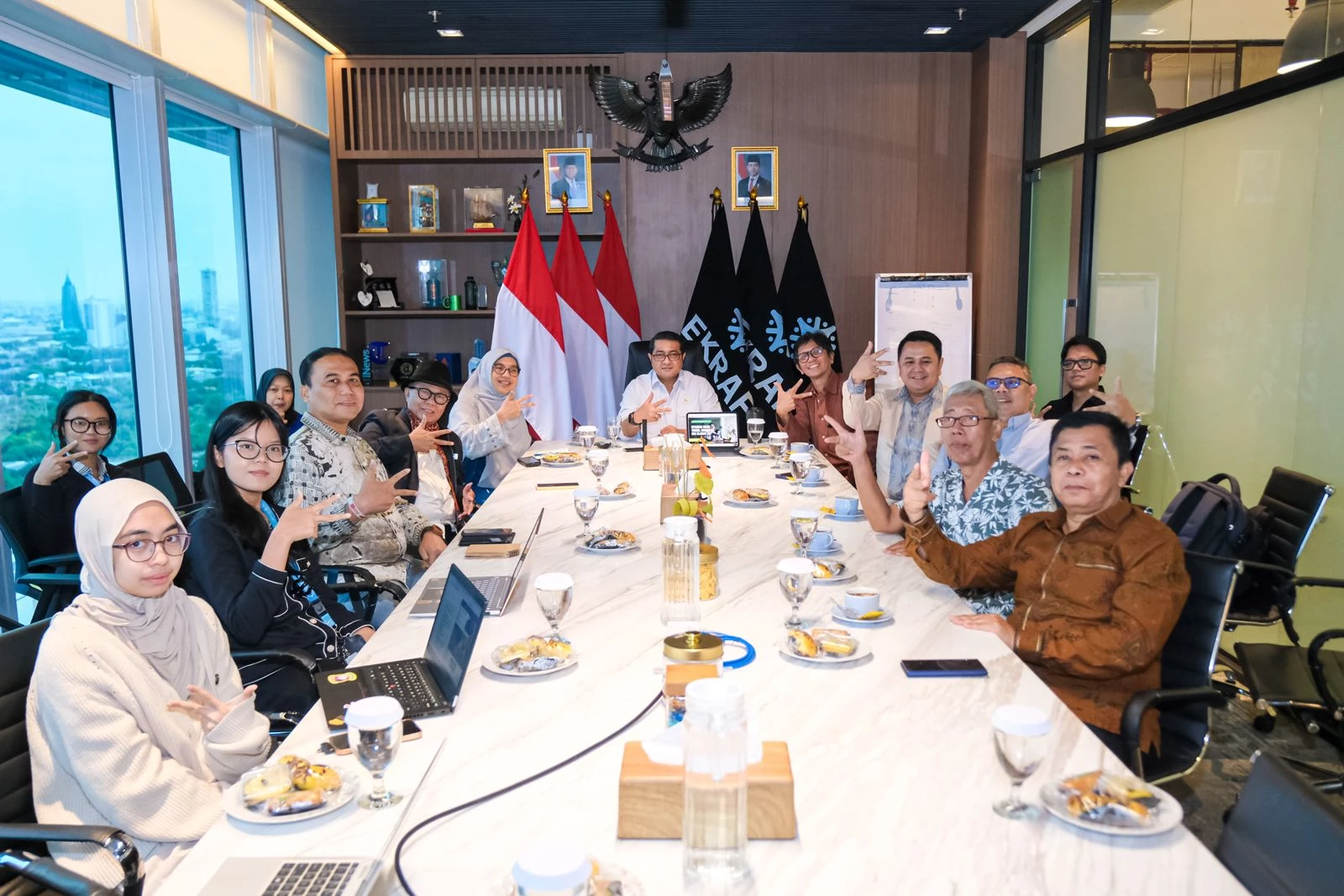
 Menteri Ekonomi Kreatif, Teuku Riefky Harsya, menerima audiensi dari Yayasan Rawindra Kata Hara di Kantor Kementerian Ekraf, Rabu (12/11/2025).
“This program has strong potential and aligns with our key performance indicators at the Creative Economy Ministry, particularly its contribution to employment, investment, and exports. To ensure broad and concrete impact, we cannot work alone—many stakeholders must be involved. We are ready to serve as an orchestrator to strengthen cross-ministerial and cross-subsector collaboration in supporting this program,” said Minister of Creative Economy Teuku Riefky Harsya during an audience with the Rawindra Kata Hara Foundation at the Ministry’s office on Wednesday, 12 November 2025.
The Rawindra Kata Hara Foundation is an organization focused on strengthening literacy in Indonesia, inspired by the intellectual legacy of Ramadhan K.H. The foundation is currently developing the pilot project “The Cianjur Experience: Integrating Traditional Music, Commodities, and Regional History,” which aims to build a regional marketing strategy through a cohesive approach combining traditional music, regional commodities, and local history. Cianjur Regency was selected as the initial study area, with a focus on Cianjuran Music, Cianjur Coffee, and historical narratives that connect local culture and the creative economy.
 Communications Bureau of the Ministry of Creative Economy/Creative Economy Agency.
The Foundation noted that Indonesia’s coffee potential remains underutilized and aims to shift the approach from selling products to selling experiences, thereby increasing global appeal. In line with this vision, Minister Teuku Riefky emphasized that strong narrative-building is a key strategy in driving investment within the creative economy subsectors.
“Investment in the creative economy subsectors reached 66 percent in the first half of this year. We hope this figure will continue to rise through initiatives like this, which employ storytelling as a strategy to market creative products rooted in local wisdom,” said the Minister.
Representing the Foundation, Aming Sukandar explained that Indonesia’s coffee plantation area now reaches nearly 1.3 million hectares, a significant increase from approximately 800,000 hectares in 2015. However, export potential remains suboptimal due to high domestic absorption, demonstrating the need for stronger government involvement to improve governance and strengthen the national coffee industry roadmap.
 Communications Bureau of the Ministry of Creative Economy/Creative Economy Agency.
“Our coffee production is high, but exports remain limited because domestic consumption is so large. Behind this are hundreds of thousands of workers whose livelihoods depend on the coffee sector, from PTPN to Perhutani. We hope the government can play a more tangible role in the coffee industry so that this enormous potential can be managed and provide added value for communities,” said Aming.
Meanwhile, Founder of the Rawindra Kata Hara Foundation, Gilang Ramadhan, highlighted Cianjur as an ideal example for developing collaboration between regional commodities and local culture. Cianjur possesses two highly valuable and interconnected assets—Cianjur Coffee and Cianjuran Music—which can be unified through a shared narrative of history and identity.
“We want to bring traditional music to the forefront using coffee as a medium. We position Cianjuran Music on equal footing with Cianjur Coffee so that both become a strong regional identity. The Cianjur Experience is not just about coffee or music; it’s about how Indonesia can confidently present its history, values, and cultural narratives to the world,” Gilang explained.
 Communications Bureau of the Ministry of Creative Economy/Creative Economy Agency.
The pilot project is designed to reach both local and global markets through domestic activations followed by international activities. Aldino Putra, Executive Chairman of the Foundation, described the project as a scalable model that will be replicated across regions.
“This project in Cianjur will serve as a blueprint that can later be replicated in other cities such as Jakarta, Palu, NTT, and Bali to highlight each region’s strengths and empower local communities. In the second phase, we aim to host activations in four international cities: Vancouver, Los Angeles, New York, and Oslo,” Aldino said.
Through this collaborative initiative, the Ministry reinforces its role in positioning the creative economy as the new, inclusive, and sustainable engine of growth—building a creative ecosystem grounded in local wisdom, regional potential, and cross-subsector collaboration.
 Communications Bureau of the Ministry of Creative Economy/Creative Economy Agency.
Also attending the meeting with the Minister were Deputy for Cultural and Design Creativity Yuke Sri Rahayu and Director of Visual Arts and Performing Arts Dadam Mahdar, along with representatives from the Prawoto Indarto and Shatria Dharma delegations.
Kiagoos Irvan Faisal
Acting Head of the Bureau of Communications
Ministry of Creative Economy / Creative Economy Agency


