
Jakarta, 23 December 2025 — Minister of Creative Economy / Head of the Creative Economy Agency Teuku Riefky Harsya, together with experts, discussed strategies to strengthen the creative economy as a driver of the national economy at the Prasasti Insights forum in Jakarta. The forum was designed as an inclusive dialogue platform to align perspectives and open avenues for collaboration in accelerating the contribution of the creative economy sector.
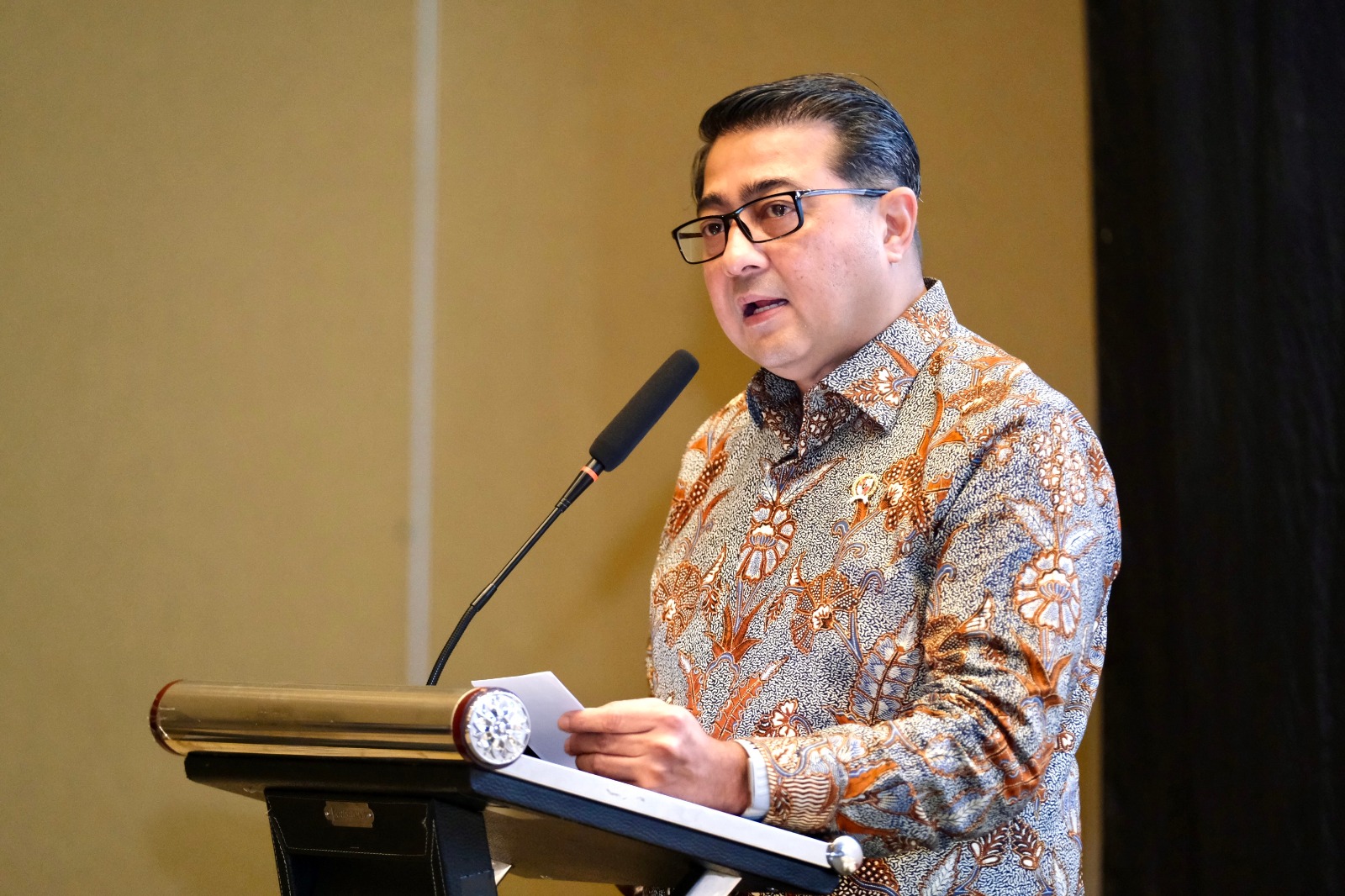 Menteri Ekonomi Kreatif, Teuku Riefky Harsya, membahas strategi penguatan ekonomi kreatif sebagai penggerak ekonomi nasional dalam forum Prasasti Insights di The Sultan Hotel & Residence, Jakarta, Selasa (23/12/2025).
“The new ‘mines’ of Indonesia are the creative economies of each region. The Ministry of Creative Economy consistently maps the potential of leading subsectors in the regions, drawing from the richness of the archipelago’s cultural heritage as a source of identity and motivation, an actively engaged young population representing digital natives, and rapidly developing digital transformation. These elements position the creative economy as the new engine of national economic growth, starting from the regions,” said the Minister of Creative Economy while presenting the potential, policy direction, and challenges of the creative economy at The Sultan Hotel & Residence, Jakarta, on Tuesday, 23 December 2025.
The Minister stated that achievements in the creative economy over the past year have contributed to economic growth, the creation of quality jobs, the strengthening of the middle class, and the enhancement of Indonesia’s global competitiveness. According to data from Statistics Indonesia (BPS), the creative economy has absorbed more than 27.4 million creative workers, or 18.70 percent of the total productive population. This aligns with Indonesia’s economic growth target toward achieving 8 percent.
“Within Asta Ekraf, we have formulated the Creative Economy Talent program, which provides training activities across all subsectors so that talents can enhance or combine their existing skills. From there, we also scale up access to markets and financing through promotional assistance and networking, enabling them to advance to the national and even global level,” the Minister explained.
 Dok. Biro Komunikasi Kementerian Ekonomi Kreatif/Badan Ekonomi Kreatif.
At the same event, Executive Director of Prasasti, Nila Marita, stated that strengthening the creative economy requires an inclusive, structured, and solution-oriented policy dialogue space. She added that discussions within Prasasti Insights are positioned as an initial foundation for formulating more targeted creative economy policies in the future.
“We express our appreciation for the consistency of the Ministry of Creative Economy in reaffirming that Indonesia’s creative economy must continue to grow and develop from the regions. This message has become a common thread across various policies and programs, while fostering the understanding that the strength of the national creative economy is rooted in local diversity, regional talents, and creative ecosystems from across Indonesia,” said Nila Marita.
Nila Marita also viewed the Prasasti Insights discussion as a means to enrich perspectives and open more competent collaboration opportunities, aligned with the policy direction of the Ministry of Creative Economy.
“We believe that with consistent policy direction and cross-sectoral support, the potential of the creative economy as a driver of economic growth as well as a source of national pride on the global stage can be increasingly realized,” she added.
Based on Prasasti’s studies and data from Statistics Indonesia (BPS), the creative economy has demonstrated relatively strong performance, with creative economy Gross Domestic Product (GDP) growth recorded at 5.69 percent and export value reaching USD 12.89 billion, exceeding the 2025 target. These achievements reflect the significant potential of Indonesia’s creative economy amid global economic dynamics and challenges.
 Dok. Biro Komunikasi Kementerian Ekonomi Kreatif/Badan Ekonomi Kreatif.
“Indonesia possesses capital that is not easily replicated, namely original cultural richness and creativity that grows from diversity. While many countries rely primarily on economies of scale and technology, Indonesia’s creative economy offers strong value differentiation based on identity, narrative, and local innovation. This potential makes the creative economy sector highly relevant in opening national economic opportunities toward achieving growth targets,” added Prasasti Board of Advisors Burhanuddin Abdullah in his remarks delivered via video message.
For information, the event continued with a panel discussion session highlighting the government’s perspective on the development of the creative industry, moderated by Prasasti’s Policy and Program Director, Piter Abdullah. In addition to the Minister of Creative Economy, the discussion also featured the Director of Digital Economy at CELIOS, Nailul Huda, who presented perspectives on collaboration among government, industry, and civil society for the integration of creative economy policies.
 Dok. Biro Komunikasi Kementerian Ekonomi Kreatif/Badan Ekonomi Kreatif.
Accompanying the Minister of Creative Economy were the Secretary of the Ministry of Creative Economy / Secretary General of the Creative Economy Agency Dessy Ruhati; Deputy for Strategic Development of the Creative Economy Cecep Rukendi; Deputy for Cultural and Design Creativity Yuke Sri Rahayu; Deputy for Digital and Technology Creativity Muhammad Neil El Himam; Special Staff to the Minister for Strategic and Inter-Institutional Issues Rian Firmansyah; Director of Strategic Studies and Management Agus Syarip Hidayat; Director of Architecture and Design Sabar Norma Megawati Panjaitan; along with representatives of associations, academics, and mass media.
Kiagoos Irvan Faisal
Acting Head of the Bureau for Communication
Ministry of Creative Economy / Creative Economy Agency


