Pacitan, 6 February 2026 – Minister of Creative Economy/Head of the Creative Economy Agency Teuku Riefky Harsya attended the Yudhoyono Dialogue Forum (YDF), which discussed global economic transformation. The forum served as a cross-sector strategic dialogue platform to formulate the future direction of Indonesia’s economic development.
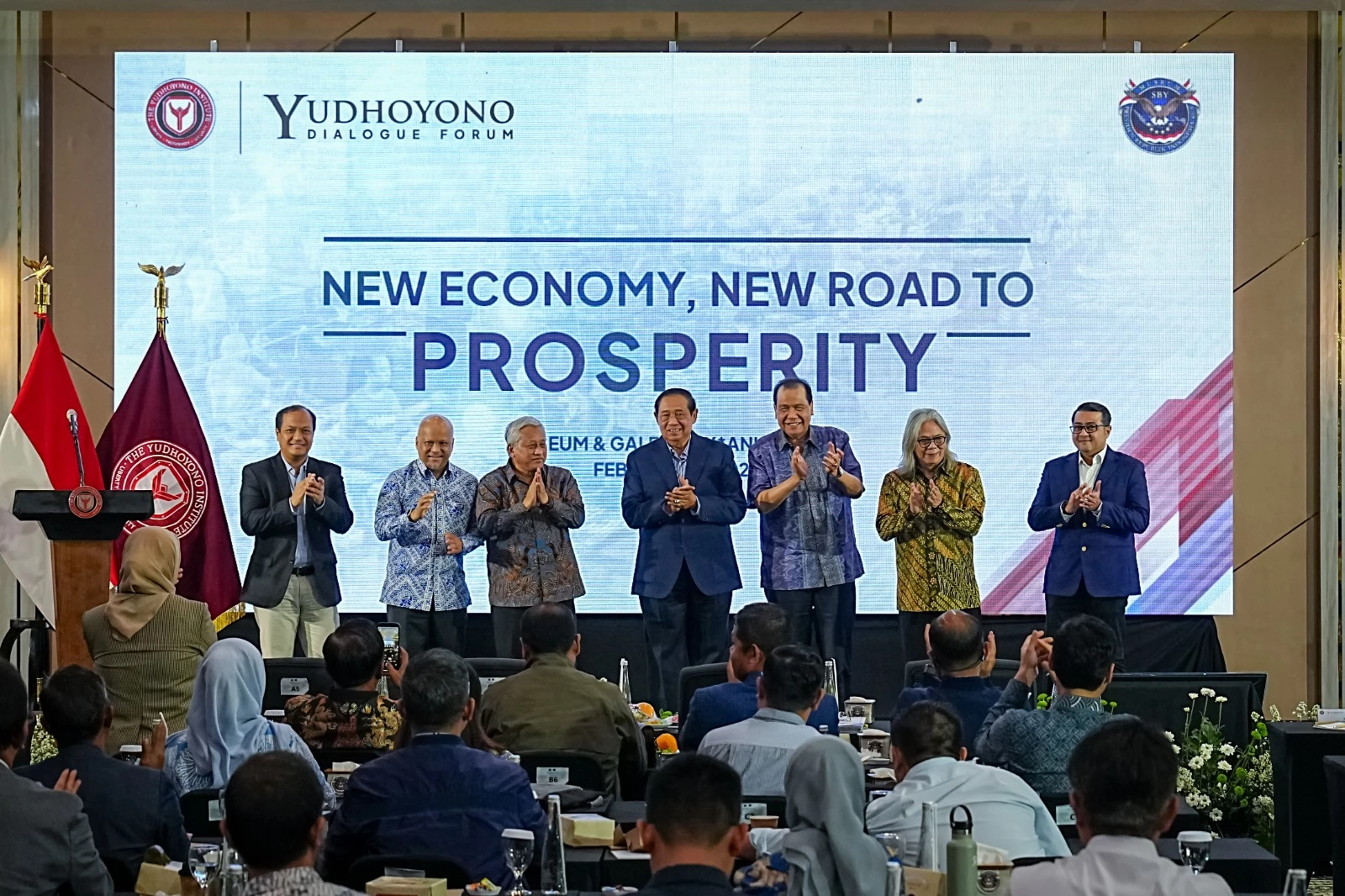
 Minister of Creative Economy Teuku Riefky Harsya attended the Yudhoyono Dialogue Forum (YDF) at the Auditorium of the SBY ANI Museum and Gallery, Pacitan, on Friday (6/2/2026).
The 6th President of the Republic of Indonesia, Susilo Bambang Yudhoyono (SBY), who is also the Chairman of The Yudhoyono Institute (TSI) as the organizer, stated that the forum was convened as a form of support for the current government through a culture of dialogue to build the nation. This is particularly relevant as global economic transformation is currently marked by technological advancement, innovation-driven disruption, climate change pressures, and shifts in global supply chains.
“I invite all of us to think about what kind of economy we want? What kind of economy we want to build? What kind of economic policy is best for Indonesia? Today and tomorrow should be grounded in our experience. Therefore, this forum discusses yesterday, today, and tomorrow,” said SBY at the forum themed ‘New Economy, New Road to Prosperity’, held at the Auditorium of the SBY ANI Museum and Gallery, Pacitan, East Java, on Friday, 6 February 2026.
 Photo: Bureau for Communication, Ministry of Creative Economy/Creative Economy Agency.
The forum underscored the importance of a development approach that is not only growth-oriented, but also focused on long-term sustainability and inclusivity. Minister of Creative Economy Teuku Riefky Harsya further emphasized that the creative economy holds a strategic position within the new economy landscape. He added that countries experiencing rapid growth in the creative economy are those with strong cultural roots, which serve as a solid foundation for Indonesia.
“In 2011, the creative economy nomenclature was first elevated to the ministerial level, with the expectation that it would become a new engine of the national economy. This vision has become increasingly tangible with the establishment of the Ministry of Creative Economy to develop the potential of the creative economy as one of the alternatives within the new economy,” said Minister of Creative Economy Teuku Riefky.
 Photo: Bureau for Communication, Ministry of Creative Economy/Creative Economy Agency.
YDF 2026 featured two main sessions, namely New Economy for Prosperity and Sustainability and The Role of Technology in New Economy. The discussions brought together academics, business actors, policymakers, and strategic thinkers to examine the interlinkages between economic growth, energy transition, and digitalization.
As one of the speakers in the New Economy for Prosperity and Sustainability session, Rector of Perbanas Institute Hermanto Siregar stated that referring to the creative economy as the new engine of growth is not an exaggeration, considering Indonesia’s rich cultural assets that can further elevate its development.
“From a research perspective, the creative economy demonstrates an impact that is roughly comparable to institutions. Therefore, the influence of technology on the output or productivity of the creative economy is evident. To further develop the creative economy, capital injection is indeed required in industries that are aligned with each subsector of the creative economy,” he explained.
 Photo: Bureau for Communication, Ministry of Creative Economy/Creative Economy Agency.
During the forum, participants discussed the integration of economic growth, the utilization of technology, and environmental sustainability as a unified national development strategy. This approach was considered relevant in addressing structural challenges while simultaneously strengthening Indonesia’s economic resilience amid global dynamics.
The forum was also complemented by an experience-sharing session with national business figures, which discussed the dynamics of economic management in the midst of global change. Through an open dialogue format, participants were expected to formulate strategic and applicable ideas to support the development of public policy.
Those in attendance included Minister of Transmigration Muhammad Iftitah Sulaiman Suryanagara; Deputy Speaker of the People’s Consultative Assembly Edhie Baskoro Yudhoyono; Deputy Minister of Manpower Afriansyah Noor; Deputy Minister of Agrarian Affairs and Spatial Planning/Deputy Head of the National Land Agency Ossy Dermawan; Vice Governor of East Java Emil Elestianto Dardak; Chairman of CT Corp Chairul Tanjung; President Director of PT DCI Indonesia Otto Toto Sugiri; Executive Director of the Center for Strategic and International Studies (CSIS) Yose Rizal Damuri; Chair of the Board of Trustees of Institut Teknologi Sepuluh Nopember (ITS) Mohammad Nuh; and Chair of the Board of Patrons of The Habibie Center Ilham Akbar Habibie.
Meanwhile, Minister of Creative Economy Teuku Riefky was accompanied by Director of Strategic Studies and Management Agus Syarip Hidayat.
Kiagoos Irvan Faisal
Head of Bureau for Communication
Ministry of Creative Economy/Creative Economy Agency


