The 5th World Conference on Creative Economy
No: SP/WCCE/EN12/2026
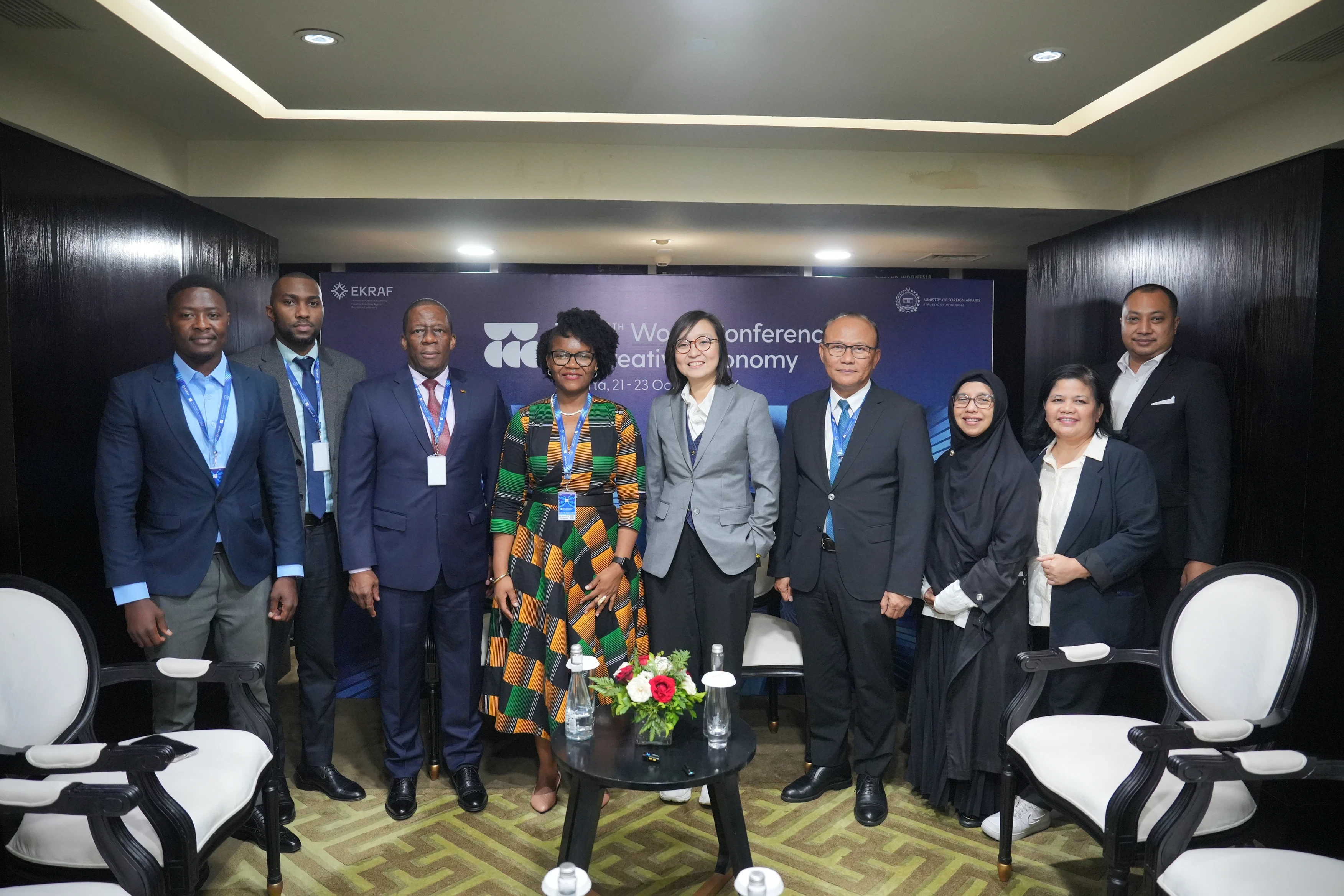
Jakarta, October 22, 2026 – Indonesia and Mozambique are exploring strategic cooperation in creative industry governance, cultural heritage preservation, alongside the strengthening of crafts, film, and fashion subsectors. This step forms a crucial part of both nations' commitment to leverage cultural richness and collective memory as primary drivers of inclusive and sustainable economic growth.
 Photo: Bureau for Communication, Ministry of Creative Economy / Creative Economy Agency.
These collaboration opportunities were discussed during a bilateral meeting between Deputy Minister of Creative Economy/Deputy Head of the Creative Economy Agency, Irene Umar, and Secretary of State for Arts and Culture of Mozambique, Matilde Martins Muocha Makara, on the sidelines of The 5th World Conference on Creative Economy (WCCE) 2026 in Jakarta, Thursday (10/22).
The Deputy Minister of Creative Economy explained that the government has positioned the creative economy as a new engine of economic growth through the strengthening of 21 creative economy subsectors divided into digital and non-digital categories. All subsectors are encouraged to collaborate in generating sustainable economic value at local and global levels.
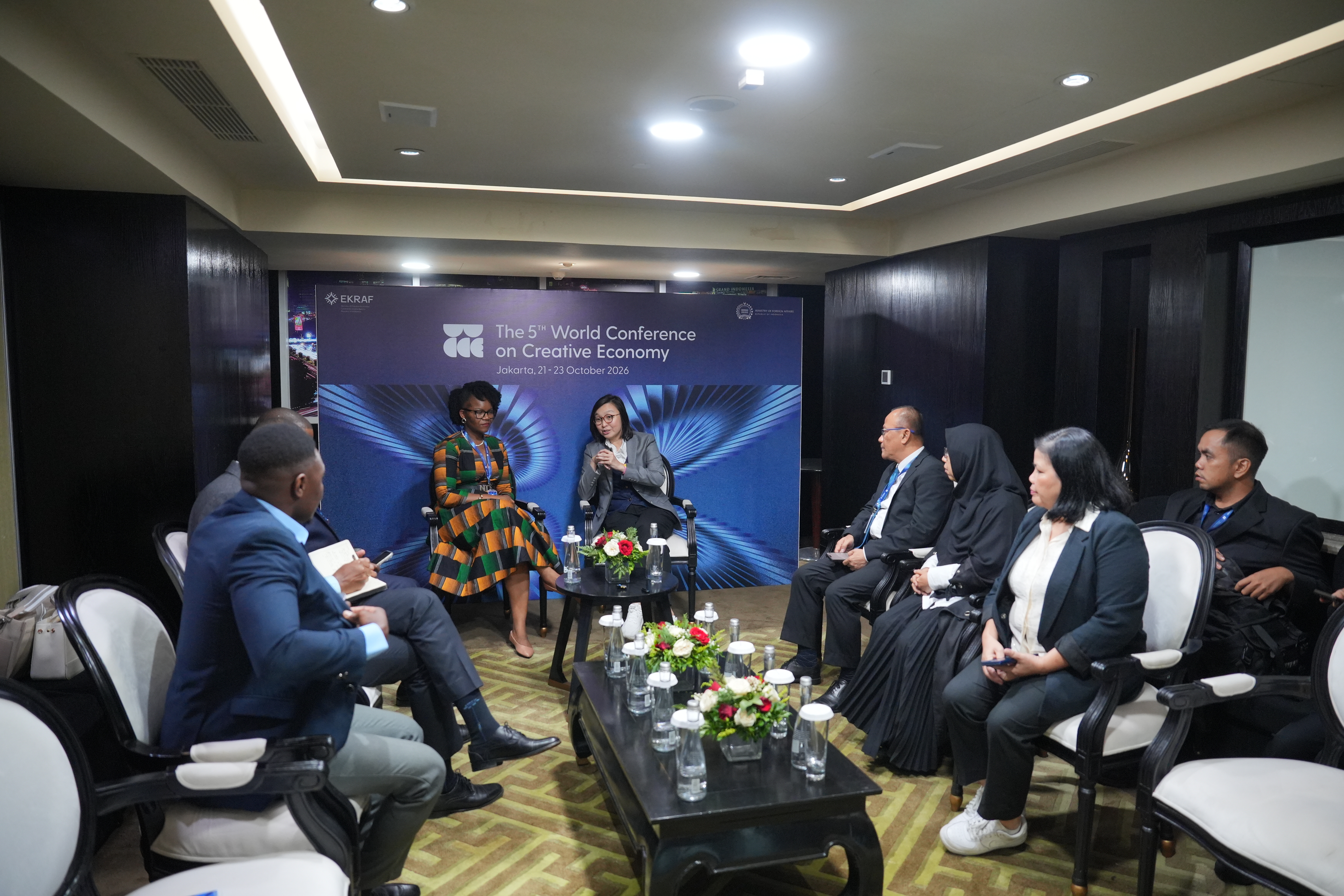 Photo: Bureau for Communication, Ministry of Creative Economy / Creative Economy Agency.
"We were different from the Ministry of Culture. While their focus is on cultural preservation, for us, culture is an economic driver. Through collaboration with Mozambique, we aim to encourage knowledge exchange in creative industry management and maximize the economic value of local cultural heritage to deliver tangible impacts on public welfare,” the Deputy Minister of Creative Economy stated.
Moving forward, several strategic collaboration opportunities being explored include knowledge exchange and cultural heritage management, as well as holding joint art exhibitions to introduce the rich traditions of each country. Both parties also plan to draft a technical cooperation framework focused on capacity building for artists, artisans, and regional museum managers.
“Strengthening a culture-based economy will ensure that the historical legacy and collective memory of the nation are not only well-preserved, but also capable of becoming engines of inclusive economic growth in the regions," the Deputy Minister of Creative Economy stated.
 Photo: Bureau for Communication, Ministry of Creative Economy / Creative Economy Agency.
The Government of Mozambique appreciated Indonesia's success in integrating cultural, communication, and creative economy governance. As a follow-up measure, Mozambique is committed to adapting this development model through training programs and knowledge transfers, especially in the crafts and textile subsectors. Mozambique intends to study Indonesian Batik technical expertise to produce traditional Kapulana fabrics locally to preserve their cultural heritage, while simultaneously opening international market penetration opportunities for Indonesian textile industry actors.
"I am delighted to know there are great opportunities for cooperation. We are committed to moving forward into more concrete stages to operationalize and explore the potential of the creative economy ecosystem in greater depth," Matilde Martins Muocha Makara stated.
 Photo: Bureau for Communication, Ministry of Creative Economy / Creative Economy Agency.
Meanwhile, Ambassador of the Republic of Indonesia to the Republic of Mozambique, Kartika Candra Negara, warmly welcomed this intensive communication to realize concrete creative economy synergy. Cross-subsector collaboration—spanning textile crafts, film, through to fashion—is expected not only to drive creative ecosystem growth in both countries, but also to reinforce diplomatic ties and cultural bonds between the peoples in a sustainable manner.
This collaboration is expected to serve as an initial stepping stone toward establishing long-term partnership programs between Indonesia and Mozambique in the visual arts, crafts, and performing arts subsectors. The Ministry of Creative Economy remains committed to expand its international diplomacy network to ensure the sustainability of the national creative economy ecosystem at the global level.
Accompanying the Deputy Minister of Creative Economy during the meeting were Deputy for Cultural Creativity and Design Yuke Sri Rahayu; Director of Architecture and Design Sabar Norma Megawati Panjaitan; and Expert Team Member for Regulatory and Institutional Issues Dahana Esha Putra.
Kiagoos Irvan Faisal
Head of Bureau for Communication
Ministry of Creative Economy/Creative Economy Agency
For further information regarding WCCE, visit:
Website wcce.id and ekraf.go.id/news
Instagram @wcceid
Event deck ekr.af/wccegeneraldeck
Media kit ekr.af/mediakitwcce2026
Youtube Official WCCE Channel - Inclusively Creative
World Conference on Creative Economy (WCCE)