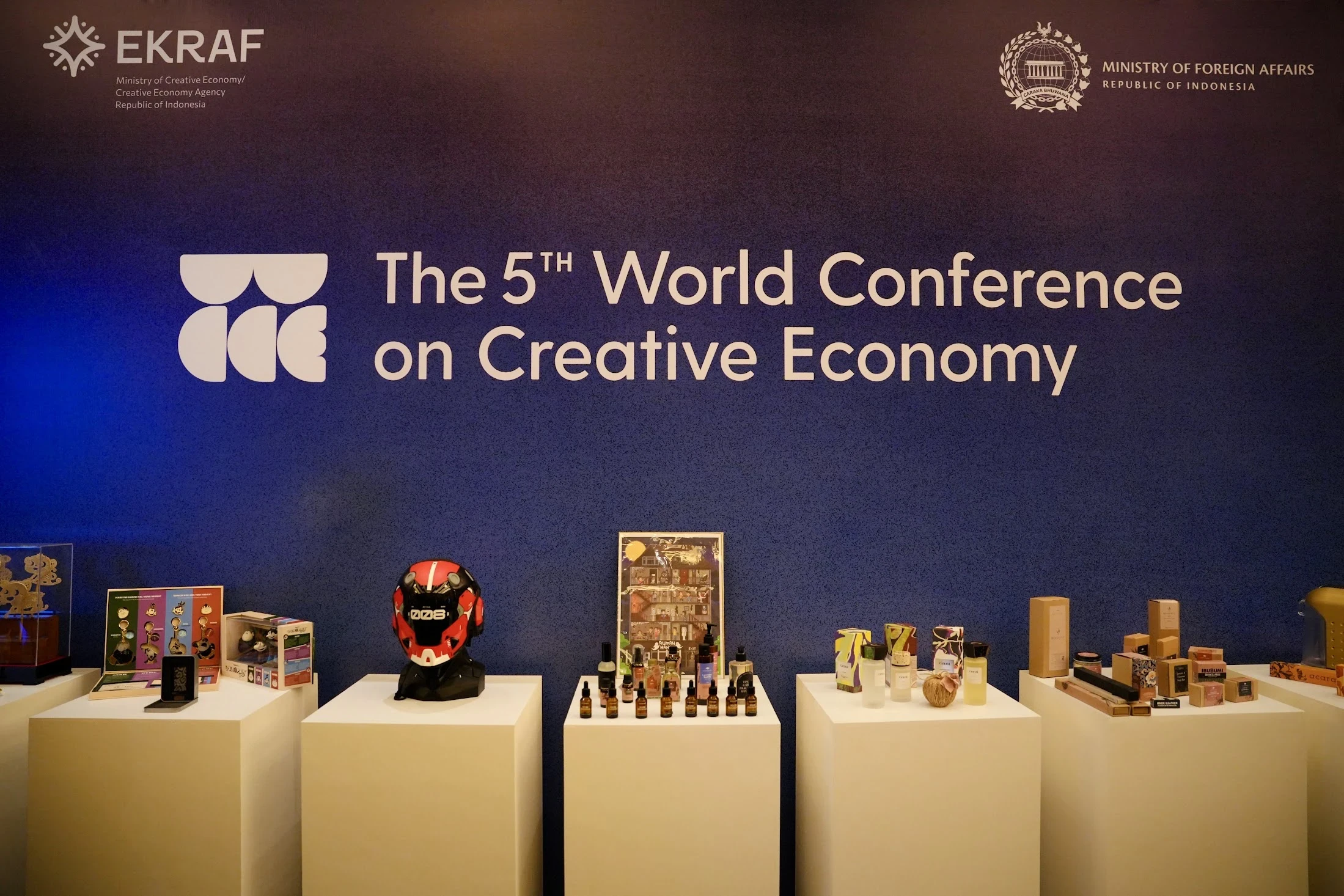
The 5th World Conference on Creative Economy
No: SP/WCCE/ID6/2026
Jakarta, October 22, 2026 – The 5th World Conference on Creative Economy (WCCE) is officially open at Grand Ballroom Hotel Indonesia Kempinski, Jakarta, Thursday (10/22). Under the theme “Inclusively Creative: Collective Continuity,” this forum initiated by Indonesia since 2018 serves as a momentum to strengthen the global commitment to develop an inclusive, adaptive, and sustainable creative economy ecosystem.
 Photo: Bureau for Communication, Ministry of Creative Economy / Creative Economy Agency.
Through remarks delivered by the Minister of National Development Planning/Head of the National Development Planning Agency (Bappenas), Rachmat Pambudy, President of the Republic of Indonesia Prabowo Subianto conveyed his message to all of the WCCE participants. The president emphasized that the creative economy possesses a strategic role as the national engine of growth rooted in local potential while forming a vital component of the global development agenda.
“Creativity and innovation is the main foundation for a fair and inclusive future economic growth. Creative economy is more than a driver of financial prosperity, but also a platform to strengthen cultural diplomacy and unite nations across all corners of the world,” the President stated.
In line with this message, the Minister of Creative Economy/Head of Creative Economy Agency (Ekraf), Teuku Riefky Harsya, highlights the creative economy contribution towards the global and national economies. According to United Nations Conference on Trade and Development (UNCTAD) data, the global export value of creative goods and services reached USD 1.7 trillion in 2024. Meanwhile in Indonesia, the creative economy sector contributed 7.38 percent to Gross Domestic Product (GDP) and absorbed up to 27.4 million workers.
The Minister of Creative Economy also emphasized the importance of collaboration and sustainability in creative economy development. The element “Collective” emphasized the involvement of all elements inside the hexahelix ecosystem, which are the governments, creators, business actors, academicians, communities, and media to realise a real action. While “Continuity” portrays the importance of maintaining the sustainability of creativity, it remains resilient and thrives amid various global challenges.
 Photo: Bureau for Communication, Ministry of Creative Economy / Creative Economy Agency.
“Eight years ago, in Bali, we proposed a brave thought, a thought that the creative economy deserves to have its own seat on a table where the world makes its own decisions. Since then, this thought has traveled around the world. Today, it came back to Jakarta to host its 5th World Conference on Creative Economy,” the Minister of Creative Economy expressed.
Indonesia’s commitment in bringing the creative economy to the global development agenda reflects through the diplomation in the international forum. Indonesia has consistently fought for this creative economy agenda in the international forum through the United Nations (UN) resolutions adopted in 2019 and 2023, and renewed at the 81st session. This diplomatic step creates a space for Global South countries to lead the direction of a global policy aligned with Sustainable Development Goals (SGDs). especially in creating job vacancies and strengthening local narration.
This commitment serves as one of the foundations for drafting the Jakarta Vision on Creative Economy. Through public consultation alongside the creative practitioners and communities, WCCE 2026 developed four main pillars that serve as the direction where the creative economy develops in future. These four pillars consist of the utilization of technology and artificial intelligence (AI) to enhance human creativity, the implementation of circular economy principles and sustainable design, the development of inclusive and community-empowering creative ecosystems, as well as protecting the intellectual property to ensure creators hold a fair economic value.
 Photo: Bureau for Communication, Ministry of Creative Economy / Creative Economy Agency.
The Minister of Creative Economy also reminded that creative economy development pertains not only to policies and strategies, but also to the human beings who conceive ideas and works. This spirit forms a crucial part of efforts to build an inclusive creative ecosystem through the Jakarta Vision on Creative Economy.
“Behind every policy, dataset, and panel discussion, there is one who fights to express what they feel and what they believe. This creativity is more than a work output, it is a way for us to talk when merely words are not enough to convey. You may have to conference and collaborate. May the Jakarta Vision pave a way to a new chapter for creative economy towards an ‘Inclusively Creative’ world,” the Minister of Creative Economy emphasized.
From an international relations perspective, Minister of Foreign Affairs of the Republic of Indonesia, Arrmanatha Christiawan Nasir, highlighted the importance of creativity as Indonesia's capital in confronting global uncertainty and world economic volatility. Minister Tata also underlined the role of diplomacy in responding to three main challenges: climate change, the digital economy, and artificial intelligence. In this context, international cooperation is required to ensure creators' works are protected from exploitation while gaining fair access to global markets.
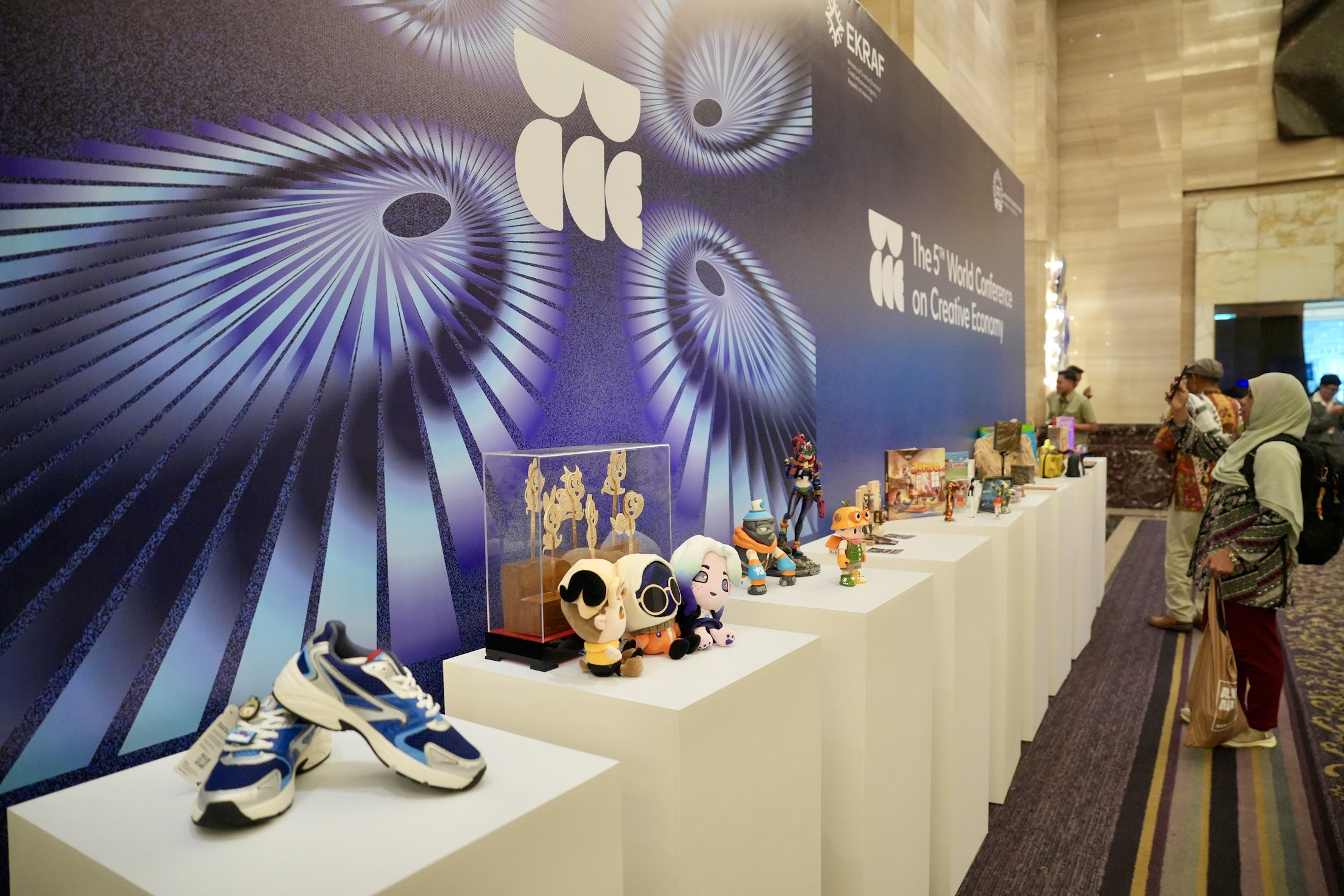 Photo: Bureau for Communication, Ministry of Creative Economy / Creative Economy Agency.
“This is why President Prabowo Subianto has positioned the creative economy as one of the pillars of our national economic resilience. Because this creates job opportunities, empowers our youth, and renders our economy more self-reliant. Amid a world full of uncertainty, ideas and creativity are renewable resources that will never be depleted to advance the economy,” Foreign Minister Tata stated.
WCCE 2026 brings together delegates from over 80 countries and seven international organizations, including 38 ministers and high-level representatives. The forum also engages 183 speakers and moderators while targeting over 6,000 participants to collectively shape the future of the global creative economy. Meanwhile, Creativillage, forming part of the WCCE series, is projected to welcome around 20,000 visitors.
The plenary session series takes place over two days, on October 22–23, 2026, featuring 33 strategic discussion sessions concluding with the Closing Session. The opening of the plenary session commenced with the Pagelaran Sabang Merauke performance displaying the rich cultural heritage of the Archipelago before the Minister of Creative Economy officially opened the discussion series.
 Photo: Bureau for Communication, Ministry of Creative Economy / Creative Economy Agency.
The hosting of WCCE 2026 simultaneously enlivens National Creation Month and serves as part of the buildup toward the peak celebration of National Creative Economy Day (Hekrafnas) on October 24, 2026.
Kiagoos Irvan Faisal
Head of Bureau for Communication
Ministry of Creative Economy/Creative Economy Agency
For further information regarding WCCE, visit:
Website wcce.id and ekraf.go.id/news
Instagram @wcceid
Event deck ekr.af/wccegeneraldeck
Media kit ekr.af/mediakitwcce2026