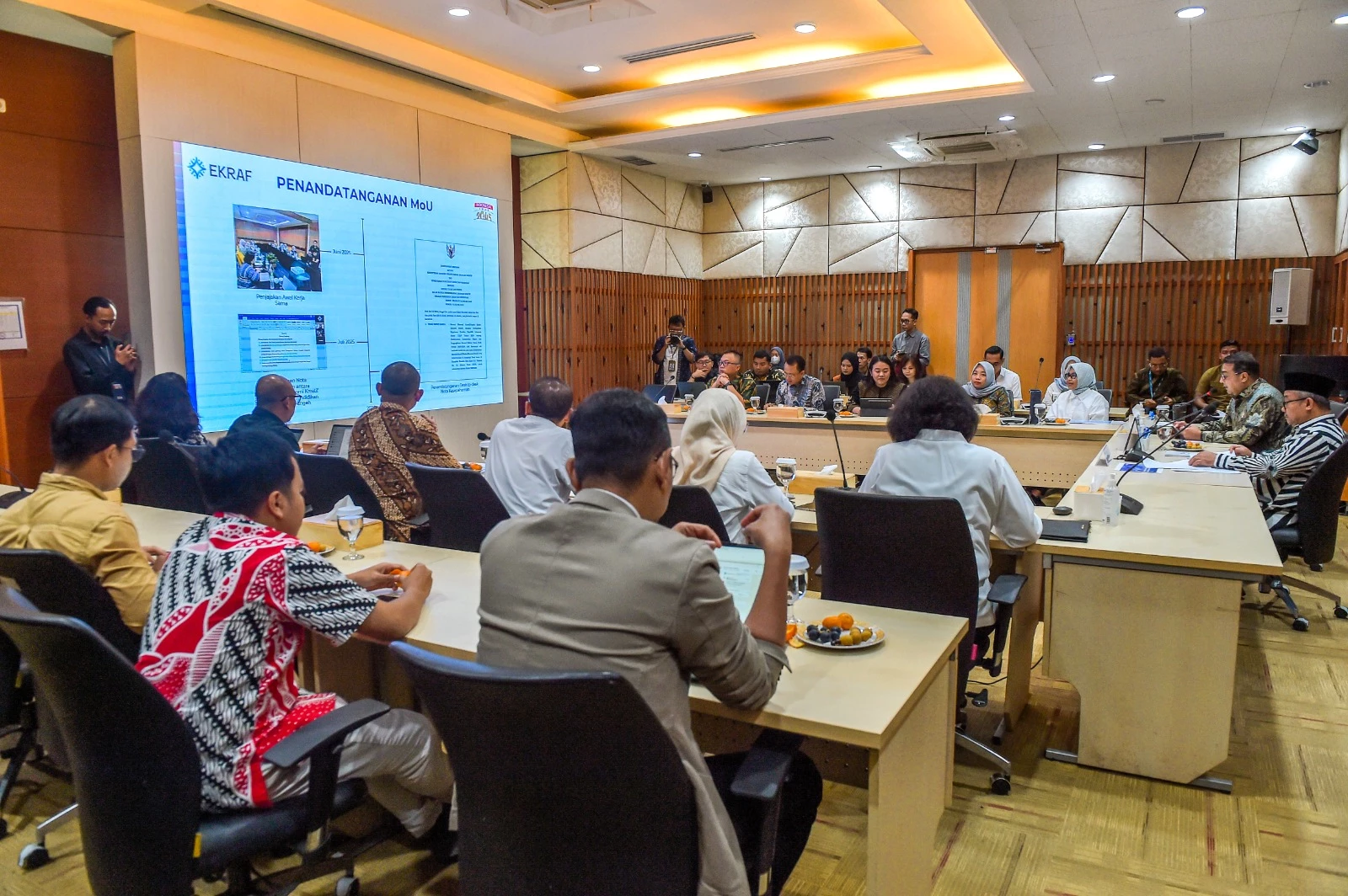
Jakarta, 8 April 2026 – The Minister of Creative Economy/Head of the Creative Economy Agency, Teuku Riefky Harsya, and the Minister of Primary and Secondary Education, Abdul Mu’ti, discussed inter-ministerial collaboration in vocational education and creative economy development. This discussion follows up on the Memorandum of Understanding signed in November 2025.
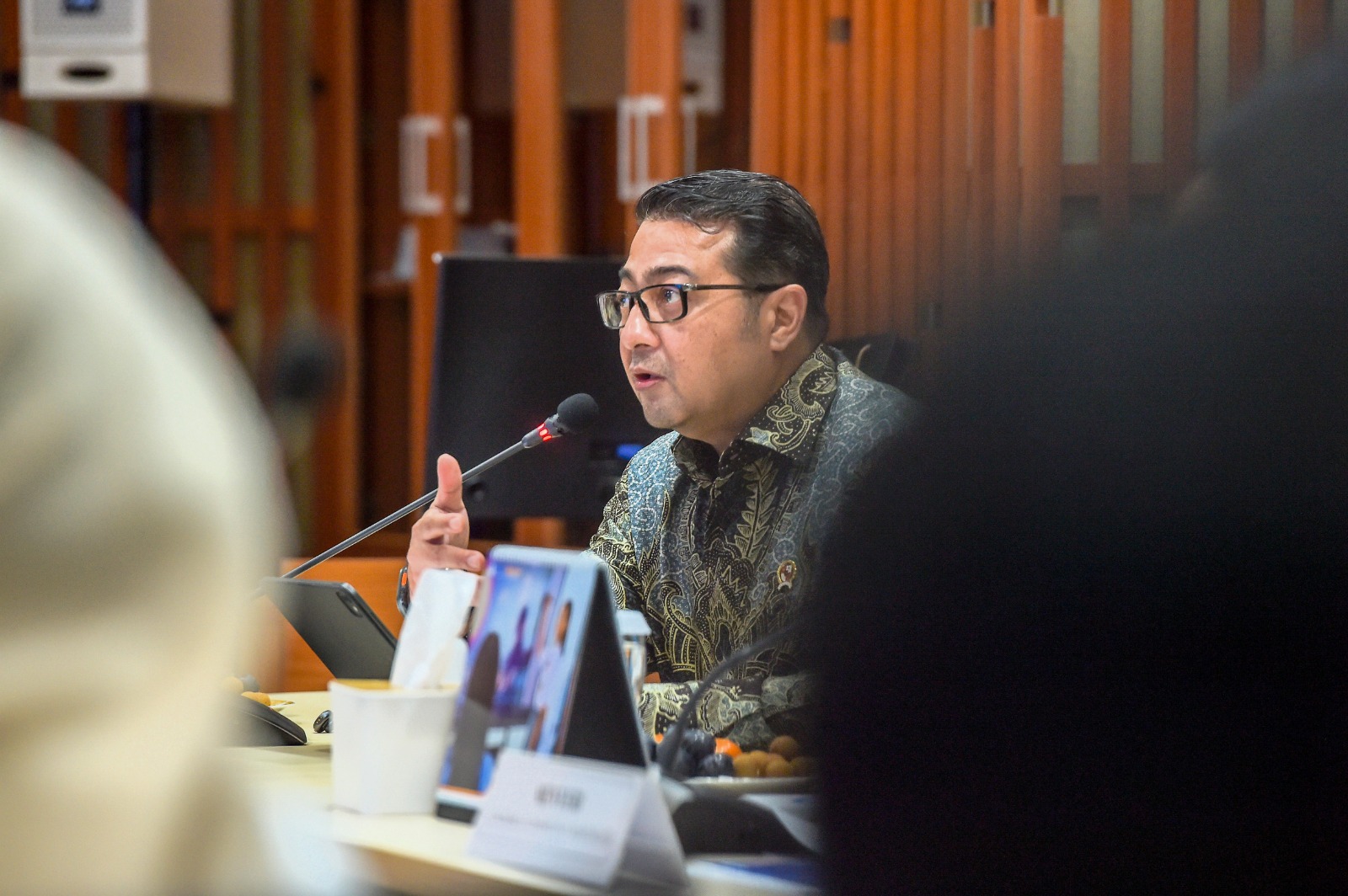
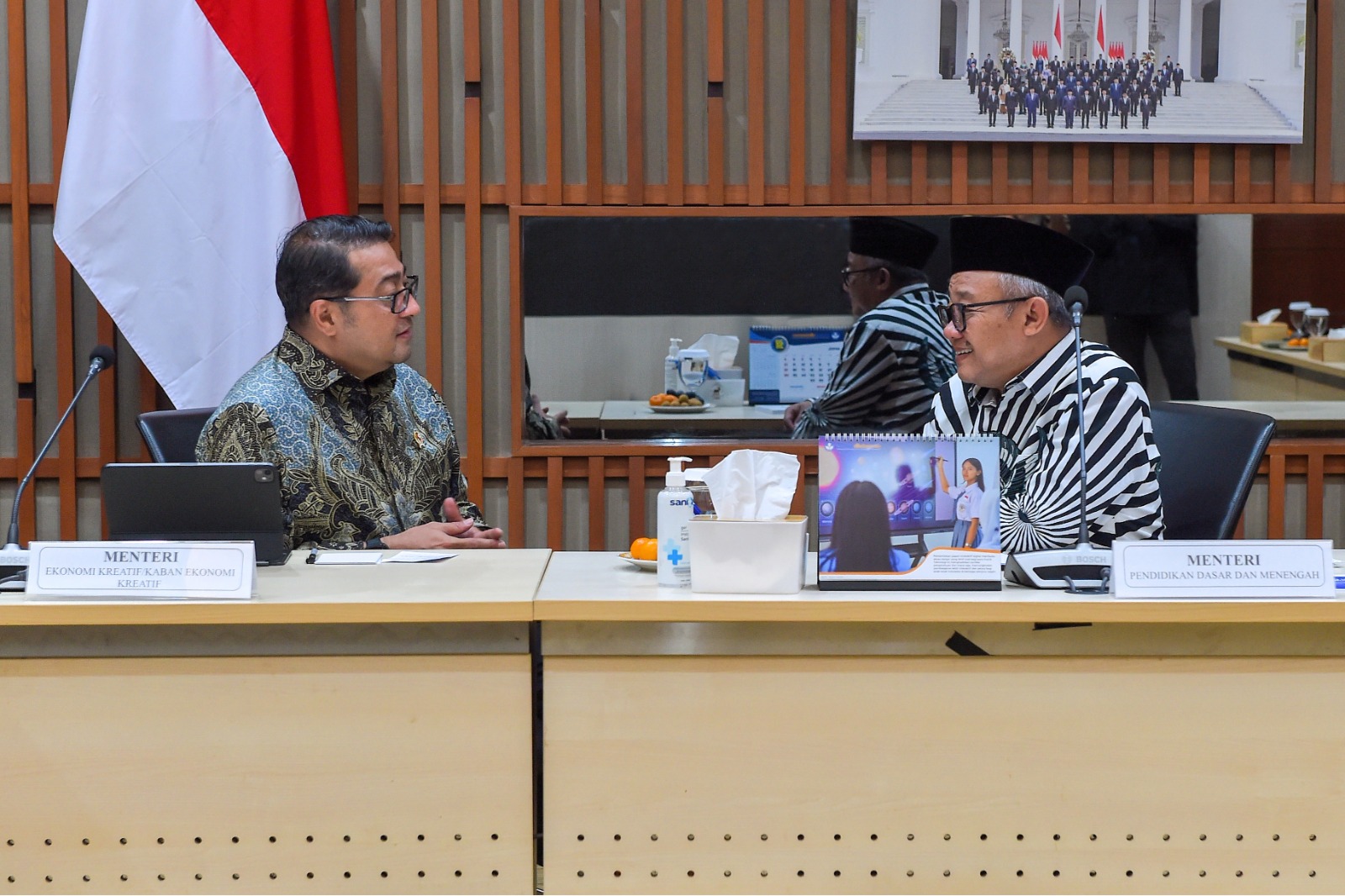 The Minister of Creative Economy, Teuku Riefky Harsya, and the Minister of Primary and Secondary Education, Abdul Mu’ti, discussed cross-ministerial collaboration in vocational education and creative economy development at the Office of the Ministry of Primary and Secondary Education, Jakarta, Wednesday (8/4/2026).
The Ministry of Creative Economy views the creative economy as a concrete solution to absorb young workers. This collaboration is also considered a strategic step to address youth unemployment while encouraging the growth of the national creative economy sector.
“Currently, the workforce in the creative economy sector, which was targeted at 25.5 million people, has reached 27.4 million workers. The majority come from the younger generation who are adaptive to technology and creativity (digital natives). Therefore, we see an opportunity to reduce unemployment by equipping educators with competencies related to the creative industry, supported through joint efforts,” said Teuku Riefky during the meeting at the Ministry’s office on Wednesday, 8 April 2026.
Furthermore, the Minister of Creative Economy added that collaboration with the Ministry of Primary and Secondary Education is key to strengthening the talent ecosystem starting from the education level. The meeting highlighted two main areas of potential collaboration: the development of creative economy modules and teaching materials for Vocational High Schools (SMK), and a scholarship synergy program to accelerate the development of top talents.
 Doc. Bureau for Communication, Ministry of Creative Economy / Creative Economy Agency
“We seek input regarding the development of creative economy modules and teaching materials for SMKs across subsectors to enhance teacher capacity, student certification in vocational pathways, and practitioner exchanges. In addition, we aim to establish scholarship synergies that can accelerate talent development through global exposure, skill enhancement, and access to internships and residency programs for outstanding talents,” added the Minister.
The Ministry of Primary and Secondary Education expects the follow-up initiatives to be implemented in the upcoming academic year, focusing on selected pilot SMKs across various regions. This synergy represents an optimistic step toward enhancing national industry competitiveness while reducing youth unemployment.
“We already have the ‘home base’ in SMKs, but the next challenge is how students’ creative works or products can be widely marketed and generate economic value, which requires strong marketing capabilities. Additionally, we seek support in fostering an entrepreneurial mindset, as our mission is to ensure that every SMK graduate is oriented toward BMW (Working, Continuing Education, and Entrepreneurship),” said Abdul Mu’ti.
The discussion also resulted in an agreement to synergize scholarship and internship programs, including access to international opportunities. Moreover, pilot projects to strengthen priority creative economy subsectors such as culinary, games, applications, music, and animation are considered aligned with vocational education programs.
“Many SMKs today offer study programs that intersect with the creative industry, such as culinary, fashion, animation, music, and games. This shows that the direction of policies to strengthen vocational education based on the creative economy is already aligned with the interests of the younger generation,” Abdul Mu’ti explained.
 Doc. Bureau for Communication, Ministry of Creative Economy / Creative Economy Agency
During the meeting, the Minister of Creative Economy was accompanied by Secretary of the Ministry/Principal Secretary Dessy Ruhati, Director of Strategic Studies and Management Agus Syarip Hidayat, Expert Staff for Research, Education, and Institutional Relations Dian Permanasari, Head of the Human Resources Development Center for Creative Economy R. Adi Mukhtar Rivai, as well as Special Advisor Gemintang Kejora Mallarangeng. Senior officials from the Ministry of Primary and Secondary Education were also in attendance.
Kiagoos Irvan Faisal
Head of Bureau for Communication
Ministry of Creative Economy / Creative Economy Agency